Brilliant Invention Gen 20 Hydrogen Generator July 2 2026
Brilliant Invention Gen 20 Hydrogen Generator ---(update Feb 7... Full Story
Perth, West Australia




by Gavan Knox
HFS whats app +61 403177183
gavan@hfuel.com.au
https://hydrogenfuelsystems.com.au
Nicolae I. Badea
Abstract: This paper covers the hydrogen technologies regarding the role of hydrogen as an energy carrier and the possibilities of its production and use. It is initially presented the modalities and the efficiency of the current technologies of obtaining hydrogen, detailing its obtaining by the electrolysis of the water, the electrochemical efficiency and the specific consumption of electricity as well as the thermodynamics of the electrochemical processes. The following paragraph addresses hydrogen conversion possibilities. This paragraph details the thermodynamic analysis of the fuel cell, the external characteristic of the fuel cell and the types of fuel cell. The last paragraph addresses the possibilities of using the fuel cells for electrical vehicles and cogeneration systems for buildings.
In this context, the traditional transport and distribution grid will have to adapt to the new realities as they will need to actively participate in the internal energy market by the transformation of the traditional electricity grid in energy flow, from unidirectional to bidirectional through the production of hydrogen offering the same facilities as the gas grid.
Hydrogen is the simplest element. A hydrogen atom consists of only one proton and one electron. It is also the most abundant element in the universe. Hydrogen is colorless, odorless, tasteless, non-toxic, and non-poisonous and it is a gas under atmospheric conditions. Despite its simplicity and abundance on Earth it is always combined with other elements. Water, for example, is a combination of hydrogen and oxygen (H2O). Hydrogen is also found in many organic compounds, especially hydrocarbons, which make up many fuels, such as gasoline, natural gas, methanol and propane
Hydrogen is the lightest element with an atomic mass of 1.0. Liquid hydrogen has a density of 0.07 g per cubic centimeter compared to water having a density of 1.0 g/cc and gasoline approximately 0.75 g/cc. It has the 142 kJ/g being the highest energy content per unit weight of any known fuel. These values of hydrogen and hydrogen technologies have both advantages and disadvantages. The advantage is that it stores about 2.6 times more energy per unit of mass compared to gasoline, and the disadvantage is that it needs about 4 times more volume for the same amount of energy.
Hydrogen is not an energy source but a chemical energy carrier, also known as an energy vector. As a vector, it is used to convert, store, and then release energy. When used, hydrogen does not produce greenhouse gases, particulates, SOx or ground-level ozone. Strategic vision of the U.S. Department of Energy (DOE) in clean energy technologies and advance economic competitiveness and scientific innovation looks like the hydrogen offer a broad range of benefits for the environment, of which I quote “including reduced greenhouse gas emissions, reduced oil consumption, expanded use of renewable power (through use of hydrogen for energy storage and transmission), highly efficient energy conversion, fuel flexibility (use of diverse, domestic fuels, including clean and renewable fuels), reduced air pollution, and highly reliable grid support”. Figure 1 illustrates in the vision of the European Commission through Directorates-General for Energy and Ambitious renewable energy targets have been agreed in the EU for 2030, with 32% of the entire EU energy demand and more than 50% of the electricity demand to be from renewable energy sources. Developing renewable energy sources to such a level, thus the level of intermittent generation, will require greater level of balancing services. In this context, hydrogen could be vital in order to balance and complement in a flexible way the renewable energy sources. Hydrogen could as well play its role in electricity storage (either long-term or seasonal). With declining costs for renewable electricity, in particular from solar PV and wind, interest is growing in electrolytic hydrogen and there have been several demonstration projects in recent years [2]. The European Commission published its hydrogen strategy for a climate-neutral Europe on the 8 July 2020 in which “it sets strategic objectives to install at least 6 GW of renewable hydrogen electrolysers by 2024 and at least 40 GW of renewable hydrogen electrolysers by 2030 and foresees industrial applications and mobility as the two main lead markets”. In accordance with Directive (EU) 2018/2001 the Member States must to ensure guarantees of origin and traceability of hydrogen, distinguishing renewable hydrogen from low-carbon hydrogen and carbonaceous hydrogen. The Member States can introduce a support framework, targeting the production of renewable or low-carbon hydrogen produced by water electrolysis. This is a stepping stone for the development of a hydrogen branch in EU, which is one of the energy sources the European Commission bets on to achieve net zero emissions by 2050.
A large number of scientific papers address the issue of hydrogen. They are published in journals dedicated to hydrogen, chemistry, energy and the environment and covers the all domain illustrated in Figure 1. This article synthesizes and updates the fundamental concepts in production and conversion of hydrogen being based on previous holistic reviews of hydrogen and fuel cells and addresses the beginners (master and PhD students) in theme approach hydrogen.
For more on this interesting topic please click on this link
https://hydrogenfuelsystems.com.au/wp-content/uploads/2025/12/Hydrogen_as_Energy_Sources_Basic_Concept.pdf
For the electricity market, reaching the European Unions’ ambitious green policy requires the application of innovative technologies and changes in the current electricity grids. It will also demand the participation of all the market actors. In this context, the traditional transport and distribution grid will have to adapt to the new realities as they will need to actively participate in the internal energy market.
An important point promoting by EU was make the transformation of the traditional electricity grid in energy flow from unidirectional (from the producer to the consumer) to bidirectional (promoting the prosumers in energy flow and smart metering) and bidirectional informational flow by smart grid. However, the system is upgrade undergoing (through the production of hydrogen) offering the same facilities as the gas grid. Comparing the traditional gas grid to the traditional electricity grid it will be noticed that the gas system has another component, storage, which allows gas stocks. By producing and storing hydrogen the two networks become similar and compatible. Like electricity, hydrogen is a carrier of energy but has the great advantage of storage. Intermittent electricity generation from renewable sources can be stored seasonally and used when demand is high (for example, summer storage to winter use). Short-term storage of hydrogen produced from renewable sources can linearize and flatten the peak consumption curve of day (balancing services). Finally, “Just as energy is the basis of life itself and ideas the source of innovation, so is innovation the vital spark of all human change, improvement and progress”.
References
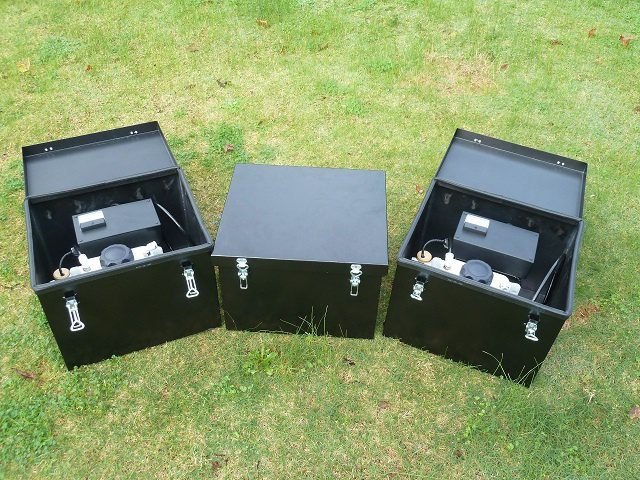
Brilliant Invention Gen 20 Hydrogen Generator ---(update Feb 7... Full Story

by Gavan Knox HFS whats app +61 403177183 gavan@hfuel.com.au... Full Story
Best Vehicles for HHO Upgrades in Australia - Oct... Full Story
Fuel Economy Methodology That Produces Real Numbers - oct... Full Story
Can HHO Improve Towing Economy? Facts That Matter -... Full Story
Payment Methods Partner:

© 2023 - Hydrogenfuelsystems pty ltd