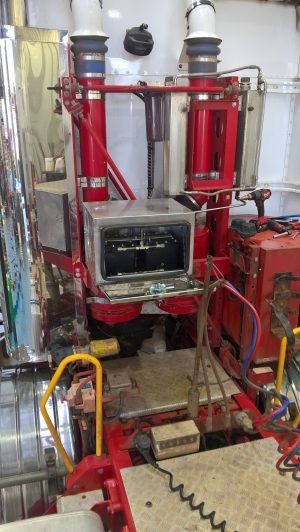
Brilliant Invention Gen 20 Hydrogen Generator
Brilliant Invention Gen 20 Hydrogen Generator ---update Feb 7... Full Story
Perth, West Australia




H. H. Thanga1 J. Lalnunthari2 1,2Department of Physics 1,2Mizoram University, Aizawl, Mizoram, India
Abstract— Faced with the ever increasing cost of conventional fossil fuels and the severe environmental pollution, researchers worldwide are working to cost effectively improve internal combustion engines fuel economy and emission characteristics. Recently, use of hydrogen or hydrogen-rich gas as fuel supplement for SI and CI engines is considered to be one of the potential solutions to these problems. Hydrogen has many excellent combustion properties that can be used for improving hydrocarbon combustion and emissions performance of both SI and CI engines. This article presents a brief review on the recent progress in the application of hydrogen as a fuel additive to improve the efficiencies and emissions of modern IC engines.
Introduction
Hydrocarbon fuels provide the primary source of energy used in the world. These fuels are used for applications such as electrical power generation, heating and transportation. Although hydrocarbon fuels provide energy for our world they have several very serious side effects. These negative side effects include harmful polluting emissions, increased level of greenhouse gases and catastrophic disasters such as large scale oil spills. Due to the widespread dependence on hydrocarbon fuels and the difficulty of their replacement, it is not economically feasible to completely eliminate their use in the near future. Hence, methods are needed to significantly reduce the harmful emissions and consumption of hydrocarbon fuels. With the depletion of fossil fuel and the adverse effect it has on the environment, researchers worldwide are working overtime to cost effectively improve internal combustion engine (ICE) fuel economy and emission characteristics. It is in this context that many are looking into hydrogen technologies as part of a sustainable energy solution.
Hydrogen is the lightest chemical element with the symbol H and having molecular formula H2. Among all fuels, hydrogen is a long term renewable, recyclable and non-polluting fuel. It is carbon-free and the combustion of hydrogen gas produce water only. It is the most abundant resource in the universe. However the biggest problems in the use of hydrogen as a fuel are (i) the high cost of hydrogen gas processing from production to compression and (ii) the danger involved in carrying compressed hydrogen gas and (iii) increase emission of nitrogen oxides (NOx).
One recent approach in tackling the above mentioned problems is the use of hydrogen as fuel supplement in fossil fuel combustion systems. Hydrogen holds significant promise as a supplemental fuel to improve the performance and emissions of spark ignition (SI) and compression ignition (CI) engines. Example of SI and CI engines are gasoline and diesel engines respectively.
Hydrogen fuel enhancement is the process of using a mixture of hydrogen and conventional hydrocarbon fuel in an internal combustion engine, typically in a car or truck, in an attempt to improve fuel economy, power output, or both. This kind of hydrogen energy application is more feasible at our present stage than trying to use hydrogen as total replacement for fossil fuel due to the high cost of hydrogen production and safety measures. Therefore the present article is intended to give a brief review on the recent application of hydrogen as fuel supplement in modern ICEs.
For More information on this exciting topic , click on this link
https://hydrogenfuelsystems.com.au/wp-content/uploads/2025/12/Application_of_Hydrogen_as_Fuel_Suppleme.pdf
CONCLUSION
Hydrogen or hydrogen rich gas is a potential fuel supplement in both SI and CI engines to enhance engine performance and improve emission characteristics. Generation of hydrogen in a form called Brown’s gas by electrolysis of water on-board vehicle appears to be a convenient and low cost method. The high burning velocity, wide flammability range, high diffusivity and low ignition energy are the main characteristics that make hydrogen a potential additive for different type of hydrocarbon fuels.
REFERENCES
[1] Z. Dulger and K.R. Ozcelik, “Fuel Economy Improvement by on Board Electrolytic Hydrogen Production,” Int. J. Hydrogen Energy,vol. 2, 895-897, 2000.
[2] J.F. Cassidy, “Emissions and total energy consumption of a multicylinder piston engine running on gasoline and a hydrogen-gasoline mixture,” NASA Technical Note, NASA TN D-8487, 1977
[3] L. Bromberg, “Emissions reductions using hydrogen from plasmatron fuel converters,” Int. J. Hydrogen Energy, vol. 26,1115-1121, 2001

Brilliant Invention Gen 20 Hydrogen Generator ---update Feb 7... Full Story

Drop in oil price and Hydrogen. April 22 2020... Full Story
Application of Hydrogen as Fuel Supplement in Internal Combustion... Full Story
Effects of Hydrogen Addition on Power and Emissions Outputs... Full Story
Improvement of performance and reduction of pollutant emission of... Full Story
Payment Methods Partner:

© 2023 - Hydrogenfuelsystems pty ltd