Brilliant Invention Gen 20 Hydrogen Generator
Brilliant Invention Gen 20 Hydrogen Generator ---update Feb 7... Full Story
Perth, West Australia




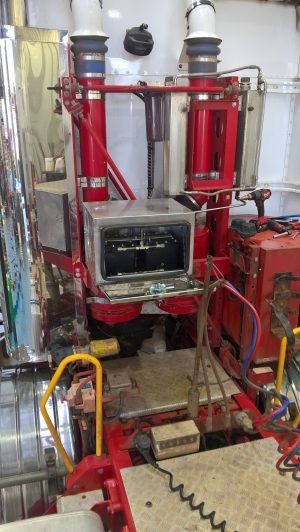

Abstract
Energy efficiency and environmental impact have become dominant topics in internal combustion engines development. Among many strategies to improve power and emissions outputs from diesel engines is the partial mix of hydrogen and air as fresh charge components to form extremely lean and homogenous mixture, which resist the spontaneous combustion, while diesel fuel is injected directly inside combustion chamber using the conventional fuel injection systems. This contribution presents an analytical and experimental investigation for the effects of adding hydrogen on diesel engines power output and the reduction of emissions. Parametric analysis is used based on lamped parameters modelling of intake manifold to estimate in cylinder trapped charge. The fuel energy flow to engine cylinders is compared for a range of loads and concentrations to simulate relevant case studies. Diesel fuel reduction for significant range of part-load operation can be achieved by introducing hydrogen, along with power improvement emission reductions are affected positively as well. This is achievable without compromising the engine maximum efficiency, given that most engines are operated at small and part-load during normal driving conditions, which allow for introducing more hydrogen instead of large quantities of excess air during such operation conditions that also can be further improved by charge boosting.
Currently, thermal systems are required to become energy efficient and produce less emission. Diesel engines are one of these systems that need to be considered for improvement in this respect. Hydrogen also is expected to become one of the most important fuels for reducing greenhouse gas emission problem in the near future. Based on the characteristics of both fuels, this contribution provides an insight into the possibility of improving diesel engines power and emissions outputs by hydrogen addition. The effectiveness of the proposed technique will be demonstrated analytically and experimentally. Diesel engines are characterized by their carbon oxides, nitrogen oxides, soot, and particulate emissions. Related literature shows that introducing hydrogen to partially substitute diesel fuel charge will enhance engine performance. It mainly helps to reduce carbon oxides emissions as a consequence to the optimized mixture characteristics due to hydrogen gaseous state. Other researchers have used Computational Fluid Dynamics to explore the changes in nitrogen oxides emissions in hydrogen-enriched diesel combustion over a range of operating conditions. Their results confirm that there is a notable reduction in exhaust emissions with increasing of hydrogen percentage. Other authors show an example of measured in-cylinder pressure for hydrogen-diesel system. The obtained data indicates normal combustion of pilot fuel without pre-ignition and premixed combustion. But the pressure has the tendency to sudden increase since hydrogen with high auto-ignition temperature ignites after pilot ignition of diesel. This allows for using hydrogen without serious modification of already onboard installed diesel engines. In different study, the lean combustion using hydrogen fuel has been considered. The result of that contribution indicates that hydrogen helps to optimize combustion process, which allows for extending the lean limit significantly due to the improvement of lean misfire limit. In addition, it shows that cycle-to-cycle variations are reduced due to better mixing and faster combustion. Another investigation presented in concerns both pure hydrogen combustion under homogeneous charge compression ignition conditions and hydrogen-diesel combustion in a compression ignition engine. Various hydrogen doses are used to provide insight related to the impact on combustion knock intensity, mass fraction burned and heat release rate, in addition to engine durability. The presented results show that up to seventeen percentage of hydrogen can give positive effect on performance. The experimental investigations have targeted the effect of using hydrogen on engine parameters such as injection timing, maximum brake thermal efficiency, and oxides of nitrogen. It concludes that port-injected hydrogen helps to increase in brake thermal efficiency of the engine with a greater reduction in emissions.
In the present contribution, the performance of diesel engine is considered using addition of hydrogen and based on mean value engine modeling oriented for power and emissions outputs improvement. Hydrogen gas is introduced into the intake manifold using the available gas fuelling techniques. The concept is based on continuous injection inside intake manifold where a central metering valve and distributor deliver vaporized hydrogen into the intake runners. For this purpose, engine coolant heat is used for hydrogen evaporation and to control its temperature. Allowing relatively low-temperature hydrogen gas into the intake manifold helps to cool the fresh charge, which increases the charge density and helps to reduce engine emissions. Lean mixture prevents backfiring into the intake ducts. Diesel fuel is injected directly inside the combustion chamber using the current fuelling technologies with some minor modifications to reduce diesel fuel flow, which will be replaced by hydrogen fuel flow. Mixture combustion is realized by diesel combustion, given that, the hydrogen mixture is relatively very lean and exceeds misfire limit in Otto cycle based engines. Thus, it is possible to assume that combustion of hydrogen synchronized to that of the diesel. The trapped fuel energy is compared for a range of loads and concentrations. The analysis and experimental results bring about a clear insight into the proposed possibility of partially and economically improving diesel engines outputs by partial addition of hydrogen at part-loads.
https://hydrogenfuelsystems.com.au/wp-content/uploads/2025/11/Effects_of_Hydrogen_Addition_on_Power_an.pdf
Acknowledgements
Acknowledgement is given to the technicians and automotive engineering students from Mechanical Engineering Department in Palestine Polytechnic University, for technical support and help in conducting the experimentation,
References
[1] Varde, K.S. and Frame, G.A. (1983) Hydrogen Aspiration in a Direct Injection Type Diesel Engine—Its Effects on Smoke and Other Engine Performance Parameters. International Journal of Hydrogen Energy, 8, 549-555. http://dx.doi.org/10.1016/0360-3199(83)90007-1
[2] Zhang, H., Lilik, G.K., Boehman, A.L. and Haworth, D.C. (2009) Effects of Hydrogen Addition on NOx Emissions in Hydrogen-Assisted Diesel Combustion. International Multidimensional Engine Modeling Users Group Meeting Detroit, MI, 19 April 2009.
[3] Adnana, R., Masjukib, H.H. and Mahlia, T.M.I. (2010) Experimental Investigation on In-Cylinder Pressure and Emissions of Diesel Engine with Port Injection Hydrogen System. International Journal of Mechanical and Materials Engineering (IJMME), 5, 136-141.
[4] Goldwitz, J.A. (2004) Combustion Optimization in Hydrogen-Enhanced Lean Burn SI Engine. Thesis, Massachusetts Institute of Technology, USA.
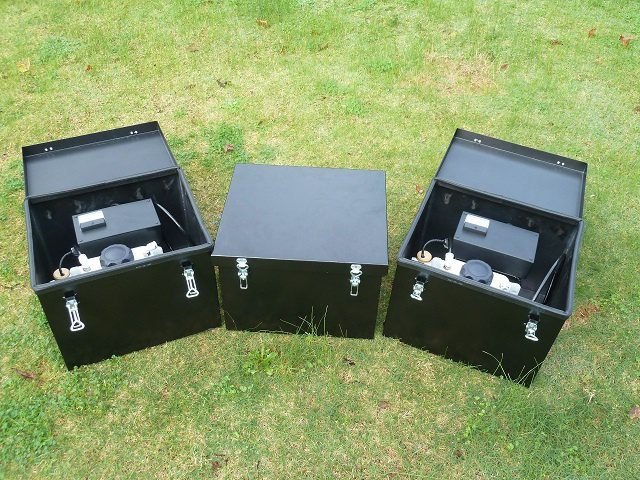
side opening lockable steel enclosure box
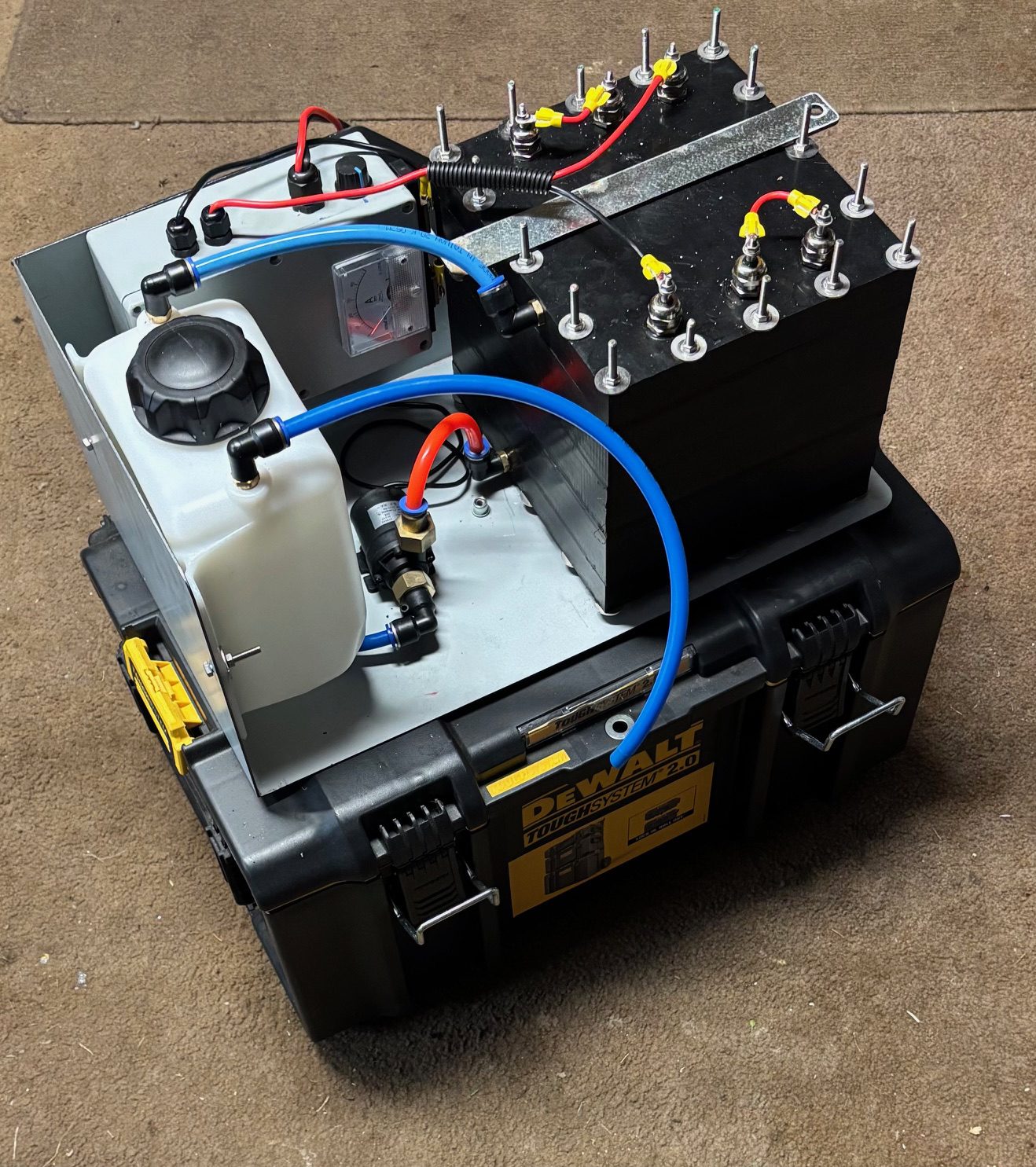
Brilliant Invention Gen 20 Hydrogen Generator ---update Feb 7... Full Story

Drop in oil price and Hydrogen. April 22 2020... Full Story
Effects of Hydrogen Addition on Power and Emissions Outputs... Full Story
Improvement of performance and reduction of pollutant emission of... Full Story
Hydrogen Fueled Internal Combustion Engine: A Review November 27... Full Story
Payment Methods Partner:

© 2023 - Hydrogenfuelsystems pty ltd