Brilliant Invention Gen 20 Hydrogen Generator
Brilliant Invention Gen 20 Hydrogen Generator ---update Feb 7... Full Story
Perth, West Australia





Abstract:
Hydrogen Fueled Internal Combustion Engine. Continuous and fast depletion of the fossil fuels and exponential growth in the industrial demand for conventional fuels are increasing sharply. This is demanding the circumstances to carry out research in order to find out the viable alternate fuels, for meeting sustainable energy demand with minimum environmental hazards, cost effective and safe. All the above challenges can be addressed by the use of hydrogen as an alternate fuel. In this paper the fundamentals of the hydrogen as a fuel in the internal combustion engine has been discussed. Fuel properties such as combustion, performance and emission characteristics of hydrogen fuelled engine are been described.
Introduction
For many years, hydrocarbon fuels have played a leading role in the transportation and power generation. Due to increase in destruction in the environment by emission and depletion of the worldwide petroleum resources, research must be carried out to find an alternate fuel to overcome the major problems. As a result of various alternative fuels like liquefied compressed gas (LPG), compressed natural gas(CNG), vegetable oil, bio gas, producer gas, hydrogen etc, have been considered as substitute for the hydrocarbon based fuels [1]. An internal combustion engine, hydrogen can be used as a sole fuel. The higher self-ignition temperature of the hydrogen (858) needs external source to initiate the combustion in the combustion camber. Emission such as HC, CO, CO2, SOx and smoke are either not observed or very much lower than the hydrocarbons used as fuels [2]. The unburned hydrogen may come out of the engine, through the exhaust but it is not considered as hydrogen is non-toxic in nature and does not involve in any smog reaction. This paper provides a brief summary of the combustion, performance and emission characteristics of the hydrogen fuel in an internal combustion engine with respect to the other traditional fuels.
COMBUSTIVE PROPERTIES OF HYDROGEN
There are several important characteristics of hydrogen that greatly influence the technical development of the internal combustion engine. Important properties are discussed in the following section
2.1 FLAMMABILITY FACTOR
2.2. FLAME PROPERTIES
MINIMUM IGNITION SOURCE ENERGY
2.4 HIGH DIFFUSIVITY
2.5 LOW DENSITY
2.6 HIGH AUTO IGNITION TEMPERATURE
2.7 SMALL QUWNCHING DISTANCE
III. ENGINE POWER OUTPUT
5.1 NOx EMISSION
5.2 HC EMISSION
5.3 CO AND CO2 EMISSION
Conclusion
It is evident from the study that it is advantageous
to use hydrogen enriched air as a fuel in internal
combustion engines. Power and torque loss occurs at low speed hydrogen operation. At high speed hydrogen gives better performance as compare to gasoline operation. Similarly Thermal efficiency and Brake mean effective pressure of hydrogen is more at higher speed. NOx emission in internal combustion engine reduces to the maximum considerable amount. This makes it possible to run the engine leaner, resulting in lower emissions of CO2, CO and HC. Short time of combustion produces lower exhaust gas temperature for hydrogen. Hydrogen is a very good candidate as an engine fuel. Appropriate changes in the combustion chamber together with better cooling mechanism would increase the possibility of using hydrogen across a wider operating range.
Professional References
| [1] Antunes Gomes M J., Mikalsen R., Roskilly
A.P., An investigation of hydrogen-fuelled HCCI engine performance and operation, International Journal of Hydrogen Energy, Volume 33, Pages 5823–5828, 2008.
[2] Saravanan N., Nagarajan G., Sanjay G., Dhanasekaran C., Kalaiselvan K.M., An experimental investigation on hydrogen as adual fuel for diesel engine system with exhaust gas recirculation technique, Renewable Energy,Volume 33, Pages 422- 427, 2008.
[3] Murat CINIVIZ, Huseyin,” hydrogen use in internal combustion engine: a review”, International journal of automotive engineering and technologies Vol. 1, Issue 1, pp.1-15, 2012.
[4] Lyon, D., “Knock and cyclic dispersion in a spark ignition engine, petroleum based fuels and automotive applications”, in Proceedings of IMechE Conference on Petroleum based fuelsand automotive applications, London, 1986, pp. 105-115.
[5] Stockhausen, W. F, Natkin, R. J., Kabat, D.M., Reams, L., Tang, X., Hashemi, S, “Ford P2000 hydrogen engine design and vehicle development program”, SAE paper 2002; 2002-01-0240.
[6] Ilbas, M., Crayford, A. P., Yılmaz, I., Bowen, P. J., Syred, N., Laminar-burning velocities of hydrogen–air and hydrogen– methane–air mixtures: An experimental study, International Journal of Hydrogen Energy, 31, 2006, pp. 1768 – 1. |
[7] White M. C., Steeper R.R., Lutz E. A., The hydrogen-fueled internal combustion
engine: a technical review, International Journal of Hydrogen Energy Volume 31, Pages 1292-1305, 2006.
[8] White, C. M., Steeper, R. R., Lutz, A. E., The hydrogen-fuelled internal combustion engine: a technical review, “International Journal of Hydrogen Energy”, 31, 2006, pp. 1292 – 1305, 2006.
[9] Saravanan N., Nagarajan G., Sanjay G., Dhanasekaran C., Kalaiselvan K.M., An experimental investigation on hydrogen as a dual fuel for diesel engine system with exhaust gas recirculation technique, Renewable Energy,Volume 33, Pages 422- 427, 2008.
[10] WahabAbd Bın Aswad M., Addition of hydrogen to gasoline-fuelled 4 stroke SI engine using 1-dımensıonal analysis, Faculty of Mechanical Engineering University Malaysia Pahang, Pages 1-68, 2009.
[11] Lewis, B., Von Elbe. G., combustion, flame and explosion of gases, Orlando. FI: Acadamic Press; 1987.
[12] ErolKahramana, S. CihangirOzcanlib, BarisOzerdemb, An experimental study on performance and emission characteristics of a hydrogen fuelled spark ignition engine International Journal of Hydrogen Energy. 32 (2007) 2066 – 2072. |
https://hydrogenfuelsystems.com.au/wp-content/uploads/2025/11/Hydrogen_Fueled_Internal_Combustion_Engi.pdf
Views: 1
Thursday, November 27, 2025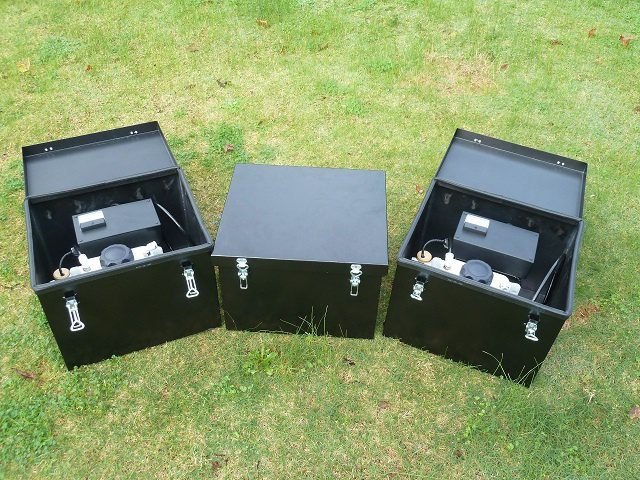
Brilliant Invention Gen 20 Hydrogen Generator ---update Feb 7... Full Story

Drop in oil price and Hydrogen. April 22 2020... Full Story
An outlook of hydrogen as an automotive fuel February... Full Story

Designing and Analysis of Hydrogen Power Vehicle along with... Full Story

Application of Hydrogen as Fuel Supplement in Internal Combustion ... Full Story
Payment Methods Partner:

© 2023 - Hydrogenfuelsystems pty ltd
