Brilliant Invention Gen 20 Hydrogen Generator July 2 2026
Brilliant Invention Gen 20 Hydrogen Generator ---(update Feb 7... Full Story
Perth, West Australia




by Gavan Knox MSc, BSc, BEd.
WhatsApp call +61 403177183
contact gavan@hfuel.com.au
https://hydrogenfuelsystems.com.au
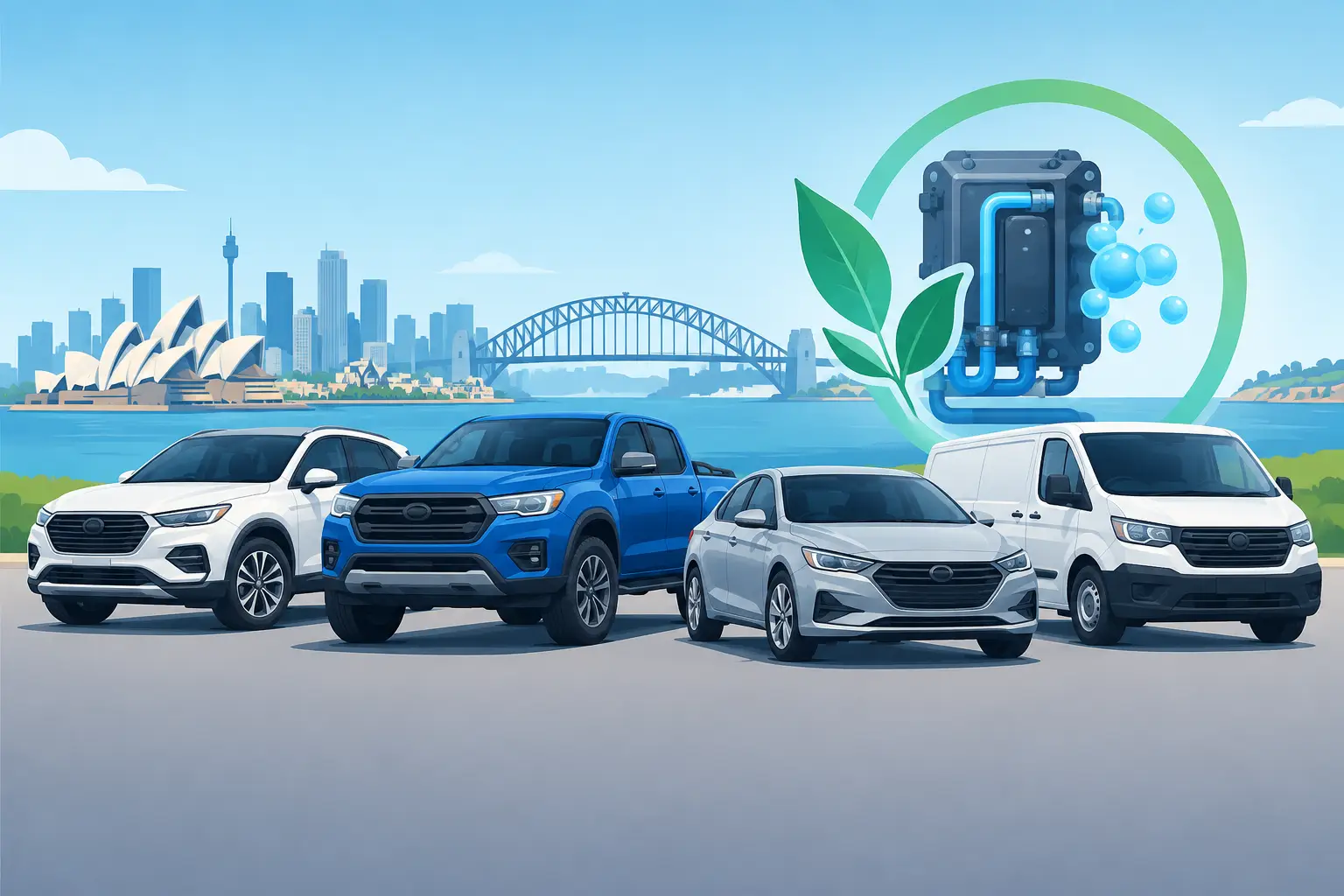
What Vehicles Suit Hydrogen Kits Best? A hydrogen kit is not a one-size-fits-all accessory. The vehicle that benefits most is usually the one working hard enough for fuel use, combustion quality and engine load to matter every day. If you are asking what vehicles suit hydrogen kits, start with the engine’s workload, fuel bill and available installation space – not just whether it is diesel or petrol.
A lightly used runabout that travels a few thousand kilometres a year may take a long time to justify any aftermarket upgrade. A diesel ute towing tools all week, a 4WD hauling a caravan, a delivery van idling in traffic, or a truck covering serious kilometres is a different proposition. These applications burn enough fuel for improved combustion efficiency to become a commercial conversation rather than a garage experiment.
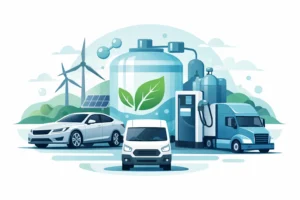
Hydrogen generator kits, often called HHO kits, are designed for internal combustion engines. They produce hydrogen gas on board and introduce it into the engine’s air intake to support a cleaner, more complete burn. That makes them relevant across a broad range of petrol and diesel applications, provided the kit is correctly sized, professionally installed and maintained.
The strongest candidates generally have one thing in common: consistent operating hours under meaningful load. More fuel moving through the engine means more opportunity to assess the effect on consumption, response and exhaust quality.
Diesel utes are a natural fit, especially when they spend their lives carrying tools, towing trailers or travelling between jobs. A tradie vehicle may idle at sites, run loaded through suburban traffic and work on the highway in the same week. That mixed duty cycle places real demand on the engine and makes fuel costs highly visible.
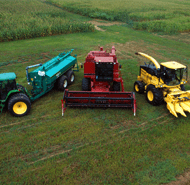


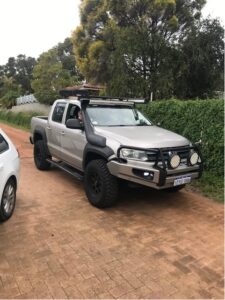
Modern common-rail diesels can be suitable, but installation must respect the factory intake layout, sensors, electrical system and engine management strategy. The objective is not to interfere with the vehicle’s original systems. It is to add a properly controlled hydrogen supply that complements the combustion process.
Petrol utes and vans can also suit a kit. They are particularly worth considering where the vehicle is heavily loaded, used for regular regional travel or spends long hours on the road. The deciding factor is utilisation, not the badge on the bonnet.
A 4WD that only sees the shops is unlikely to be the priority application. A touring wagon or dual-cab that tows a camper, carries recovery gear and crosses long distances is another matter entirely. Higher loads raise fuel consumption, and that is where owners are most motivated to improve efficiency without giving away usable torque.
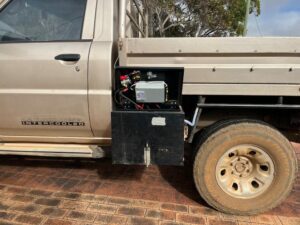
For 4WD applications, physical installation planning matters as much as kit output. The system needs a secure mounting location away from excessive heat, moving parts and water exposure. Battery condition, alternator capacity, hose routing and access for servicing all need to be checked before fitting anything.
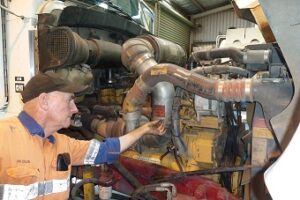
A well-planned installation should leave the vehicle practical. You should not lose essential under-bonnet access, compromise a dual-battery setup or create an unreliable arrangement for the sake of adding a kit. Touring gear needs to survive corrugations, dust, heat and long days away from the workshop.
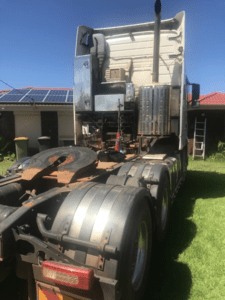
Heavy vehicles are where operating cost becomes impossible to ignore. A prime mover, rigid truck, courier fleet or bus can consume vast amounts of fuel across a year. Even a modest improvement in fuel efficiency can carry more weight financially than it would in a privately owned passenger car.
That does not mean every fleet vehicle receives the same system. Engine displacement, duty cycle, intake configuration and average load all affect kit selection. A truck that pulls weight through hilly country needs a different assessment from one that runs light freight on flat metropolitan routes.
Fleet operators should approach hydrogen enhancement as a measured trial, not a guess. Record kilometres, litres used, load, routes, idle time and driver behaviour before installation. Continue recording the same data after installation over enough operating time to account for normal variations. This gives management something useful: evidence from its own vehicles, drivers and work conditions.
For a business that tracks every litre, the value is not limited to fuel. Better combustion can also support cleaner exhaust performance and reduce the soot-related stress associated with poor burn conditions. Results will vary by vehicle and operation, so the numbers must be verified in the field rather than promised from a brochure alone.

Vans and delivery vehicles can be strong candidates because stop-start driving, idling and repeated acceleration add up quickly. A vehicle travelling all day for parcel work, mobile servicing or deliveries may cover fewer highway kilometres than a truck, yet still consume significant fuel over the year.
Passenger cars can suit hydrogen kits too, particularly larger petrol or diesel vehicles used for regular commuting, rideshare work or long-distance travel. The financial case is usually weaker for a small, lightly driven hatchback with low annual fuel spend. It can be stronger for a six-cylinder sedan, SUV or work vehicle that is regularly on the road.
Be realistic about the goal. A hydrogen kit is an engine-efficiency enhancement, not a replacement for overdue servicing, worn injectors, blocked filters, poor tyre pressures or a heavy right foot. Fix the basics first. A healthy engine gives any efficiency-focused upgrade its best chance to perform.
Boats and generators are often overlooked, yet they can be excellent applications. A work boat, fishing vessel or recreational cruiser can run its engine for extended periods under steady load. Likewise, generators may operate for hours at a time in remote work, events, farms or backup-power settings.
These installations require more care than a typical vehicle fitment. Marine environments bring salt, moisture and vibration. Generator enclosures can introduce heat and ventilation constraints. Components must be mounted securely, protected from the environment and matched to the engine’s operating pattern.
The upside is clear: where an engine runs for long hours, fuel consumption and maintenance exposure are ongoing costs. A correctly engineered hydrogen system can be a practical tool for operators who want to improve combustion efficiency without replacing functioning equipment.
Choosing between a Gen 10, Gen 15, Gen 20 or Gen 25 system should never be based solely on the vehicle’s appearance. A large-looking 4WD may have a modest engine. A compact truck may run a high-capacity diesel. Engine size is a starting point, but average load and hours of use complete the picture.
A smaller system may suit lower-capacity engines and lighter applications. Larger engines, heavy-duty towing, trucks, marine engines and generator applications may require greater hydrogen production capacity. Oversizing is not a shortcut to better results, and undersizing can leave the system unable to support the workload it was bought for.
Before selecting a kit, confirm the engine capacity, fuel type, intake arrangement, available mounting space and electrical condition. Also consider how the asset actually earns its keep. A vehicle doing 800 kilometres a week at highway speed is different from one doing 800 kilometres in short urban runs. Both may be suitable, but the installation plan and performance expectations should reflect reality.
Not every internal combustion vehicle is an immediate candidate. Vehicles with unresolved mechanical faults should be repaired first. Oil consumption, overheating, injector issues, intake leaks, failing batteries and charging problems can distort results and create unnecessary risk.
Very low-use vehicles may also struggle to deliver a convincing payback period. If the fuel bill is small, the potential saving is small. This is why high-use commercial vehicles, towing rigs, marine engines and generators are often more compelling than a weekend-only car.
Compliance matters as well. Australian vehicle modification requirements can vary by state and territory, while insurer and warranty conditions may apply. Check the relevant requirements before installation, retain product and installation documentation, and use a competent installer where required. A serious upgrade should be fitted and documented like one.
The best vehicle for a hydrogen kit is rarely the newest, flashiest or biggest. It is the one that burns enough fuel, works under enough load and operates often enough for efficiency gains to matter. Start with the fuel records. Look at kilometres, hours, loads and maintenance history. Then choose a system that matches the engine instead of buying on hope.


Hydrogen Fuel Systems supplies application-focused HHO kit options for cars, utes, 4WDs, trucks, marine engines and generators. Get the engine and duty cycle assessed properly, install the right-sized system, and let your own operating data show whether the vehicle is delivering the result you want.
Thursday, July 30, 2026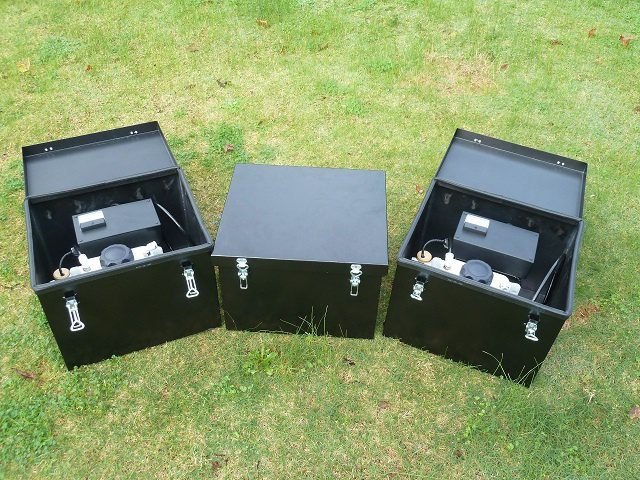
Brilliant Invention Gen 20 Hydrogen Generator ---(update Feb 7... Full Story

by Gavan Knox HFS whats app +61 403177183 gavan@hfuel.com.au... Full Story
A diesel that works hard does not hide its... Full Story
Best Vehicles for HHO Upgrades in Australia - Oct... Full Story
Fuel Economy Methodology That Produces Real Numbers - oct... Full Story
Payment Methods Partner:

© 2023 - Hydrogenfuelsystems pty ltd