Brilliant Invention Gen 20 Hydrogen Generator July 2 2026
Brilliant Invention Gen 20 Hydrogen Generator ---(update Feb 7... Full Story
Perth, West Australia




by Gavan Knox MSc, BSc, BEd, Inventor
WhatsApp call +61 403177183
contact gavan@hfuel.com.au
https://hydrogenfuelsystems.com.au
How 24V-to-13.8V Buck Configuration Regulators Affect HHO generation in Trucks – oct3. A 24V electrical system can destroy an HHO cell designed for 12V operation if it is connected directly. That is why the question, how do 24V to 13.8V DC-DC buck configuration regulators affect hydrogen gas production, matters to truck operators, machinery owners, marine users and anyone fitting an on-board hydrogen system to a 24V vehicle.
The short answer is simple: a properly specified buck regulator reduces the 24V supply to a controlled 13.8V, allowing a 12V HHO generator to run in its intended operating range. It protects the cell, wiring and associated components while giving the electrolyser a stable electrical supply. But it does not magically create more gas. Hydrogen production still comes down to usable current, cell design, electrolyte concentration, water temperature and how the entire system is configured.
Note: The positive and negative pole, input and output connection are marked on the back of the product,be sure not to connect incorrectly
Most light-duty HHO generator kits and their electrical accessories are designed around a nominal 12V automotive system. With the engine running, that system commonly sits around 13.8V to 14.4V. A 24V truck, bus, plant machine or vessel may charge at roughly 27.6V to 28.8V.
Feed that higher voltage directly into a 12V-rated cell and current can climb sharply. The result is not simply more useful hydrogen. It can mean excess heat, aggressive electrolyte activity, rapid water use, damaged terminals, overheated cable, failed relays and shortened cell life. In severe cases, the cell can boil electrolyte, create corrosive carry-over and turn a performance upgrade into an expensive electrical fault.
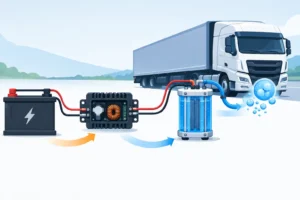
A DC-DC buck converter steps the voltage down rather than wasting it as heat like an old-style resistor arrangement. Set at 13.8V, it provides a supply close to the voltage a 12V HHO system expects while the 24V vehicle remains at its normal charging voltage.
Hydrogen gas production in an electrolyser is primarily linked to electrical current. More current through the electrolyte generally produces more hydrogen and oxygen gas, provided the cell remains within a safe and efficient operating range.
Voltage is still critical because it drives current through the cell. A buck regulator controls that driving voltage. By reducing 24V to 13.8V, it prevents the uncontrolled current surge that would occur if a 12V cell were connected straight to the vehicle batteries.
The practical effect is controlled, repeatable gas output. Rather than producing a short burst of excessive gas while overheating the cell, the system can produce gas at the rate the cell was engineered to handle. That is the output that matters for consistent operation over long highway kilometres, long generator run times or demanding off-road work.
A regulator also helps account for charging-voltage variation. A 24V vehicle does not always sit at exactly 24V. Alternator output changes with engine speed, battery condition, temperature and electrical load. A quality buck converter maintains its set output across a defined input range, so the HHO cell sees substantially less variation than it would through an improvised reduction method.

Note: The positive and negative pole, input and output connection are marked on the back of the product,be sure not to connect incorrectly
A 13.8V output does not guarantee a particular amp draw. Every HHO cell has its own electrical resistance, plate configuration, electrolyte mix and operating temperature. As the electrolyte warms up, resistance often falls and current may rise. This is why a system that looks fine during the first five minutes can draw too many amps after half an hour.
The regulator’s job is to hold voltage steady. The installer’s job is to ensure the cell’s normal operating current remains within the regulator, wiring, fuse and relay ratings. A current meter is not an optional decoration on a serious installation. It tells you what the generator is actually drawing under real operating conditions.
This distinction matters. A buck converter set to 13.8V is a voltage-regulating solution. It is not necessarily a constant-current device. If the cell draws 20A at operating temperature, the converter must be rated to supply that current continuously, not merely claim a 20A peak figure on a label.
For example, a 13.8V HHO cell drawing 20A needs around 276W at its output before allowing for conversion losses. On a 24V system, the converter will draw less current from the vehicle side, but it still needs thermal capacity, safe cable sizing and adequate airflow. Undersize the converter and it may run hot, reduce output, cycle on protection or fail altogether.
Some installers see a higher current reading as proof of a better system. That is a costly mistake. Excess current can increase visible bubbling, but it also increases heat. More heat can accelerate electrolyte consumption and create more water vapour or electrolyte mist in the gas stream.
The target is not the biggest possible current draw. The target is efficient, controlled production that suits the cell size and the engine application. A small generator pushed beyond its design limit will not become a larger generator. It will usually become a hotter, harder-to-maintain one.
For a commercial vehicle, that distinction affects uptime. A fleet operator needs a system that can run predictably on a long haul, not one that performs briefly in the workshop and then needs constant water checks or electrical repairs. A correctly matched 24V-to-13.8V buck regulator helps maintain that discipline.
The first requirement is input-voltage tolerance. Check that the regulator is rated for the actual maximum voltage of the charging system, not just the nominal 24V battery label. A unit intended for a limited 24V supply may not survive a 28V-plus alternator charging voltage or electrical spikes from heavy-duty equipment.
Output current rating comes next. Choose continuous capacity with headroom above the measured operating draw of the HHO cell. Heat is the enemy of electronic converters, particularly when fitted under a bonnet, near an engine bay, or in a confined machinery compartment. A converter that is barely adequate on paper is rarely adequate in Australian summer conditions.
Installation quality is equally important. Use appropriately rated cable, secure earth points, a fuse close to the power source and a relay or ignition-controlled trigger so the HHO system is not left operating with the engine off. Mount the converter away from direct exhaust heat, water spray and vibration where possible.
A sensible 24V HHO electrical layout includes these essentials:
Hydrogen and oxygen produced together are highly combustible. Do not store mixed HHO gas, do not allow leaks, and do not treat gas plumbing as an afterthought. Electrical control and gas safety work together.
After fitting the converter, test the output voltage with the engine running and accessories switched on. Then monitor cell current from cold start through to full operating temperature. If current rises beyond the intended range as the cell warms, do not assume the regulator has failed. The cell’s electrolyte condition may be changing the load.
Check converter temperature, cable warmth, fuse holders and terminal tightness after a sustained run. Any hot connection represents resistance and wasted power. It can also cause voltage loss at the cell, inconsistent gas output and eventual failure.
Water level and electrolyte condition should be checked routinely as part of normal HHO maintenance. A buck regulator protects a 12V system from a 24V supply, but it cannot compensate for contaminated water, incorrect electrolyte concentration, loose wiring or a poorly matched generator size.
For 24V trucks, generators, marine applications and heavy-duty equipment, the electrical conversion stage is not a minor accessory. It is the control point that lets a 12V HHO system operate safely on a 24V platform. Get the voltage reduction, current capacity and installation standard right first, then judge the system by stable operation over real working hours – not by a few minutes of aggressive bubbling in the shed.
Note: The positive and negative pole, input and output connection are marked on the back of the product,be sure not to connect incorrectly
by Gavan Knox MSc, BSc, BEd, Inventor
WhatsApp call +61 403177183
contact gavan@hfuel.com.au
https://hydrogenfuelsystems.com.au
Brilliant Invention Gen 20 Hydrogen Generator ---(update Feb 7... Full Story

by Gavan Knox HFS whats app +61 403177183 gavan@hfuel.com.au... Full Story
How 24V-to-13.8V Buck Configuration Regulators Affect HHO generation in... Full Story
A diesel that is smoking, using more fuel or... Full Story
How Do DC-DC Boost Regulators Affect Hydrogen Gas Production?... Full Story
Payment Methods Partner:

© 2023 - Hydrogenfuelsystems pty ltd