Brilliant Invention Gen 20 Hydrogen Generator July 2 2026
Brilliant Invention Gen 20 Hydrogen Generator ---(update Feb 7... Full Story


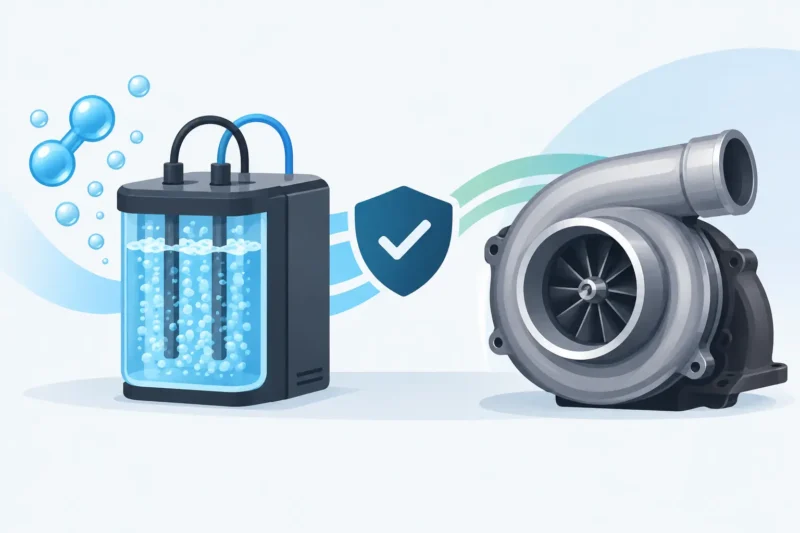
Will HHO Affect Turbochargers? Facts That Matter. A turbocharger works in a brutal environment. It spins at extreme speed, lives on clean oil and precise air flow, and copes with exhaust heat every time you put your foot down. So, will HHO affect turbochargers? Yes, it can affect the conditions a turbo operates under – but a correctly sized and properly installed HHO system does not mechanically drive, lubricate or place a direct load on the turbo.
What it can influence is combustion quality. That is where the real discussion starts. Better combustion can change exhaust energy, smoke output, throttle response and exhaust gas temperature. Poor installation, incorrect gas placement or chasing power without monitoring the engine can create problems. The difference comes down to setup, engine condition and how the vehicle is used.
No. HHO gas does not turn the turbo harder like an electric motor, and it does not replace a boost controller, intercooler or proper tune. The turbo is driven by exhaust gas passing through its turbine housing. Its speed is controlled by the engine’s exhaust energy and the factory boost-control system, including the wastegate or variable-geometry mechanism.
An on-board hydrogen generator introduces a small amount of hydrogen and oxygen gas into the intake stream. In a sound installation, it is fed into the engine where it can support a faster, cleaner burn of the main fuel charge. The gas volume is small compared with the total airflow consumed by a turbo diesel truck, a petrol ute or a marine engine under load. It is an enhancement to combustion, not a substitute for the air volume supplied by the compressor.
That distinction matters. If a turbo is already damaged, consuming oil, overboosting or suffering from a blocked air filter, an HHO kit will not repair it. The underlying fault still needs to be fixed. A hydrogen system should be fitted to an engine that is mechanically healthy and serviced correctly.
Turbochargers respond to heat and flow. Any change that improves how efficiently fuel burns can alter the exhaust conditions reaching the turbine. On diesel engines, the most visible sign is often reduced soot under load. Less unburnt fuel leaving the cylinders means less smoke through the exhaust system and less contamination building through the turbine, exhaust gas recirculation system and intake path.
A cleaner burn may also improve response when the vehicle is carrying weight, towing or working long hours. That is valuable for owner-drivers, fleets, 4WD operators and generator users because the engine does not need to work as hard to produce the same usable output. The benefit is not that HHO magically creates boost. The benefit is that the engine can make more effective use of the fuel and air it already has.
Exhaust gas temperature, or EGT, is the measurement worth watching. High EGT is hard on exhaust valves, manifolds, turbo housings and turbine wheels. In many practical applications, improved combustion and less smoke can support lower EGT for the same workload. But it depends on the engine, fuel system condition, load, ambient temperature, tuning and driving habits.
If extra fuel is added simply to chase maximum power, EGT can rise quickly. That is not an HHO issue alone. It is a calibration and operating issue. A sensible operator measures the result rather than relying on guesswork.
A turbo diesel that tows a caravan through summer heat, hauls tools every day or carries heavy loads needs monitoring. An EGT gauge and boost gauge provide useful information before and after any performance-related change. They show whether the engine is operating within a sensible range when it is working hardest.
For a standard vehicle using HHO primarily for fuel economy and cleaner combustion, factory boost control should remain in charge. Do not alter wastegate settings or variable-geometry turbo control merely because the vehicle feels stronger. Stronger response can tempt drivers to use more throttle, tow more weight or hold higher gears for longer. That extra workload can erase fuel savings and increase component stress.
Petrol turbo engines can benefit from efficient combustion, but they are less forgiving of incorrect installation than many diesel applications. They rely on precise fuel control, knock sensing and ignition timing. A modern direct-injection petrol engine can react to changes in intake conditions very quickly.
The HHO gas entry point must be selected carefully, particularly where mass air flow sensors, manifold pressure sensors, intercooler plumbing and crankcase ventilation systems are involved. Introducing gas in the wrong location can create air-metering issues, fault codes or inconsistent idle quality. It can also expose plastic intake components to an unnecessary risk if a backfire occurs.
Any petrol turbo vehicle with an aftermarket tune should be assessed as a complete package. The tuner needs to know what has been fitted, and the system must not interfere with sensor readings, closed-loop fuelling or boost control. A clean installation with proper fusing, relays, flashback protection and secure hose routing is non-negotiable.
Diesel engines are popular HHO candidates because they often spend long periods at steady load. Think road trains, delivery vehicles, tradie utes, 4WD touring rigs, pumps, marine engines and generators. These applications burn significant fuel and can build soot through the intake and exhaust systems over time.
When combustion is more complete, a diesel may show less visible smoke, sharper low-end response and reduced fuel use under comparable operating conditions. The key phrase is comparable operating conditions. Fuel results need to be measured over similar loads, routes, idling time and driving styles. One tank is not a meaningful test on its own.
A clean-burning diesel can also reduce the amount of carbon reaching the turbine side of a variable-geometry turbo. That does not mean HHO will free a seized vane mechanism or cure a neglected EGR system. It means reducing future soot load may support cleaner operation when the vehicle is already maintained properly.
The turbo itself is rarely harmed by HHO gas. Problems arise when the system is installed carelessly or when a pre-existing engine issue is ignored. There are four areas that deserve professional attention:
A quality install also protects the turbo indirectly by preserving the basics it depends on: unrestricted air intake, clean oil, correct drain and feed lines, healthy intercooler hoses and factory boost control. If your turbo has shaft play, oil leakage, siren noise or inconsistent boost, diagnose that first.
Start with the engine’s baseline condition. Replace blocked air filters, repair boost leaks, service the oil system and scan for fault codes. On a diesel, inspect the intercooler pipes, EGR operation and exhaust system. On a petrol turbo, check plugs, coils, fuel trims and any history of detonation or boost-control faults.
Then establish real numbers. Record fuel consumption, usual payload, route type, idle hours and towing weight where relevant. If the vehicle is a work asset, track kilometres per litre, litres per 100 km or litres per operating hour. That gives you a proper before-and-after comparison rather than a hopeful estimate.
Hydrogen Fuel Systems offers HHO kit sizes for different engine and operating requirements, but system choice should be based on the application, not marketing hype. A light passenger vehicle, a hard-working diesel ute and a large generator do not have the same airflow, electrical capacity or fuel demand.
HHO can affect the operating environment around a turbocharger by supporting cleaner combustion and potentially reducing soot and EGT under comparable load. It does not directly increase turbo speed, replace boost hardware or fix mechanical faults. The results depend on a healthy engine, correct kit sizing, safe installation and realistic measurement.
For the operator paying for every litre of diesel or petrol, that is the useful point. Fit the right system, monitor the engine that earns its keep, and let verified operating data decide whether the improvement is working for your vehicle.
Monday, November 16, 2026
Brilliant Invention Gen 20 Hydrogen Generator ---(update Feb 7... Full Story

An HHO system that draws too little current can... Full Story
Will HHO Affect Turbochargers? Facts That Matter - Nov... Full Story

Marine Vessel HHO Fuel Trial for Real Fuel Savings... Full Story
Payment Methods Partner:

© 2026 Hydrogen Fuel Systems Pty Ltd