Brilliant Invention Gen 20 Hydrogen Generator July 2 2026
Brilliant Invention Gen 20 Hydrogen Generator ---(update Feb 7... Full Story
Perth, West Australia




by Gavan Knox MSc, BSc, BEd, Inventor
WhatsApp call +61 403177183
contact gavan@hfuel.com.au
https://hydrogenfuelsystems.com.au
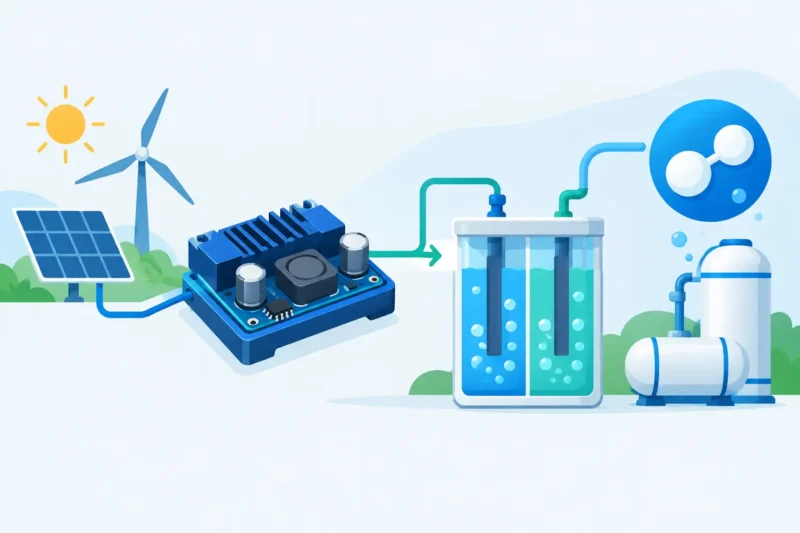
How Do DC-DC Boost Regulators Affect Hydrogen Gas Production? – Oct 2. A hydrogen generator is only as consistent as the power feeding it. So, how do DC-DC voltage boost regulators affect hydrogen gas production? They can maintain the electrical conditions a cell needs to produce gas consistently when vehicle supply voltage sags, wiring losses rise or electrical loads change. Used correctly, a boost regulator supports stable hydrogen output. Used badly, it can turn electrical power into excess heat, shorten cell life and overload wiring.
For vehicle owners chasing practical fuel savings, cleaner combustion and stronger engine response, the point is not simply to force more voltage into an HHO cell. The point is controlled power. A properly matched system produces usable gas without creating a heat problem under the bonnet.

A DC-DC boost regulator takes a lower DC input voltage and raises it to a higher output voltage. In a vehicle, that input may vary considerably. A nominal 12-volt electrical system can sit lower during cranking or heavy accessory use, then climb well above 14 volts while the alternator is charging. Long cable runs, undersized wiring, poor earth connections and corroded terminals can reduce the voltage that actually reaches the hydrogen generator.
That variation matters because electrolysis depends on electrical current passing through the electrolyte. More current generally means a higher rate of hydrogen and oxygen gas production, provided the cell remains within its safe operating range. Voltage is the pressure that drives current through the circuit, while resistance in the cell, wiring and connections limits how much current flows.
A boost regulator can compensate where supply voltage at the cell is too low. It can hold a selected output voltage despite modest drops at the input, helping the generator maintain a more predictable output as the vehicle operates. This is especially relevant in utes, 4WDs, marine engines and generators where cable runs may be longer and loads are less predictable.
But there is no free power. If a regulator boosts voltage, it draws more current from the source to do it. It also loses some energy as heat. A unit boosting 12 volts to a higher voltage does not magically increase electrical capacity from the alternator or battery. The full system must be designed around the required input current, cable size, fuse protection and alternator headroom.
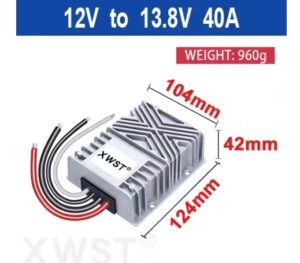
The main benefit of a correctly specified boost regulator is consistency. Without regulation, a hydrogen cell may produce strongly at one engine speed and weakly at another. It can also react to headlights, air-conditioning fans, winches, pumps or other accessories switching on. A stable power supply helps reduce those swings.
Consistency is valuable because an on-board hydrogen system is intended to support combustion under real operating conditions, not just look impressive on a bench. A fleet vehicle needs predictable operation across long highway runs, stop-start work, hills and hot days. A generator needs stable performance as load changes. A boat needs electrical components that cope with vibration, heat and variable engine speed.
A well-configured regulated supply also makes commissioning easier. Instead of guessing whether a change in gas production came from electrolyte concentration, water quality, engine load or supply voltage, installers have a more controlled electrical baseline. That makes it easier to inspect the actual current draw and confirm the system is working as designed.
Hydrogen production is closely tied to current, not voltage alone. Raising voltage may increase current through the cell, but only until the cell’s resistance, temperature and electrolyte condition establish a new balance. If voltage is lifted too far, current can rise beyond the efficient range and the extra energy becomes heat rather than useful gas production.
That is why a boost regulator should not be selected on voltage alone. Its continuous current rating, thermal design, efficiency, input-voltage range and ability to handle automotive electrical noise all matter. A cheap regulator that claims a large peak rating but cannot sustain the load is a weak point in an otherwise well-built HHO system.
The most common mistake is assuming higher voltage automatically means better hydrogen production. It may initially produce more gas, but it can also make the electrolyte heat rapidly. As temperature rises, resistance often falls, allowing current to climb further. That can create a runaway cycle of higher current, more heat, more vapour and faster wear.
Excess heat causes practical problems. It can increase water consumption, push moisture through the system, discolour or degrade components, and reduce the long-term reliability of the cell. It can also make output inconsistent. A system that starts cold at a sensible current draw and then climbs sharply after twenty minutes is not properly controlled.
The target is efficient gas production at a stable operating temperature, not the highest possible bubbles-per-minute figure. The right regulator setting depends on cell design, plate area, electrolyte concentration, reservoir capacity, ambient temperature and the vehicle’s duty cycle. A ute doing short suburban trips has different demands from a prime mover running all day across regional Australia.
A voltage boost regulator is strongest when paired with a way to monitor or limit current. This may involve a properly sized controller, a current display, temperature checks during setup or a system engineered to operate within a defined range. The important thing is knowing what the cell draws once it is warm, not only what it draws immediately after start-up.
For example, if a regulator holds the voltage perfectly but the cell current rises continually as electrolyte warms, the regulator has solved only half the problem. The installer still needs to address electrolyte concentration, thermal control or the maximum current available to the cell.
Before fitting a boost regulator, confirm whether it is needed. Many vehicle hydrogen generator systems are designed to operate directly from a properly protected 12-volt or 24-volt supply. Adding another electronic component only makes sense where it solves a real voltage-drop or control issue.
Start with the alternator and battery system. Check charging voltage with the engine running, then measure voltage at the hydrogen generator under load. If the difference is significant, improving cable size, terminals, earth points and relay connections may be a better first move than boosting voltage. A regulator cannot fix poor wiring practices.
Next, calculate input current rather than focusing only on output. If the hydrogen cell needs a certain number of watts, the regulator will require slightly more watts from the vehicle supply because no converter is 100 per cent efficient. The input-side cable, fuse and relay must be rated for that real demand. Mount the regulator where it receives airflow and is protected from direct water spray, exhaust heat and vibration.
In automotive use, connect the system through appropriate fusing and switched control so it runs only when intended. A hydrogen generator should not be left operating unattended from a parked vehicle battery. Use quality terminals, secure cable routing and a reliable earth. Gas generation, electrical current and engine-bay heat are not areas for shortcuts.
A properly designed power setup gives the cell a repeatable operating point. Hydrogen output remains stable as the engine runs, current stays within the intended range after warm-up, wiring remains cool and the regulator does not run at its limit. That is the foundation for reliable combustion support, rather than a system that performs differently every time the vehicle is driven.
Hydrogen Fuel Systems focuses on matched components because output is never just about the generator body. The cell, power supply, wiring, water management and installation method work as one system. Get the electrical side right and you protect the equipment while giving the engine a consistent hydrogen supply to work with.
The practical test is simple: measure voltage at the cell, measure current once the system is hot, inspect temperatures and confirm that all wiring and connections remain sound. Build for controlled output, not maximum strain, and the system has a far better chance of delivering dependable results kilometre after kilometre.
by Gavan Knox MSc, BSc, BEd, Inventor
WhatsApp call +61 403177183
contact gavan@hfuel.com.au
https://hydrogenfuelsystems.com.au
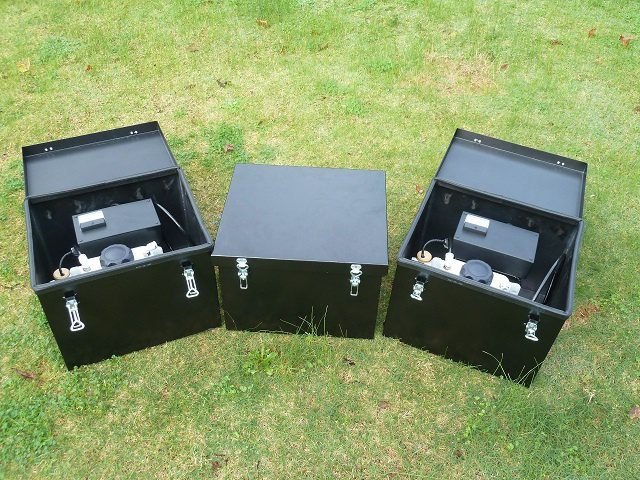
Brilliant Invention Gen 20 Hydrogen Generator ---(update Feb 7... Full Story

by Gavan Knox HFS whats app +61 403177183 gavan@hfuel.com.au... Full Story
A diesel that is smoking, using more fuel or... Full Story
How Do DC-DC Boost Regulators Affect Hydrogen Gas Production?... Full Story
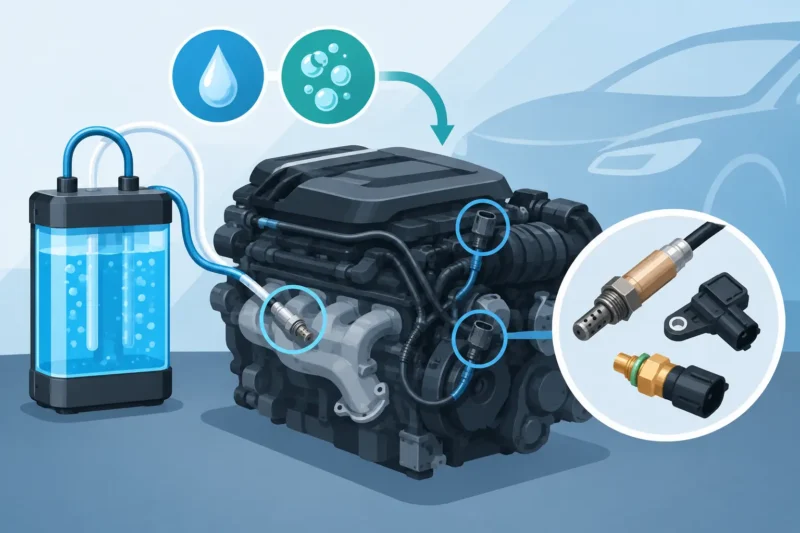
## Can HHO Affect Engine Sensors? What to Check... Full Story
Payment Methods Partner:

© 2023 - Hydrogenfuelsystems pty ltd