Brilliant Invention Gen 20 Hydrogen Generator July 2 2026
Brilliant Invention Gen 20 Hydrogen Generator ---(update Feb 7... Full Story
Perth, West Australia





by Gavan Knox MSc, BSc, BEd.
WhatsApp call +61 403177183
contact gavan@hfuel.com.au
https://hydrogenfuelsystems.com.au
Diesel Fuel Saving Upgrades That Earn Their Keep – Aug 16. A diesel that is burning more fuel than it should rarely announces itself with a dramatic breakdown. It shows up at the bowser, on the monthly fleet report and in the gap between what your vehicle should cost to run and what it actually costs. The right diesel fuel saving upgrades target the causes of wasted fuel – incomplete combustion, excess idling, poor airflow, driveline drag and a vehicle that is simply not being maintained to work efficiently.
For an owner-driver, a tradie with a loaded ute, a transport operator or a business running pumps, generators and machinery, fuel consumption is not a minor operating detail. It is a direct hit on margin. That is why worthwhile upgrades need to be measured by more than a promise on a box. They need to suit the engine, the duty cycle and the kilometres or hours being worked.

Before fitting any upgrade, establish a proper baseline. Record litres used, kilometres travelled or hours operated, payload, route type and idle time. A highway prime mover running consistent interstate work gives cleaner data than a stop-start delivery truck, but both can be measured when the same conditions are tracked over time.
Do not rely on one tank of fuel. Weather, traffic, load weight, towing, tyre pressure and driving style can distort a short test. Track enough operating time to identify a genuine average, then compare results after the change. This is how you separate a useful investment from a feel-good modification.
The other reason to start here is that a sudden jump in fuel use may be a fault, not an upgrade opportunity. Dirty air filters, sticking brakes, leaking boost hoses, worn injectors, a failing thermostat, incorrect tyre pressures and overloaded roof racks can all cost fuel. Fixing these basics first protects the return from every performance or combustion upgrade that follows.
The best upgrade path depends on whether the engine spends its life hauling, idling, towing, working off-road or running at a steady load. There is no single part that delivers the same result across every diesel application. However, several areas consistently deserve attention.
A diesel engine needs a clean, unrestricted air supply and a sealed intake tract. Replace a blocked filter with the correct quality filter, inspect ducting for cracks and make sure intercooler hoses and clamps are doing their job. A boost leak makes the turbo work harder while reducing the air available for efficient combustion.
An intercooler upgrade can help where an engine works hard in high ambient temperatures, towing conditions or sustained load. Cooler intake air may support more consistent performance, but it is not a universal fuel-saving fix. On a lightly used vehicle, the payback may be slow. On a heavily loaded 4WD or commercial diesel, stable charge-air temperatures can be far more valuable.
Modern diesel injection systems work at extreme pressure. Even small deterioration in spray pattern or fuel delivery can affect combustion quality, power and economy. Regular filter changes, clean fuel handling and prompt attention to water contamination are non-negotiable.
If an engine has hard starting, rough idle, excessive smoke, poor response or worsening consumption, diagnose the fuel system before adding performance parts. Injector testing, scan-tool data and a proper workshop inspection cost less than chasing the wrong problem for months.
A professionally developed diesel calibration can alter torque delivery, throttle response and fuel strategy. Done correctly for the vehicle and its intended work, it may improve usable torque and reduce the need to work the engine as hard. Done badly, it can increase exhaust gas temperatures, place more stress on components and create expensive reliability issues.
The target should not be the biggest dyno number. It should be safe, usable torque in the operating range where the vehicle spends most of its time. A towing vehicle needs a different approach from a weekend street vehicle. Any calibration should account for transmission limits, exhaust temperatures, cooling capacity and Australian compliance requirements.
On-board hydrogen generation is one of the more discussed diesel fuel saving upgrades because it is designed to address combustion itself. An HHO system produces hydrogen and oxygen gas on demand from water, then introduces that gas into the engine intake in controlled amounts. The intended result is a faster, more complete burn of the diesel charge.
For high-use diesel applications, improved combustion can mean less fuel wasted through incomplete burn, cleaner exhaust behaviour and a sharper engine response. The system does not replace diesel fuel, and it is not a licence to ignore servicing or drive harder. Its value comes from improving the efficiency of the fuel already being used.
A properly matched kit matters. Generator size, electrical supply, installation position, hose routing, safety components and engine capacity all affect the outcome. Hydrogen Fuel Systems supplies different generator capacities for applications ranging from passenger vehicles and 4WDs to trucks, marine engines and generators. The right approach is application-specific, not one-size-fits-all.
Treat proof seriously. Ask for documented test material, installation guidance and evidence relevant to your engine type or duty cycle. A system that has been fitted correctly and evaluated against real fuel records gives you something useful to act on. A vague claim without before-and-after data does not.
Tyres are often ignored because they are not glamorous, yet they can quietly drain fuel every day. Underinflation increases rolling resistance and heat. Poor wheel alignment makes tyres scrub across the road. Aggressive all-terrain patterns may be the right choice for remote work, but they generally bring a trade-off in road noise, rolling resistance and fuel use.
Set pressures for the actual load and check them cold. For fleet vehicles, a scheduled pressure and alignment check can be one of the simplest ways to stop fuel waste across multiple vehicles. It will not deliver the excitement of a power upgrade, but the savings are repeatable.
A sound product fitted poorly can become a source of faults, leaks or unreliable readings. This is particularly true with electrical accessories and hydrogen enhancement systems. Wiring must be fused correctly, connections must be secure, hoses must be routed away from heat and moving parts, and brackets must withstand vibration.
Installation should also allow for routine checks. Can the water level be inspected easily? Are filters accessible? Is the system protected from dust, moisture and engine-bay heat? A clean installation is not just about appearance. It is what keeps an upgrade operating reliably after thousands of kilometres on corrugations, job sites or long highway runs.
For commercial fleets, standardising the installation process is critical. Use the same components, fitting method and monitoring process across comparable vehicles. This makes performance easier to review and prevents one-off installation errors from being mistaken for product performance.
A fuel-saving upgrade should be assessed against its installed cost, expected life and the amount of fuel the asset consumes. A modest percentage improvement can be commercially significant on a truck, generator or marine engine that burns large volumes every week. The same upgrade may take longer to pay back on a low-kilometre commuter.
Use a simple calculation: work out your average litres used over a defined period, multiply that by your fuel price, then compare the cost before and after the upgrade under similar operating conditions. Include maintenance benefits only where they can be demonstrated. Lower emissions, improved driveability and reduced soot loading may matter, but they should not be used to disguise weak fuel results.
Also account for the way the vehicle is driven after the upgrade. Extra torque can improve efficiency when it lets the engine hold a gear with less throttle. It can also increase fuel use if the driver uses the new performance at every set of lights. The equipment and the operator both influence the final number.
A sensible diesel improvement plan begins with maintenance and data, then moves to upgrades that match the actual work. A touring 4WD may benefit from improved airflow checks, tyre management and a correctly sized hydrogen system. A towing vehicle may need careful calibration and cooling attention. A generator operator should focus on stable load testing, clean fuel and a system engineered for long running hours.
The strongest result usually comes from several small, disciplined improvements rather than one expensive gamble. Get the engine healthy, remove obvious losses, fit technology that suits the application and keep recording the numbers. When fuel is one of your biggest costs, proof is not paperwork – it is the reason the upgrade earns its place.
by Gavan Knox MSc, BSc, BEd.
WhatsApp call +61 403177183
contact gavan@hfuel.com.au
https://hydrogenfuelsystems.com.au
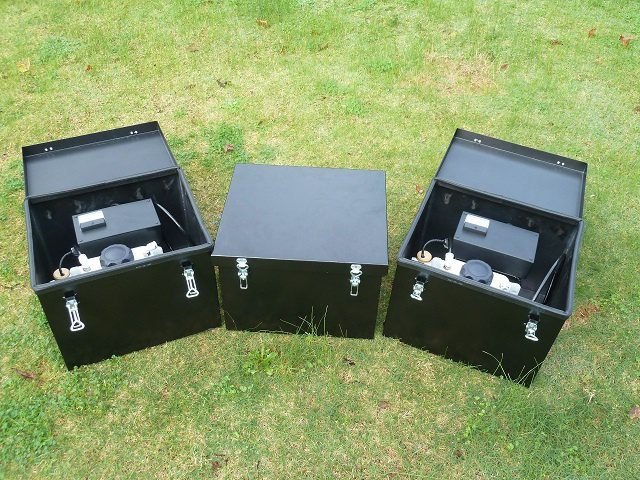
Brilliant Invention Gen 20 Hydrogen Generator ---(update Feb 7... Full Story

by Gavan Knox HFS whats app +61 403177183 gavan@hfuel.com.au... Full Story
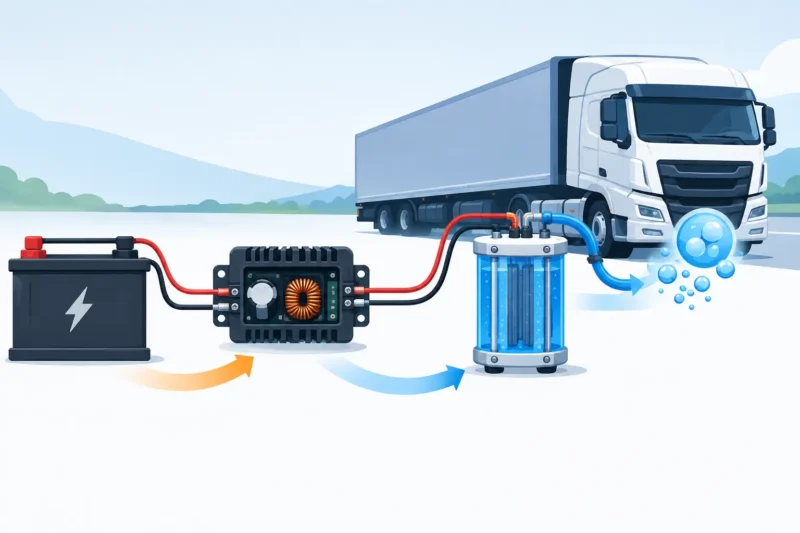
How 24V-to-13.8V Buck Configuration Regulators Affect HHO generation in... Full Story
A diesel that is smoking, using more fuel or... Full Story

How Do DC-DC Boost Regulators Affect Hydrogen Gas Production?... Full Story
Payment Methods Partner:

© 2023 - Hydrogenfuelsystems pty ltd