Brilliant Invention Gen 20 Hydrogen Generator July 2 2026
Brilliant Invention Gen 20 Hydrogen Generator ---(update Feb 7... Full Story
Perth, West Australia





by Gavan Knox MSc, BSc, BEd, Inventor
WhatsApp call +61 403177183
contact gavan@hfuel.com.au
https://hydrogenfuelsystems.com.au
Excavator HHO Performance Example for Fuel Savings – Aug 11. A 20-tonne excavator can burn through a serious fuel budget before the month is out. That is why an excavator HHO performance example needs more than a claim about better combustion. It needs operating hours, litres consumed, comparable digging work and a clear record of what changed after installation.
For earthmoving contractors, fuel is not an abstract cost. It is a daily operating expense that rises with idle time, poor loading, tough ground, long travel distances and an engine that is working below its best. An on-board HHO system is intended to introduce a controlled hydrogen and oxygen gas blend into the intake stream, supporting a cleaner and more complete burn of the diesel charge. The potential outcomes are lower fuel use, sharper engine response and less visible exhaust smoke under load. The result on any particular machine, however, depends on the test conditions and the quality of the installation.

Excavators do not operate like highway trucks. A machine may spend one hour trenching in hard clay, another loading loose spoil, then sit idling while a truck changes over. Fuel consumption can swing heavily across those tasks. Comparing one day of light work with one day of difficult excavation will not prove anything.
A credible test compares like with like. Record the same operator where possible, the same attachment, similar material, similar ambient conditions and a meaningful number of hours. Fuel should be measured from a consistent fill point or, better again, through calibrated fuel-use data. Machine hours, idle hours and production quantities all matter.
The strongest performance record does not rely on a single tank. It shows a baseline period before the HHO system, followed by an equivalent operating period after the system has been fitted and checked. That gives a fleet owner something useful: a return-on-investment calculation built around their machine, their fuel price and their workload.
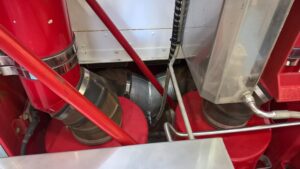

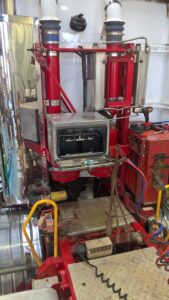
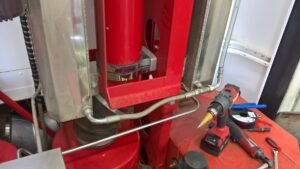
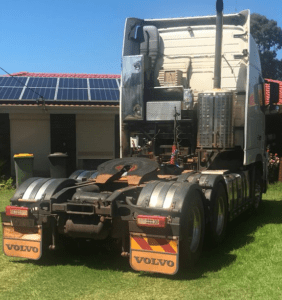
Consider an illustrative test on a 20-tonne diesel excavator working on bulk earthworks. The operator uses a 1.0 cubic metre bucket to load spoil into tippers over two five-day periods. The ground conditions are similar, the same operator remains in the cab and the machine receives no other engine modifications between tests.
During the baseline period, the excavator works 42.0 engine hours and consumes 672 litres of diesel. That equals 16.0 litres per hour. It loads an estimated 1,680 cubic metres of material, or 0.40 litres per cubic metre.
After fitting and commissioning an appropriately sized HHO system, the second test period records 42.5 engine hours and 625 litres of diesel while moving an estimated 1,700 cubic metres. Fuel consumption works out at 14.7 litres per hour, or approximately 0.37 litres per cubic metre.
| Measurement | Baseline period | HHO test period | |—|—:|—:| | Engine hours | 42.0 hours | 42.5 hours | | Diesel used | 672 L | 625 L | | Average fuel burn | 16.0 L/hour | 14.7 L/hour | | Material moved | 1,680 m³ | 1,700 m³ | | Fuel per cubic metre | 0.40 L | 0.37 L |
On these figures, the machine uses 47 fewer litres across a very similar work period. The hourly reduction is about 8.1 per cent. Per cubic metre moved, the improvement is slightly stronger because production also increased modestly.
That does not mean every excavator will return the same number. It does show the right way to assess the system: compare the fuel consumed against the work completed, not just the reading on a fuel gauge.
If diesel costs $2.10 per litre, saving 1.3 litres per operating hour is worth $2.73 per hour. At 1,500 operating hours a year, that is $4,095 in annual fuel savings on one excavator, before allowing for variations in fuel price and workload.
For a contractor running several machines, the numbers become more significant. A saving that looks modest per hour can materially reduce site operating costs over a full year. That is the commercial case for measuring results carefully rather than treating HHO as a vague add-on.

Fuel data takes time to build, but operators often report changes sooner. Under repeated bucket loading, a well-set-up system may produce a more willing response when the engine comes under load. The machine may hold revs more cleanly through the hydraulic demand, particularly where the engine previously felt lazy or smoky.
Exhaust appearance can also be a useful observation, although it is not a laboratory test. Reduced black smoke during hard acceleration or heavy digging can suggest a more complete combustion event. It does not replace checking injectors, air filters, turbocharger condition or fault codes. An HHO system should complement a sound engine, not be used to hide a maintenance issue.
There is also an electrical trade-off. The generator requires power from the excavator’s charging system, so system sizing, wiring protection and current draw must be right. A poorly sized unit or untidy installation can create more problems than it solves. Properly matched equipment, fused wiring, secure hose routing and a reliable water supply are non-negotiable on machinery that vibrates all day.

An excavator installation is not a passenger-car installation with longer cables. Heat, dust, vibration and service access need to be planned from the start. The generator should be mounted securely away from direct exhaust heat and where the reservoir can be inspected during routine pre-start checks. Hoses must be protected from chafing, routed clear of moving components and fitted so they cannot become a snag hazard.
The electrical supply should be switched correctly, fused close to the power source and matched to the machine’s voltage and alternator capacity. On electronically controlled engines, the aim is a stable, controlled gas supply that works with the engine’s existing management system, not against it.
Water quality matters too. Contaminated water can affect system operation and maintenance intervals. Use the specified electrolyte and distilled or demineralised water where required by the system instructions. Check fluid level, connections and filter condition as part of normal machine servicing.
Hydrogen Fuel Systems offers generator sizes and components intended for demanding engine applications, but the right unit should be selected according to engine displacement, electrical capacity and the excavator’s duty cycle. Bigger is not automatically better. Correct matching produces a more dependable result than simply fitting the largest generator available.

Before installation, establish a baseline over at least 30 to 50 operating hours where practical. Record date, start and finish hours, litres filled, task type, idle time, attachment used and production output. If the excavator has telematics, keep those reports with the fuel records.
After installation, repeat the same recordkeeping for an equivalent period. Do not judge the result after a short warm-up or one easy shift. Look for trends over enough hours to smooth out differences in ground conditions and operator behaviour.
It is also smart to exclude unusual events from the comparison. Extended idling because of rain, a hydraulic breakdown, a difficult rock section or a day spent travelling around site can distort the numbers. Keep the notes honest. Clean data makes a stronger case than exaggerated savings ever will.
If results are below expectation, check the basics first: air filtration, injector health, turbo condition, cooling system performance, alternator output, wiring connections and HHO gas production. Diesel engines respond best when the underlying machine is maintained properly.

An HHO system should earn its place on an excavator through measured litres, operating hours and production output. A credible result may be fuel savings, better response under load or improved fuel use per cubic metre moved. The actual outcome depends on the machine and the work, but a disciplined before-and-after test turns the conversation from theory into site numbers.
Start with a clean baseline, fit the system correctly and give it enough operating time to prove itself. Your excavator’s fuel records will tell the story that matters.
by Gavan Knox MSc, BSc, BEd.
WhatsApp call +61 403177183
contact gavan@hfuel.com.au
https://hydrogenfuelsystems.com.au




Brilliant Invention Gen 20 Hydrogen Generator ---(update Feb 7... Full Story

by Gavan Knox HFS whats app +61 403177183 gavan@hfuel.com.au... Full Story
How 24V-to-13.8V Buck Configuration Regulators Affect HHO generation in... Full Story
A diesel that is smoking, using more fuel or... Full Story

How Do DC-DC Boost Regulators Affect Hydrogen Gas Production?... Full Story
Payment Methods Partner:

© 2023 - Hydrogenfuelsystems pty ltd