
Brilliant Invention Gen 20 Hydrogen Generator July 2 2026
Brilliant Invention Gen 20 Hydrogen Generator ---(update Feb 7... Full Story
Perth, West Australia




by Gavan Knox MSc, BSc, BEd.
WhatsApp call +61 403177183
contact gavan@hfuel.com.au
https://hydrogenfuelsystems.com.au
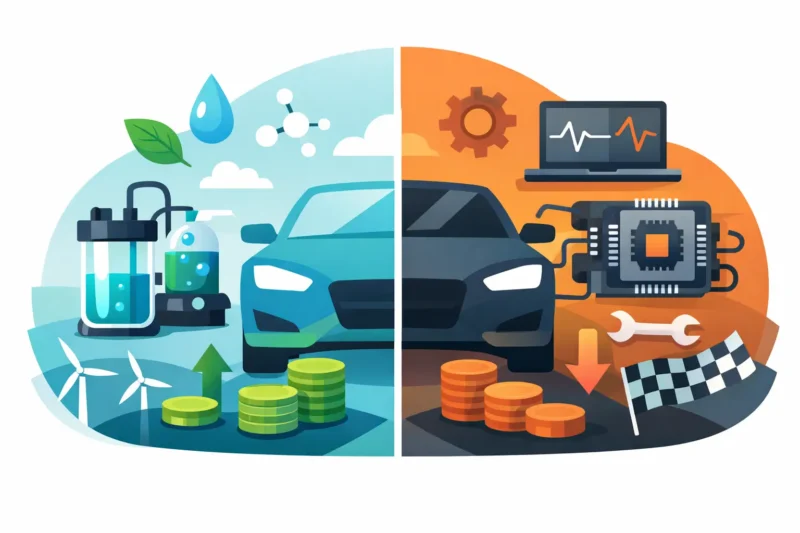
Hydrogen Kit vs ECU Remap: What Pays Back? A Great question but easy to answer today when the Federal Government reintroduces a full Fuel Excise tax on every liter of Diesel, Petrol or LPG fuel for Australians to pay to compensate the Multinational oil companies taking advantage of the Iran War maintained by the “DROP KICK” Donald (F___ a Duck) Trump.
A loaded ute, a diesel work truck or a generator running long shifts does not need more marketing talk. It needs lower operating costs without turning a reliable engine into a workshop project. That is why the hydrogen kit vs ecu remap question matters. Both modifications target combustion and drivability, but they work in completely different ways, carry different risks and suit different owners.
An ECU remap changes the engine’s electronic calibration. A hydrogen generator kit adds a small, on-board hydrogen and oxygen gas flow – often called HHO – to support combustion. One changes the commands sent to the engine; the other changes what enters the combustion process. If you are chasing fuel savings, torque, cleaner operation or a better return from a hard-working vehicle, that distinction is everything.
An ECU remap modifies the software parameters that control fuel delivery, boost pressure, timing, torque limits and throttle response. On a turbo-diesel, a remap can make the vehicle feel substantially stronger by increasing available torque and sharpening response. It can also be calibrated for economy, towing or performance, although these objectives do not always align.
A hydrogen kit uses electricity from the vehicle’s charging system to generate hydrogen-rich gas on demand from water. That gas is introduced into the intake system in controlled quantities. The intended result is a more complete, cleaner combustion event, particularly in engines that spend their lives under load, idling, towing or travelling long distances.
Put simply, a remap asks the engine to behave differently. A hydrogen system is designed to improve the combustion environment while retaining the factory ECU strategy. That makes a hydrogen kit attractive to operators who want to target efficiency and engine cleanliness without rewriting the vehicle’s core calibration.
There is no question that a quality ECU remap can deliver noticeable gains. For a driver wanting stronger overtaking power, better throttle response or more pulling force with a caravan or trailer, remapping is often the fastest route to a seat-of-the-pants result.
The trade-off is that more power is rarely free. Extra boost and fuelling can increase cylinder pressure and exhaust gas temperatures. On a vehicle already working hard, that may place greater demand on pistons, turbochargers, transmissions, cooling systems and clutches. The quality of the tune matters enormously, as does the condition of the engine before tuning begins.
Economy remaps are more nuanced. A carefully calibrated tune may improve fuel use when the driver maintains the same workload and changes driving habits accordingly. But many owners use the extra torque more often. The vehicle feels better, so it gets driven harder, tows more or accelerates faster. Fuel savings can disappear quickly when extra performance becomes the main benefit.
There are also practical considerations. Some remaps are detectable during dealer diagnostics, may affect manufacturer warranty coverage and can create insurance or roadworthiness questions. In Australia, any modification needs to remain compliant with applicable state rules, emissions requirements and insurer conditions. Never assume that a generic file is suitable for every engine, transmission, injector set or towing application.
A properly selected hydrogen generator kit is aimed at owners who measure results at the bowser, in fleet records or through operating hours. This is especially relevant for diesel 4WDs, delivery vehicles, trucks, marine engines and generators that consume fuel day after day.
The kit produces gas only while the engine is operating, using an electrolyser, power supply components, water reservoir and intake delivery hardware. System size matters. A small passenger vehicle has very different requirements from a high-displacement diesel truck or a generator working under continuous load. Oversizing or undersizing a system is not a shortcut to better results – it is poor application matching.
The practical appeal is straightforward. A hydrogen system does not need to chase headline power figures to be worthwhile. Its value is in supporting more efficient combustion under real operating conditions. For a fleet operator, even a modest and repeatable reduction in fuel use can be worth far more than a one-off horsepower number.
That said, results depend on the vehicle, duty cycle, installation quality, engine condition and how fuel use is measured. A worn injector, blocked air filter, dragging brake, boost leak or poor tyre pressure will distort any test. Treat claims of savings as something to verify on your own equipment, not as a substitute for baseline maintenance and proper measurement.
Hydrogen Fuel Systems focuses on application-specific HHO systems, installation documentation and technical evidence because the hardware must suit the engine and the job. A Gen 10, Gen 15, Gen 20 or Gen 25 system should be selected around engine capacity, fuel type and operating load – not bought on guesswork.
For fuel savings alone, the answer is not automatically an ECU remap or a hydrogen kit. It depends on how the engine is used.
A remap can help when the factory calibration is conservative and the vehicle can hold higher gears with less throttle input. It may be useful for a regularly towed 4WD or a commercial diesel that needs more low-down torque. But if the tune increases fuelling heavily, its main outcome may be greater performance rather than lower fuel consumption.
A hydrogen kit is more aligned with an efficiency-first approach, particularly where the vehicle runs consistent routes, steady loads or long hours. This makes it a serious consideration for owner-drivers, couriers, tradies, marine operators and generator users who can accurately compare litres per 100 kilometres or litres per operating hour.
The strongest test is not a short drive after installation. Record fuel purchases, kilometres, idling time, load carried, routes and operating hours before and after the modification. Run the comparison over enough time to account for traffic, weather, payload and driving behaviour. If there is no disciplined baseline, there is no meaningful return-on-investment figure.
If your priority is maximum torque and acceleration, an ECU remap normally has the clearer advantage. It directly changes the engine’s torque model and fuel strategy. A conservative remap from a capable specialist can make a vehicle more enjoyable and more capable under load.
If your priority is supporting combustion quality while keeping the factory ECU calibration intact, a hydrogen kit takes a different path. Many operators are interested in the potential for reduced carbon build-up, smoother operation and lower visible exhaust smoke in suitable diesel applications. These are outcomes that should be assessed through condition checks, emissions testing and long-term operating data rather than assumed from a single drive.
Reliability comes back to installation and restraint. A poor tune can overstress mechanical components. A poorly fitted hydrogen system can create electrical, plumbing or intake issues. Neither modification should be treated as a bolt-on miracle. Use correct fusing, cable sizing, secure mounting, safe hose routing and a system designed for the application.
An ECU remap can appear cheaper upfront, especially when compared with a larger hydrogen system. However, upfront price is only one part of the equation. Consider dyno time, transmission tuning, potential supporting modifications, insurance disclosure and the effect on warranty arrangements.
A hydrogen kit has hardware and installation costs, plus ongoing requirements such as maintaining water quality and checking components. Its payback calculation should be based on actual fuel spend. A vehicle using $150 of fuel each week has a very different savings opportunity from a truck or generator burning that amount in a day.
Before choosing either option, work out your fuel baseline, annual consumption and realistic savings target. Then calculate payback using conservative figures. If the numbers only work under perfect conditions, the investment is not ready. If the numbers stack up using ordinary operating data, you have a business case rather than a sales pitch.
Yes, a hydrogen kit and an ECU remap can be used on the same vehicle, but only when the approach is deliberate. Start with the engine in sound mechanical condition. Install the hydrogen system correctly, establish its performance over a meaningful period, then consider whether a conservative calibration change is still required.
Do not stack modifications simply because more sounds better. An aggressive tune combined with poor maintenance, heavy towing and high exhaust temperatures is a recipe for expensive downtime. For most cost-conscious operators, the sensible order is maintenance first, measurement second and modification third.
The best choice is the one that matches how your vehicle earns its keep. If you need outright torque, a carefully managed ECU remap may be the answer. If fuel spend, repeatable operating costs and combustion efficiency are your focus, assess a correctly sized hydrogen system against your own fuel records before making the call.
by Gavan Knox MSc, BSc, BEd.
WhatsApp call +61 403177183
contact gavan@hfuel.com.au
https://hydrogenfuelsystems.com.au
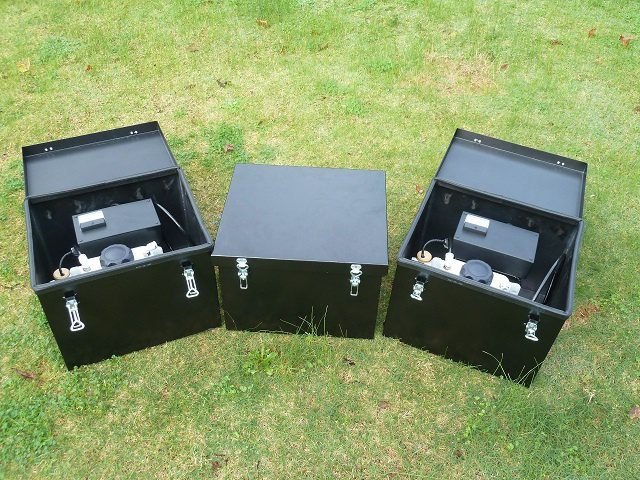
Brilliant Invention Gen 20 Hydrogen Generator ---(update Feb 7... Full Story

by Gavan Knox HFS whats app +61 403177183 gavan@hfuel.com.au... Full Story
A diesel that works hard does not hide its... Full Story

Best Vehicles for HHO Upgrades in Australia - Oct... Full Story

Fuel Economy Methodology That Produces Real Numbers - oct... Full Story
Payment Methods Partner:

© 2023 - Hydrogenfuelsystems pty ltd