Brilliant Invention Gen 20 Hydrogen Generator July 2 2026
Brilliant Invention Gen 20 Hydrogen Generator ---(update Feb 7... Full Story
Perth, West Australia




by Gavan Knox MSc, BSc, BEd, Inventor
WhatsApp call +61 403177183
contact gavan@hfuel.com.au
https://hydrogenfuelsystems.com.au
On Board Hydrogen Generation Explained for Engines – Sept 14.A diesel work ute pulling a loaded trailer, a long-haul truck, a marine engine or a site generator all have one thing in common: fuel burn is a cost that never stops. On board hydrogen generation explained properly is not about carrying compressed hydrogen cylinders or converting an engine into a hydrogen vehicle. It is about producing a small, controlled volume of hydrogen-rich HHO gas from water while the engine is running, then introducing that gas into the intake to support a cleaner, faster combustion event.
The practical question is simple: can an on-board HHO system improve how efficiently your engine uses the fuel you already buy? In the right application, with the right system size and installation, it can support improved combustion quality, reduced soot loading and more responsive engine operation. But it is not magic, and it is not a substitute for a sound engine, correct tuning or basic maintenance.
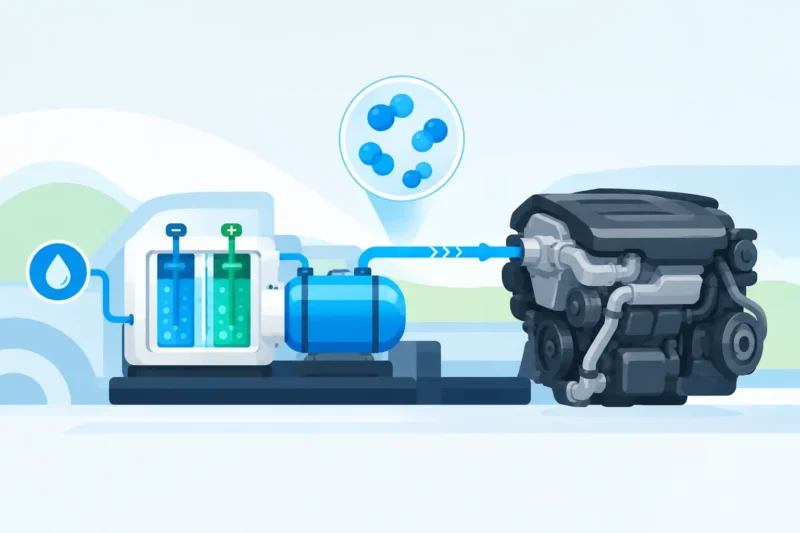
An on-board hydrogen generator is an electrolyser fitted to the vehicle or machinery. It uses electrical power from the charging system to split water into hydrogen and oxygen gas. This mixed gas is commonly called HHO, oxyhydrogen or Brown’s gas. Rather than storing large quantities of gas, the system generates it as the engine operates and feeds it through the intake air stream.
The generator itself is only one part of a properly engineered setup. A complete system also needs a water reservoir, electrolyte, power supply and protection components, gas tubing, a bubbler or safety filter, wiring, mounting hardware and a controlled intake connection. The objective is consistent gas production without leaks, overheating, excessive electrical draw or interference with normal vehicle operation.
The HHO gas enters with the intake charge before combustion. Hydrogen has a very low ignition energy and a rapid flame speed. In practical terms, a small quantity can help initiate and propagate the burn through the cylinder charge more effectively. Petrol and diesel engines behave differently, but the intended result is similar: make more complete use of the primary fuel rather than sending unburnt fuel and particulate matter out through the exhaust.
No internal combustion engine converts every drop of diesel or petrol into useful work. Combustion is affected by air-fuel mixing, injector condition, intake deposits, load, temperature, fuel quality, ignition timing and the engine’s operating cycle. Heavy loads, stop-start work, towing and extended idling can all expose inefficiencies.
A hydrogen enhancement system is designed to improve the combustion event, not replace the diesel or petrol in the tank. When combustion is cleaner and more complete, the engine may need less throttle input to do the same job. Drivers often focus first on fuel savings, but the mechanical gains can be equally relevant: smoother pull under load, improved throttle response, less visible smoke in some diesel applications and reduced carbon build-up over time.
That does not mean every vehicle will produce the same result. A well-maintained highway truck running at a steady load may respond differently from a city delivery van, a 4WD used for towing, or a generator operating at fixed RPM. The starting condition of the engine matters. If injectors are worn, boost leaks are present, the air filter is blocked or the engine has fault codes, repair those issues first. HHO is an efficiency enhancement, not a repair kit.
A common objection is valid: if the alternator powers the generator, does the generator not create extra engine load? Yes, it does. Alternators are driven by the engine, and electrolysis consumes energy. Anyone claiming otherwise is not explaining the system honestly.
The case for on-board hydrogen generation is not that it creates free energy. It is that a carefully controlled amount of HHO gas can improve the burn quality enough to offset the electrical demand and deliver a net operational benefit in suitable engines. Whether that happens depends on generator output, electrical efficiency, engine size, duty cycle, installation quality and how the vehicle is driven.
This is why system sizing matters. A small passenger vehicle, a turbo-diesel ute, a large displacement truck engine and a stationary generator do not require the same generator capacity. Oversizing can place unnecessary demand on the charging system. Undersizing may deliver too little gas to make a meaningful difference. Hydrogen Fuel Systems offers Gen 10, Gen 15, Gen 20 and Gen 25 configurations because matching the system to the application is part of getting a useful result.
The gas path needs just as much attention as the cell. HHO is highly flammable, so an installation must prevent flame travelling back towards the generator. Safety devices such as bubblers, filters and correctly routed hose are not optional extras. They are essential system components.
Gas is typically introduced into the intake at a point that allows it to mix with incoming air before entering the cylinders. The exact location depends on the engine layout. Turbocharged diesel engines, naturally aspirated petrol engines, carburetted engines, EFI vehicles and marine engines each need an application-specific approach. Drilling an intake pipe without considering airflow, boost pressure, sensor placement and hose security is poor practice.
Electrical work matters too. The system needs suitable cable sizing, fusing, secure earth connections and switched power control so the generator does not continue operating when the engine is off. The mounting location must be protected from excessive heat, vibration and physical damage. On a working vehicle, especially one travelling corrugated roads or operating around dust and water, a tidy install is a reliability issue, not a cosmetic one.
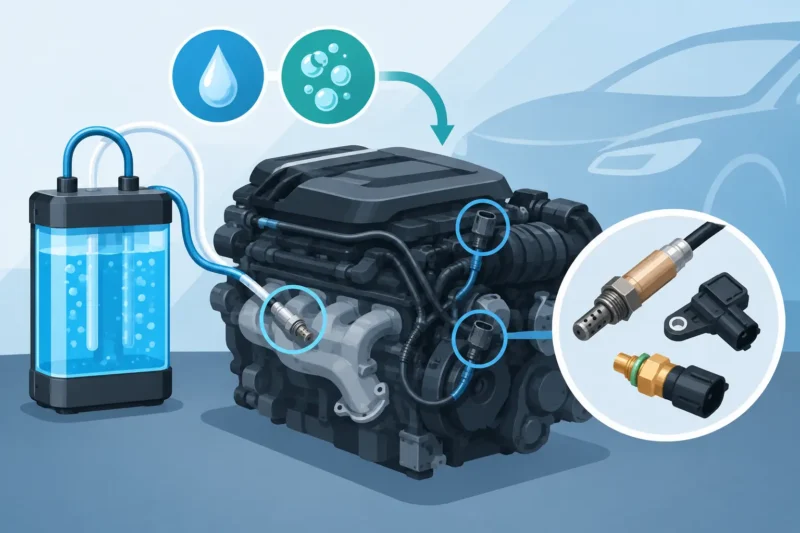
Older mechanical diesels can be relatively straightforward because fuel delivery is less dependent on electronic feedback. Modern common-rail diesels and petrol vehicles are more complex. Their ECUs constantly adjust fuelling using signals from oxygen sensors, manifold pressure sensors, airflow sensors, exhaust temperature sensors and other inputs.
Adding HHO may change combustion behaviour, and the ECU can respond by adapting fuelling over time. That is why a system should be assessed for the engine and its management strategy rather than installed as a one-size-fits-all bolt-on. Any modification must also be compatible with applicable Australian roadworthiness, insurance, emissions and safety requirements.
For fleets, the proof should be operational rather than anecdotal. Record litres per 100 km, hours run, fuel used, average payload, idle time and the routes or work performed before fitting the system. Then compare enough equivalent operating time after installation to remove the effect of one easy run, a change in driver behaviour or a different load. Generator operators can compare litres per hour against consistent electrical load.
Before selecting an on-board hydrogen generator, establish what the engine is doing now and what result would justify the investment. Check these practical points:
A credible supplier should be able to provide fitting guidance, component specifications and evidence relevant to the application. Look for patented design details, certification documentation, test material and real installation examples. Claims are easy to make. Consistent components, correct fitment and measurable operating data are what turn an efficiency product into a commercial decision.
It is most compelling where fuel consumption is high and the engine spends real time under load. That includes trade utes, 4WD towing vehicles, transport trucks, marine engines, pumps, agricultural equipment and generators. A vehicle that travels only short distances with frequent cold starts may offer a different return profile than a diesel covering thousands of kilometres each month.
The best approach is to treat HHO as part of an engine-efficiency plan. Start with servicing, tyre pressures, correct lubricants, clean intake and fuel systems, sensible driving habits and accurate fuel records. Then fit a correctly sized on-board system designed for the job. When every litre matters, better combustion is not an abstract idea. It is a practical opportunity to make the engine work harder for the fuel already in the tank.
by Gavan Knox MSc, BSc, BEd, Inventor
WhatsApp call +61 403177183
contact gavan@hfuel.com.au
https://hydrogenfuelsystems.com.au
Brilliant Invention Gen 20 Hydrogen Generator ---(update Feb 7... Full Story

by Gavan Knox HFS whats app +61 403177183 gavan@hfuel.com.au... Full Story
A diesel that is smoking, using more fuel or... Full Story

How Do DC-DC Boost Regulators Affect Hydrogen Gas Production?... Full Story
## Can HHO Affect Engine Sensors? What to Check... Full Story
Payment Methods Partner:

© 2023 - Hydrogenfuelsystems pty ltd