Brilliant Invention Gen 20 Hydrogen Generator July 2 2026
Brilliant Invention Gen 20 Hydrogen Generator ---(update Feb 7... Full Story
Perth, West Australia




by Gavan Knox MSc, BSc, BEd, Inventor
WhatsApp call +61 403177183
contact gavan@hfuel.com.au
https://hydrogenfuelsystems.com.au
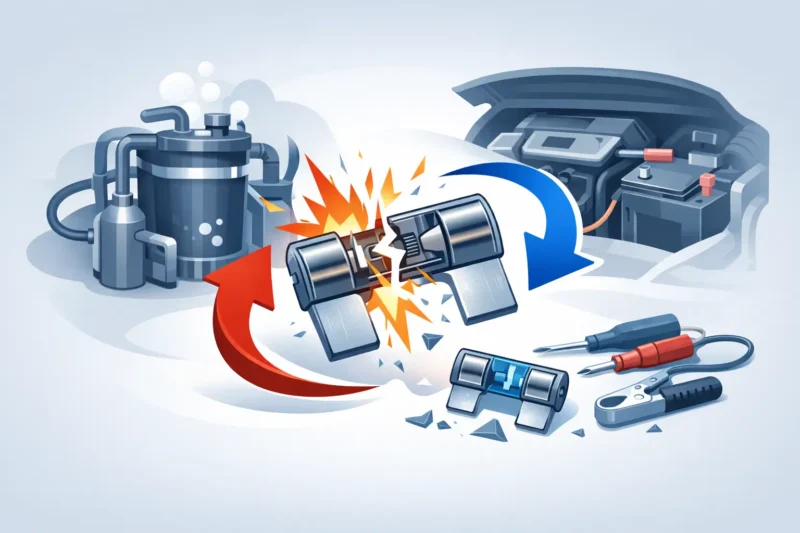
A blown HHO fuse is not a nuisance to work around. It is the electrical system telling you that current has gone where it should not, or that a component is drawing more power than the circuit was designed to carry. If you are trying to work out why an HHO fuse blows, start with that fact: the fuse has done its job. Replacing it with a larger fuse, bridging it, or fitting foil around the terminals can turn a simple fault into melted wiring, a damaged relay, battery drain or an under-bonnet fire.
An HHO system operates in a harsh environment. Heat, vibration, moisture, battery acid fumes and road grime all work against electrical connections. Add a hydrogen generator cell that uses electrolyte and water, and correct wiring becomes non-negotiable. The good news is that most repeat fuse failures come back to a small group of faults that can be isolated methodically.
The fuse rating in an HHO kit is selected to protect the cable and components in that circuit. It should tolerate normal operating current while opening quickly when there is an overload or short circuit. When it blows, the problem is generally one of three things: excessive current draw, a direct short to earth, or a poor connection creating heat and electrical instability.
This is the most common reason a fuse blows instantly. A positive wire may have rubbed through on a sharp metal edge, been pinched under a bracket, melted against an exhaust-side component, or become trapped beneath a battery clamp. The exposed conductor then touches the vehicle body or engine, which is earthed, and current rises sharply.
Look closely at the entire positive cable run, not just the obvious section near the battery. Check where wiring passes through panels, around the radiator support, beside the alternator, and underneath cable ties. A wire can look sound from above while insulation has worn through against the metal behind it.
Pay special attention to wiring added during other vehicle work. A bullbar, auxiliary battery, driving lights, winch, dual-battery system or recent engine-bay repair can move or crush an HHO cable. On utes, 4WDs and machinery, vibration can wear through insulation over time even when the installation was originally tidy.
A fuse that survives briefly, then blows after the system has been running, often points to an over-current condition rather than a dead short. The cell may be producing more current draw than the system wiring, relay or fuse rating allows.
Electrolyte concentration is a major factor. Adding too much electrolyte raises conductivity, which raises amperage. More chemical mix is not a shortcut to better performance. It can drive the cell beyond its intended operating range, create excessive heat, accelerate plate wear and repeatedly pop the fuse.
Water quality also matters. Contaminants in the water can make current draw unpredictable. Use the water and electrolyte procedure specified for your particular generator, and measure current with a suitable meter rather than guessing from bubbling activity. A cell that is working properly should operate within the current range set out for that model.
If the current rises as the cell warms up, stop the test. That can indicate an overly strong electrolyte mix or an internal issue in the cell. Letting it continue while fitting bigger fuses is a fast way to damage a power supply component.
Not every fuse failure is caused by the cell itself. A fuse that is undersized for the normal operating load may blow during startup or under hot conditions, even though the rest of the circuit is healthy. This often happens when a kit has been modified, moved between vehicles, or installed with substitute components.
At the other end of the scale, an oversized fuse is dangerous. A fuse must be matched to both the expected load and the cable size. Its purpose is to protect the smallest-rated component in the circuit, usually the wire. Never increase the fuse rating simply because the original one blew.
Inspect the fuse holder as well. Loose terminals, corrosion, cheap blade holders and heat-damaged plastic create resistance. Resistance creates heat, and heat can weaken a fuse or deform the holder until the connection becomes unreliable. If the holder is discoloured, brittle, loose or warm after normal operation, replace it with a quality sealed holder and correctly crimped terminals.
Many HHO installations use a relay and, depending on the system, a PWM or other current-control device. These components should switch and regulate power correctly. If a relay has internal damage, water ingress or burnt contacts, it can create erratic operation. A failed PWM can allow excessive current to reach the cell or short internally.
Signs include a fuse that blows only when the ignition trigger is active, a relay that clicks repeatedly, hot wiring near the controller, or a cell that operates at full current when it should be regulated. Do not assume the component is sound because it looks clean on the outside. Electrical testing is the answer.
HHO cells and reservoirs contain liquid. Any leak near electrical terminals is a serious fault. Electrolyte can conduct electricity, corrode terminals and create a tracking path between positive and negative connections. A small damp patch around a fitting, cap or hose can be enough to create recurring problems.
Check the cell, reservoir, hose connections and fittings for seepage. Inspect terminal covers and the area below the cell for dried residue. Clean corrosion safely, correct the leak, dry the components fully and replace damaged connectors before installing another fuse.
Do not keep feeding fuses into an unknown fault. Isolate the circuit one section at a time. Begin with the ignition off and the system disconnected from battery power. Fit only the manufacturer-specified fuse after the inspection work is complete.
First, disconnect the HHO cell from the power supply output. Then inspect and test the vehicle-side wiring, relay and controller. If the fuse blows with the cell disconnected, the issue is in the wiring, fuse holder, relay, controller or installation route. If it holds until the cell is connected, focus on cell current draw, electrolyte concentration, terminal contamination and internal cell condition.
A multimeter or DC clamp meter is invaluable here. Measure current under normal operating conditions and compare it with the intended system specification. A clamp meter is especially useful because it lets you monitor current without opening the circuit. Watch for a current figure that climbs rapidly as the cell heats.
If you are not confident working around 12-volt or 24-volt automotive electrical systems, use a qualified auto electrician. This is particularly sensible on late-model vehicles with sensitive electronics, fleet utes with complex accessory wiring, and marine or generator installations where an electrical fault can stop essential equipment.
A dependable installation is built around cable protection, clean connections and controlled current. Route cables away from heat and moving parts, use abrasion protection wherever a cable crosses metal, secure the loom so it cannot vibrate, and keep electrical terminals dry. The fuse holder should sit close to the battery positive source so the full cable run is protected.
Use appropriately sized automotive cable, sealed connectors and a proper relay arrangement. Keep earth connections clean and secure on bare metal where required, then protect them from corrosion. A weak earth does not usually cause an immediate fuse blow on its own, but it can create inconsistent operation and force other components to work harder.
For the cell, follow the approved electrolyte mix and operating-current guidance for the specific system size. Gen 10, Gen 15, Gen 20 and Gen 25 units are not interchangeable simply because they all produce HHO. The vehicle application, supply voltage, intended output and current-control setup all matter.
Hydrogen Fuel Systems installations are designed around matched components for a reason. A correctly rated fuse, cable, relay, controller and cell should work as one protected circuit, not as a collection of improvised accessories.
A fuse that blows once deserves attention. A fuse that blows twice is a clear instruction to stop replacing parts at random and start testing the circuit properly. Find the source of the excess current, correct it at the root, then get back to running an HHO system that supports efficient, reliable engine operation.
by Gavan Knox MSc, BSc, BEd, Inventor
WhatsApp call +61 403177183
contact gavan@hfuel.com.au
https://hydrogenfuelsystems.com.au
Brilliant Invention Gen 20 Hydrogen Generator ---(update Feb 7... Full Story

by Gavan Knox HFS whats app +61 403177183 gavan@hfuel.com.au... Full Story
A diesel that is smoking, using more fuel or... Full Story

How Do DC-DC Boost Regulators Affect Hydrogen Gas Production?... Full Story
## Can HHO Affect Engine Sensors? What to Check... Full Story
Payment Methods Partner:

© 2023 - Hydrogenfuelsystems pty ltd