Brilliant Invention Gen 20 Hydrogen Generator July 2 2026
Brilliant Invention Gen 20 Hydrogen Generator ---(update Feb 7... Full Story
Perth, West Australia




by Gavan Knox MSc, BSc, BEd.
WhatsApp call +61 403177183
contact gavan@hfuel.com.au
https://hydrogenfuelsystems.com.au
Generator Efficiency Example: Hydrogen Kit Results. A standby generator that starts every fortnight but burns litres per hour under load is not a minor operating cost. For a business running irrigation pumps, site sheds, refrigeration, marine auxiliaries or off-grid power, every hour on the meter has a dollar figure attached. This generator efficiency example hydrogen kit guide shows how to assess an on-board HHO system properly – using fuel figures, load data and engine condition rather than wishful thinking.
The point is simple: a hydrogen generator kit is fitted to support cleaner, more complete combustion in an internal combustion engine. The system produces hydrogen and oxygen gas on demand, then introduces that gas into the engine’s intake air. When the installation, tune and operating conditions are right, the aim is to reduce fuel required for the same useful electrical output, while helping the engine run more cleanly.
## The generator efficiency example: hydrogen kit at work
Start with a realistic operating scenario. A diesel generator is supplying a consistent 60 kW load for eight hours a day. Before any modification, the operator records fuel use over several comparable runs and finds the unit consumes 18 litres per hour. That equals 144 litres per day.
After fitting a correctly sized hydrogen kit, the operator must not simply look at one tank refill and declare victory. They need to run the same load, for the same duration, with the same fuel source and as close as possible to the same ambient conditions. If measured consumption falls to 16.5 litres per hour, daily use becomes 132 litres. The difference is 12 litres a day.
At a diesel cost of $2.00 per litre, that is $24 saved each operating day. Over 250 operating days, the fuel-cost difference is $6,000. The arithmetic is not complicated. What matters is proving that the load and conditions were genuinely comparable.
This is why a serious generator efficiency example is based on litres per hour at a documented kW load, not vague claims that the engine ‘seems to be using less’. Generator engines can use less fuel simply because the demand has dropped. If the electrical load falls from 60 kW to 45 kW, fuel use should fall too. That is not automatically an efficiency improvement.
## What a hydrogen kit changes – and what it does not
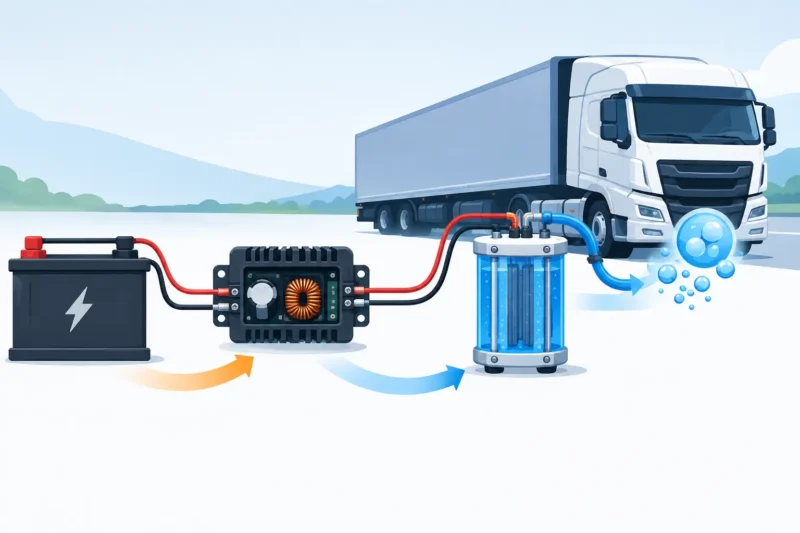
A hydrogen kit does not create free energy and it does not remove the need for proper generator maintenance. The alternator supplies electrical power to the hydrogen generator, so the entire system must be sized, wired and controlled correctly. An undersized cable, poor earth, weak alternator or inadequate water supply can undermine the installation before it has had a fair run.
What the system can do is introduce a highly combustible gas mixture into the intake charge. Hydrogen has a fast flame speed and can assist the combustion event. In practical terms, the target is more complete burning of the diesel or petrol already entering the cylinder. That can mean less unburnt fuel leaving through the exhaust, a cleaner burn and a measurable reduction in fuel consumption where the engine responds well.
Results depend on the generator. A well-maintained diesel operating steadily at a useful load is often a better candidate for measurement than a neglected unit that spends most of its life idling. Generators are also different from road vehicles: their [load can be stable](https://hydrogenfuelsystems.com.au/performance-characteristics-of-constant-speed-diesel-engine-by-using-of-hho-gas/), which makes before-and-after testing easier, but their governing system may react differently to changes in combustion.
A hydrogen kit should be treated as an engine-efficiency upgrade, not a substitute for fixing worn injectors, clogged air filters, incorrect valve clearances, poor fuel quality or a generator that is badly oversized for its job.
## Measure the right numbers before installation
A credible fuel-saving result starts before the kit is fitted. Collect a baseline over enough hours to smooth out one-off variations. For a generator with steady work, five to 10 comparable operating periods is a sensible starting point. Record the fuel added with a calibrated method or use a reliable flow meter. Do not rely on a dashboard gauge or an estimate from the bowser.
For each run, log operating hours, average kW load, peak load, litres consumed, ambient temperature and any unusual events. Also note the engine oil level, coolant temperature and whether the generator was servicing a motor-heavy load, resistive load or variable demand. These details explain results that might otherwise look inconsistent.
The core calculation is:
**Fuel consumption = litres used ÷ operating hours**
Then compare fuel consumption at the same output level:
**Fuel reduction percentage = (baseline litres per hour – post-install litres per hour) ÷ baseline litres per hour × 100**
For a more useful business number, calculate litres per kWh. This shows how much fuel is needed to produce each unit of electrical energy. A generator that uses fewer litres per hour but is also carrying a lighter load may not have improved at all. Litres per kWh cuts through that confusion.
## Sizing the hydrogen kit for generator duty
A generator kit must match the engine, not just the label on the generator canopy. [Engine displacement](https://hydrogenfuelsystems.com.au/how-to-choose-hho-kit-size/4-2-diesel-img_2247-2/), fuel type, actual loading, intake arrangement and alternator capacity all matter. A small petrol generator requires a different gas-production rate and electrical setup from a large diesel unit powering a workshop or remote site.
Hydrogen Fuel Systems offers Gen 10, Gen 15, Gen 20 and Gen 25 systems for different engine applications. The correct unit should be selected from the engine’s actual requirements and the intended duty cycle. Bigger is not automatically better. Excessive gas production, poor placement or an uncontrolled supply can cause poor running characteristics rather than better efficiency.
The installation also needs clean, secure plumbing into the intake, a properly mounted reservoir, suitable filtration and electrical protection. Vibration is constant on generator sets, particularly mobile units and equipment mounted on trailers, utes or marine platforms. Loose fittings, heat exposure and poor cable routing are not small details. They are the difference between a system that works reliably and one that becomes a maintenance headache.
### Control and safety matter
The kit should only operate when the engine is running. A correctly installed system uses the appropriate power supply components, fusing and switching so it is not producing gas while the generator is stopped. Check valves, [flashback protection](https://hydrogenfuelsystems.com.au/product-water-bubbler-cannister-10-inch-sourcealertsmailhlenglaumsgidndmzmjaynzmznjy5nzuxndy3nasab2xq4gbfmo3fb1uv5qqxt3x3wzwcebrhnq1bjq/) and secure hose routing are essential parts of a professional installation.
Use distilled water where specified and inspect the system as part of normal generator servicing. Electrolyte level, connections, filter condition and hose integrity should be checked before problems develop. Operators who want lower running costs should not ignore basic preventative maintenance.
## Where the strongest returns usually sit
The commercial case is strongest where a generator runs regularly and fuel is a meaningful line item. A backup unit that only operates for a few hours each year may take a long time to recover the cost of an upgrade. A generator running daily on a construction site, farm, mine support operation, vessel or remote property can produce a much faster payback because the fuel baseline is substantial.
Steady-load applications are particularly useful. If a generator repeatedly carries the same refrigeration bank, pumping equipment or workshop load, the operator can build a clean data set. That makes it easier to identify fuel savings, calculate return on investment and decide whether to roll the system out across a fleet.
It also pays to look beyond the bowser. Cleaner combustion may help reduce carbon build-up and exhaust smoke, while improved combustion quality can support smoother engine operation. These benefits are valuable, but they should be treated as operational observations alongside fuel data, not as a reason to skip proper testing.
## Avoid the mistakes that ruin a good test
The most common mistake is comparing different loads. The second is testing for too short a period. A third is fitting the kit to an engine with unresolved mechanical faults and expecting gas production to overcome them. No enhancement system can compensate for injectors that are worn, an intake that is restricted or a governor that cannot maintain stable speed.
Also avoid changing several variables at once. If you install a hydrogen kit, replace injectors, alter fuel quality and service the generator on the same day, you cannot confidently attribute the fuel result to one change. Improve the engine’s maintenance condition first, establish a baseline, install the system, then test again.
For fleet operators, use a standard test sheet across every unit. That creates evidence you can show to management, customers or finance teams. The result is a decision based on litres, hours and kWh – the numbers that actually matter.
A hydrogen kit earns its place on a generator when it is correctly matched, professionally installed and measured against a disciplined baseline. Put the system on a productive engine, track the fuel honestly and let the operating figures show whether the upgrade is paying for itself.
by Gavan Knox MSc, BSc, BEd.
WhatsApp call +61 403177183
contact gavan@hfuel.com.au
https://hydrogenfuelsystems.com.au
Brilliant Invention Gen 20 Hydrogen Generator ---(update Feb 7... Full Story

by Gavan Knox HFS whats app +61 403177183 gavan@hfuel.com.au... Full Story
Hydrogen Cell Reviews for Real Engine Results - Oct... Full Story
Best Marine Fuel Upgrades for Working Boats - Oct... Full Story
How 24V-to-13.8V Buck Configuration Regulators Affect HHO generation in... Full Story
Payment Methods Partner:

© 2023 - Hydrogenfuelsystems pty ltd