Brilliant Invention Gen 20 Hydrogen Generator July 2 2026
Brilliant Invention Gen 20 Hydrogen Generator ---(update Feb 7... Full Story
Perth, West Australia




by Gavan Knox MSc, BSc, BEd.
WhatsApp call +61 403177183
contact gavan@hfuel.com.au
https://hydrogenfuelsystems.com.au
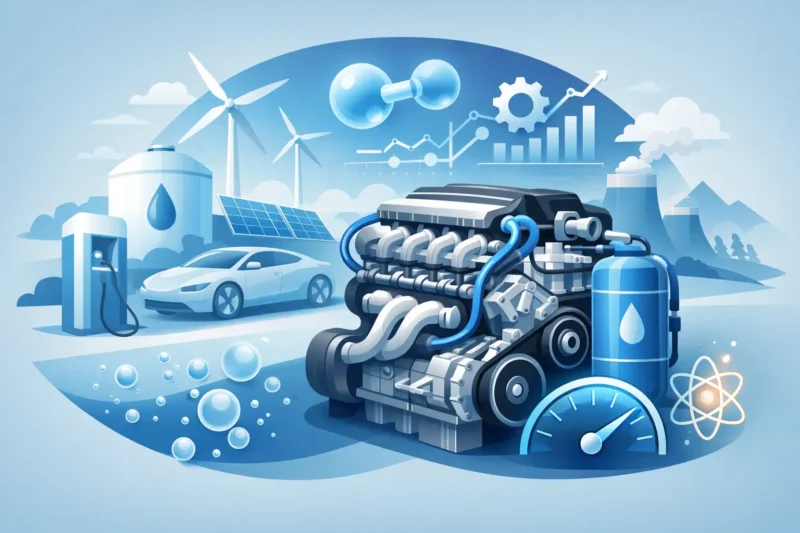
The Future of Hydrogen Engine Enhancement. A diesel work ute that idles for hours, a prime mover hauling interstate or a generator running through a long shift all have one expensive thing in common: fuel that is not fully converted into useful work is money out the exhaust. The future of hydrogen engine enhancement is not about replacing a sound diesel or petrol engine with a science experiment. It is about improving combustion where the operating costs are already high enough to demand attention.
For Australian operators, the question is simple. Can an on-board hydrogen system contribute to a cleaner, more complete burn while keeping the vehicle or machine practical to run, service and rely on? The answer depends on the application, the system sizing, the installation quality and how honestly performance is measured.
Internal combustion engines do not turn every drop of fuel into forward motion or electrical output. Some energy becomes heat, some is lost through pumping and friction, and some leaves the exhaust as unburnt hydrocarbons, carbon monoxide, particulate matter and other combustion by-products. Diesel engines are efficient by design, but high-load work, extended idling, stop-start driving and poor servicing can all compromise how cleanly fuel burns.
Hydrogen enhancement targets the combustion event itself. An HHO generator uses electrical power to produce a controlled hydrogen and oxygen gas mixture on board. That gas is introduced into the engine’s intake air in a measured quantity. Hydrogen has a fast flame speed and wide flammability range, characteristics that can support faster, more complete ignition of the main fuel charge when the system is correctly matched to the engine.
The commercial upside is clear. Better combustion can mean less fuel required for the same job, sharper throttle response, reduced visible smoke in suitable diesel applications and potentially less carbon build-up over time. For an owner-driver paying for every litre, or a fleet manager watching monthly fuel accounts, those are operating outcomes that matter.
This is also why hydrogen enhancement should not be confused with a vehicle being converted to run solely on hydrogen. The engine remains a diesel or petrol engine. The hydrogen system is a combustion-support technology designed to work alongside the primary fuel.
There is no one-size-fits-all formula for engines. A small passenger vehicle, a 4WD towing a caravan, a refrigerated truck, a marine diesel and a stationary generator have different airflow, load, run-time and electrical characteristics. The future of hydrogen engine enhancement is therefore not simply making a larger cell. It is sizing the right system, supplying it correctly and fitting it in a way that suits the actual duty cycle.
A vehicle that spends most of its time on short urban trips may show a different result from a diesel that runs at steady highway load for eight hours a day. Similarly, a generator operating at a stable load is often easier to monitor than a vehicle exposed to gradients, traffic, payload changes, wind and driver behaviour.
That is where practical system selection matters. Generator capacity, water reservoir design, wiring, relays, fusing, hose routing, filtration and intake placement all affect reliability. An under-sized system may not deliver a meaningful contribution for a hard-working engine. An oversized or poorly installed system can create unnecessary electrical demand or maintenance issues. Good engineering is not about adding the biggest component possible. It is about matching the kit to the engine and the work it performs.
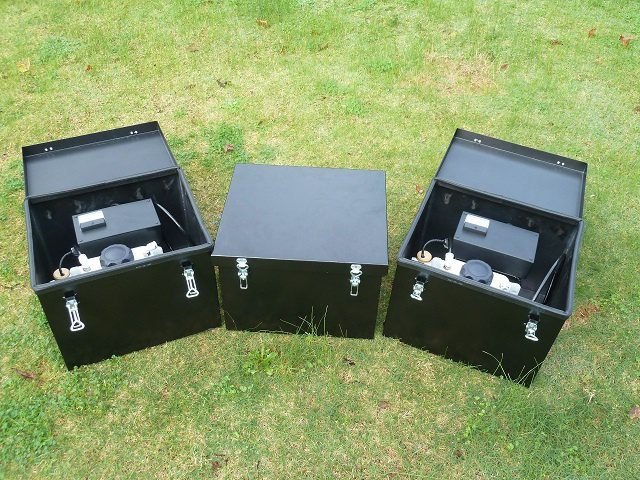
Hydrogen Fuel Systems offers Gen 10, Gen 15, Gen 20 and Gen 25 configurations for this reason. Cars, light commercial vehicles, trucks, 4WDs, marine engines and generators should be assessed by engine size and use, not selected on guesswork alone.
The strongest development in this market is not a flashy claim. It is better measurement. Fleet telematics, ECU data, fuel management platforms and consistent route records give operators a far better way to assess any fuel-saving technology than relying on a single tank refill.
A proper assessment establishes a baseline before installation. Record litres per 100 kilometres, hours run, fuel consumed per operating hour, average load, idle time, payload and maintenance condition. After installation, compare like-for-like work over enough time to account for route changes, weather, fuel quality and driving style.
For generators and marine applications, track fuel use against kilowatt output or engine hours. For road fleets, compare the same vehicle class on similar work. One week of figures is rarely enough. A disciplined review over several fuel cycles is more useful and far more credible.
This evidence-first approach protects the buyer. It also identifies problems that a hydrogen system cannot fix, such as leaking boost hoses, blocked air filters, worn injectors, faulty sensors, poor tyre pressures or excessive idling. Enhancement works best when it is fitted to a mechanically healthy engine.
The next generation of aftermarket hydrogen systems will be judged on control, durability and installation discipline. Buyers increasingly want components that can survive heat, vibration, dust, long-distance travelling and demanding work cycles. They also want clear documentation, parts availability and a system that a competent installer can inspect and service without drama.
Expect greater focus on protected power supply design, proper circuit protection, reliable level monitoring and gas delivery that is stable rather than erratic. Better mounting solutions will matter too. A system fitted to a touring 4WD crossing corrugated tracks has a very different physical challenge from one mounted in a plant room beside a generator.
Control integration is another area to watch. The more accurately an enhancement system can operate in line with engine demand, the more useful it becomes. However, complexity is not automatically an advantage. For many working vehicles and machines, a proven, serviceable design with clear installation instructions is more valuable than unnecessary electronics.
An on-board hydrogen generator is not a fit-and-forget accessory. Water level, electrolyte condition where applicable, filters, electrical connections, hose condition and mounting hardware need regular checks. This is ordinary ownership discipline, much like checking a battery, cooling system or fuel filter, but it should be factored into the decision.
The best operators build these checks into scheduled servicing. That prevents small issues becoming downtime and keeps performance consistent. It also makes it easier to document the system’s condition when reviewing fuel figures.
Hydrogen enhancement attracts attention because the potential benefits are attractive: lower fuel consumption, improved torque feel, cleaner exhaust and reduced engine contamination. But any serious buyer should demand evidence relevant to their use case.
Ask for technical specifications, installation guidance, test material, certification documentation where applicable and examples from comparable vehicles or equipment. A result from a lightly loaded passenger car does not automatically translate to a fully laden truck. A result from one generator cannot be copied straight across to every marine engine.
Be equally careful with blanket percentage promises. Fuel savings are influenced by the engine’s condition, load profile, fuel type, route, ambient temperature, maintenance, driving style and the quality of the installation. A responsible supplier can explain what the system is intended to do, what must be maintained and how results should be verified. That is far more useful than a headline number without context.
Any modification around an engine bay must be installed safely and with respect for vehicle requirements. Electrical wiring needs correct fusing, cable sizing, relay protection and secure routing away from heat and moving parts. Gas lines and fittings must be secure, and components must be mounted to withstand vibration.
Vehicle owners should also consider manufacturer warranty implications, insurer requirements and relevant state or territory modification rules before fitting an aftermarket system. Emissions equipment must not be tampered with or defeated. For commercial fleets, involve the workshop manager, safety team and insurer early, particularly where vehicles work on sites with formal compliance procedures.
This is not red tape for its own sake. A properly documented installation gives the owner confidence, helps technicians service the vehicle and reduces avoidable risk.
Hydrogen engine enhancement is likely to remain most compelling where fuel use is high, operating hours are predictable and the owner can measure the result. Long-haul transport, delivery fleets, agricultural machinery, diesel generators, marine operators and high-kilometre 4WD users all have a clearer commercial reason to investigate it than a vehicle that only travels a few thousand kilometres each year.
The payback calculation should be based on actual fuel spend, not enthusiasm. Work out the engine’s current consumption, estimate a conservative improvement, include installation and maintenance costs, then assess the recovery period. If the vehicle is off the road regularly or uses little fuel, the economics may be weaker. If it burns fuel every day, even a modest improvement can become meaningful over a year.
The future belongs to operators who measure their machines, fit the right hardware and refuse to accept vague claims from any supplier. Start with a healthy engine, choose a system sized for the work, document your baseline and let real operating data make the decision.
by Gavan Knox MSc, BSc, BEd.
WhatsApp call +61 403177183
contact gavan@hfuel.com.au
https://hydrogenfuelsystems.com.au
Brilliant Invention Gen 20 Hydrogen Generator ---(update Feb 7... Full Story

by Gavan Knox HFS whats app +61 403177183 gavan@hfuel.com.au... Full Story

Best Vehicles for HHO Upgrades in Australia - Oct... Full Story
Fuel Economy Methodology That Produces Real Numbers - oct... Full Story

Can HHO Improve Towing Economy? Facts That Matter -... Full Story
Payment Methods Partner:

© 2023 - Hydrogenfuelsystems pty ltd