Brilliant Invention Gen 20 Hydrogen Generator July 2 2026
Brilliant Invention Gen 20 Hydrogen Generator ---(update Feb 7... Full Story
Perth, West Australia




by Gavan Knox MSc, BSc, BEd, Inventor
WhatsApp call +61 403177183
contact gavan@hfuel.com.au
https://hydrogenfuelsystems.com.au
Marine HHO Installation for Diesel Boat Engines – Aug 22. A boat engine that burns hundreds of litres through a working week has no room for guesswork. A correctly planned marine HHO installation puts on-board hydrogen generation to work where it counts: at the engine, under load, with safe mounting, protected wiring and a gas path designed for the marine environment.
For diesel boat owners, charter operators and commercial crews, the aim is straightforward. Improve combustion efficiency, reduce wasted fuel and carbon build-up, and support stronger engine response without compromising the vessel’s reliability. The installation quality is what separates a system built for hard use from one that becomes another problem in the engine bay.
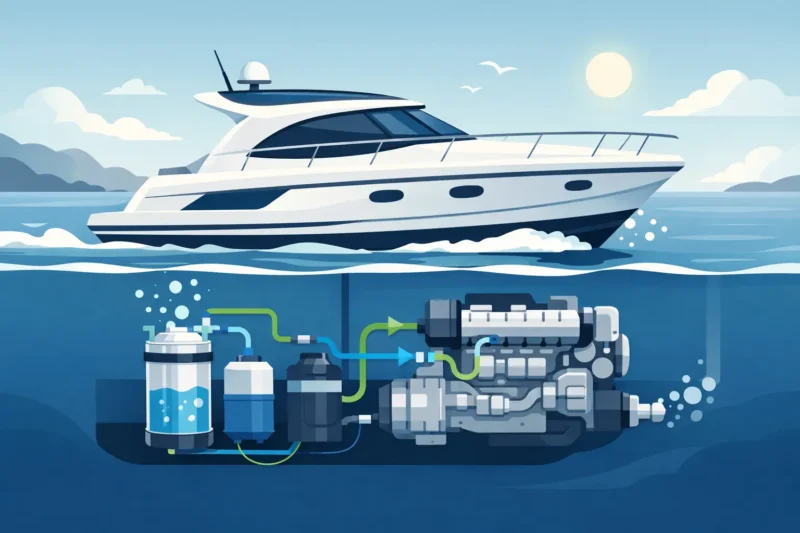
A marine engine is not a car engine bolted to a hull. The engine bay is exposed to heat, vibration, salt air, moisture and confined-space risks. Access is tighter, cable runs are often longer, and a poor connection that survives on a road vehicle can corrode quickly at sea.
That is why marine HHO installation must be treated as an engine-system job, not a quick accessory fitment. The hydrogen generator, water reservoir, electrical supply, safety devices and intake connection all need to work together. Every component must be secure, serviceable and positioned away from direct heat, moving belts, exhaust components and sources of water ingress.
On a diesel engine, the HHO gas is introduced into the air intake before combustion. The purpose is to assist the burn of the primary diesel charge. When combustion is more complete, operators may see fuel-use improvements, reduced smoke under load and a cleaner-running engine. Actual results depend on engine condition, propeller load, vessel use, tune, fuel quality and how accurately consumption is measured.
A tired injector set, restricted air filter or badly over-propped vessel will not be fixed by any add-on system. Sort the underlying engine issues first, then use the HHO system as a combustion-efficiency upgrade.
Before choosing generator size or opening the toolbox, assess the application. Engine displacement matters, but so does how the boat works. A lightly loaded recreational runabout, a trawler operating for long periods and a workboat pushing against current place very different demands on the engine.
Record the engine model, fuel type, displacement, intake layout, alternator output and available space. Check whether the vessel has one engine or twin engines, and decide whether the system will serve a single intake or require a matched arrangement for each engine. Do not assume one generator can simply be tee-connected across two engines. Gas flow, intake vacuum or boost characteristics, and engine operating patterns all need consideration.
For many marine applications, a larger system is appropriate because the engine spends more time under steady load than a road vehicle. That does not mean fitting the biggest unit available. Generator output must suit the engine and electrical capacity. Oversizing without the right power supply, cable protection and installation layout is poor engineering.
Measure a real fuel baseline before fitting anything. Use fuel invoices, tank fills, engine-hour records and consistent operating conditions where possible. Litres per engine hour is far more useful than a rough estimate based on a fuel gauge. This gives you a fair way to judge the result once the system is commissioned.
The generator and reservoir need a solid, accessible mounting point. Choose a protected section of the engine bay or machinery space where the unit can be inspected and topped up without dismantling half the vessel. The mount must handle vibration, not just support the weight of the unit while tied up at the jetty.
Use corrosion-resistant fasteners and a substantial bracket or mounting plate. Avoid thin panels that flex, areas directly beneath deck leaks, and locations where bilge water can reach the equipment. Keep adequate clearance around the generator for hoses, electrical terminals and regular maintenance.
Heat management matters. Do not mount a generator beside a turbocharger, exhaust manifold, wet exhaust hose or other high-temperature component. Excessive heat shortens component life and can affect water temperature and system performance. If the only available location is warm, improve shielding and ventilation rather than accepting a marginal placement.
The reservoir should remain visible enough for routine level checks. It must be mounted upright and secure, with hose routing that does not kink, chafe or create a low point where contaminants can collect. Use the correct water and electrolyte procedure specified for the system. Marine operators who treat servicing as optional usually create the faults they later blame on the hardware.
The gas hose should take the cleanest, shortest practical route to the intake. Secure it at regular intervals and keep it clear of sharp edges, hot surfaces and moving equipment. Where the hose passes through a bulkhead or panel, use a proper grommet or protective fitting.
Safety components such as bubblers, check valves and flashback protection are not decorative extras. They are part of the system’s protection strategy and must be installed in the correct orientation and location. Follow the system documentation exactly. Never delete a safety device to make the hose route look neater.
The intake entry point must be downstream of the air filter but positioned to suit the engine’s layout. On turbo-diesel engines, the chosen point needs to account for boost pressure and the intake plumbing design. A poor drill point, an air leak or loose fitting can cost performance and create avoidable engine issues. If the intake system is unfamiliar, get a qualified marine diesel technician involved before drilling.
The electrical side of a marine HHO installation deserves the same attention as the gas side. Boats operate in a harsh electrical environment, so use appropriately rated cable, terminals, fuses, relays and protective conduit. Marine-grade components are the smart choice where moisture and salt exposure are likely.
Power should be supplied through a properly fused circuit sized for the system’s expected current draw. The generator should operate only when the engine is running, typically through an ignition or oil-pressure-triggered relay arrangement. This prevents the unit from continuing to draw power with the engine stopped and protects the battery bank from unnecessary discharge.
Run positive and negative cables cleanly, secure them against vibration and protect them from abrasion. Do not rely on a corroded engine-bay earth point simply because it is close. Make sound, clean connections and inspect them after the first operating hours. A voltage drop caused by undersized cable or poor terminals can reduce system output and lead to heat at the connection points.
On vessels with twin batteries, battery isolators, solar charging or complex house-bank systems, plan the connection carefully. The goal is reliable generator operation without interfering with starting circuits, battery management or essential onboard equipment. If you are not confident reading the boat’s wiring layout, engage a qualified marine auto electrician. That is a small cost compared with diagnosing an electrical fault offshore.
Once installed, do not head straight for open water and assume the job is done. Commission the system at the dock first. Check fluid level, hose connections, clamps, electrical terminals, fuse rating and the operation of all safety components. Start the engine and confirm the system activates only as intended.
Inspect for air leaks at the intake fitting and look for any hose movement, vibration or heat exposure as the engine reaches operating temperature. Then perform a controlled sea trial. Record engine hours, RPM, speed, load and fuel use over a route that can be repeated. A system should be judged by operating data, not by a single short run with changing weather and tide.
Pay attention to smoke, throttle response and engine behaviour under normal working load. A cleaner exhaust and steadier response can be useful indicators, but fuel records remain the commercial proof. For a fishing operation, charter vessel or workboat, even a modest reduction in litres per hour can add up quickly over a season.
A marine HHO system is straightforward to maintain, but it still needs maintenance. Check water level and quality at the specified intervals, inspect the filter and safety devices, and look over every cable and hose for rubbing or corrosion. Salt atmosphere finds weak points fast.
Periodically clean terminals, confirm mounting bolts remain tight and inspect the intake connection. If generator output changes, do not guess. Check the electrical supply, fluid condition, connectors, fuse, relay and hose integrity in a logical order. Good installation documentation makes this easier, especially when more than one person operates or services the boat.
Hydrogen Fuel Systems provides application-focused hardware and technical documentation because installation details matter. A system matched to the engine, mounted properly and verified with operating data gives marine operators the best chance of turning combustion improvement into lower running costs.
Your boat already tells you what it costs to operate every time the tanks are filled. Fit the system properly, keep accurate engine-hour records and let the numbers show whether your marine HHO installation is earning its place in the engine bay.
by Gavan Knox MSc, BSc, BEd.
WhatsApp call +61 403177183
contact gavan@hfuel.com.au
https://hydrogenfuelsystems.com.au
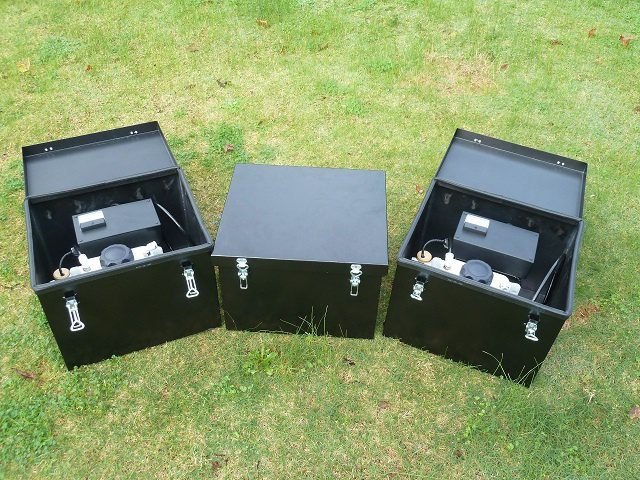
Brilliant Invention Gen 20 Hydrogen Generator ---(update Feb 7... Full Story

by Gavan Knox HFS whats app +61 403177183 gavan@hfuel.com.au... Full Story

Fuel Economy Methodology That Produces Real Numbers - oct... Full Story

Can HHO Improve Towing Economy? Facts That Matter -... Full Story

HHO Versus Additives: What Actually Pays Back? - Oct.... Full Story
Payment Methods Partner:

© 2023 - Hydrogenfuelsystems pty ltd