


Brilliant Invention Gen 20 Hydrogen Generator July 2 2026
Brilliant Invention Gen 20 Hydrogen Generator ---(update Feb 7... Full Story
Perth, West Australia




by Gavan Knox MSc, BSc, BEd, Inventor
WhatsApp call +61 403177183
contact gavan@hfuel.com.au
https://hydrogenfuelsystems.com.au
Alternator Load Assessment Guide for HHO Kits – Sept 16. An HHO system only performs as well as the electrical system feeding it. This alternator load assessment guide gives you the checks that matter before fitting a hydrogen generator kit to a ute, truck, 4WD, boat, generator or work machine. Get the electrical capacity right first and you protect battery life, maintain charging voltage and give the system stable power when the engine is working hard.
A kit should never be treated as an isolated accessory. It is another continuous electrical load, alongside headlights, air conditioning, thermo fans, refrigeration, pumps, winches, communications gear and factory engine electronics. A vehicle that appears fine around town can show a charging shortfall at idle, at night or under sustained auxiliary load. That shortfall costs reliability.
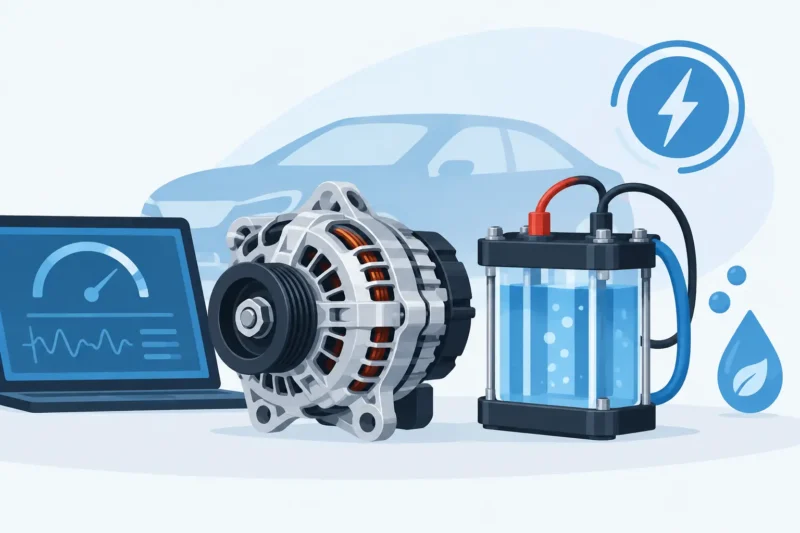
The alternator does two jobs: it runs the vehicle’s electrical loads while the engine is operating and it replaces energy removed from the battery during starting and stationary use. Its advertised maximum output is not the same as the output available in every condition. Alternators produce less current at low engine speed, particularly at idle, and output can drop further when the unit is hot.
That distinction matters for owner-drivers and fleet operators. A 120-amp alternator may look generous on paper, but if the vehicle already runs high-demand accessories, there may be little safe reserve at idle or in slow work. Add an HHO kit without measuring the real load and voltage can fall below the level needed to keep the battery properly charged.
Low voltage is not a performance upgrade. It creates heat in wiring, reduces battery reserve, can trigger fault codes in sensitive vehicles and leaves the operator with a flat battery when the vehicle is needed most. The correct approach is simple: measure the existing load, add the proposed HHO demand, then confirm the alternator and wiring can carry it with margin.
Begin with the vehicle in the configuration it actually works in. A lightly equipped passenger car needs a different assessment from a refrigerated van, a mine-site 4WD or a truck with driving lights and an inverter. Record the accessories that run regularly, not just the items fitted on the day.
Use a quality DC clamp meter, a multimeter and, where available, scan-tool data for engine speed and charging voltage. Measurements taken at the battery are useful, but voltage-drop testing at the alternator, earth straps and accessory supply points often reveals restrictions that a basic battery reading misses.
Take readings at cold idle, hot idle and a raised engine speed representative of normal driving. Repeat the test with major loads switched on. For a meaningful result, capture at least these four conditions:
Do not assume every accessory runs at full load continuously. Thermo fans cycle, air conditioning compressors engage and disengage, and electric water pumps may vary. But do plan for realistic peak combinations. A highway-only vehicle may tolerate a different duty cycle from a generator that runs at steady load for eight hours.
Current draw tells you how much load is being added. Charging voltage tells you whether the system is coping. On many conventional 12-volt systems, battery voltage with the engine running will commonly sit around the mid-13 to mid-14 volt range, depending on temperature, battery state and regulator strategy. Modern smart alternators can deliberately vary voltage, so always assess the manufacturer’s charging behaviour before declaring a reading faulty.
The warning sign is a sustained voltage drop once loads are applied, especially if it remains low after engine speed rises. If battery voltage is falling under operating conditions, the battery is supporting the electrical system instead of being recharged. That is a capacity problem, a wiring problem, an alternator fault or a combination of all three.
Check voltage drop as well. Excessive resistance in a tired earth strap, corroded battery terminal, undersized cable or poor fuse holder can make a healthy alternator look weak at the accessory. Test between alternator output and battery positive, then between alternator housing and battery negative, while the system is loaded. Heat, discolouration and loose connections are not minor details. They are evidence of lost electrical efficiency.
The applied voltage for a Hydrogen fuel systems should be above 13 volts. When a typical car or truck is used with a number of other electrical loads operating the available voltage for the Hydrogen generator may fall to 12 volt or below and will stop the hydrogen system working efficiently. You might see a the supply voltage drop only a single volt and may think this is not significant. Any Year 12 Chemistry student would realize that even one volt drop is enough to stop oxidation reduction reaction and convert the electrolysis cell into making heat only and boiling water…. which makes steam only , not hydrogen gas. A vehicle with a a good battery and good quality /output alternator should have correct output voltage , but there is still a chance of excessive voltage drop when the vehicle electrical load increases.
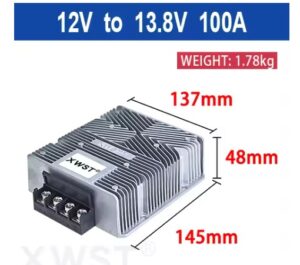
Fortunately there is a solution to this unexpected voltage drop for all vehicles irrespective of battery / alternator condition. An up-voltage regulator device such as the one shown below will increase the output voltage to 13.2 volts from 12 volts or lower. (see photo below) This unit can be purchased as a 40 amp output or a 100 amp output. Similarly a down -voltage regularly should be used to decrease the output voltage of a 24 volt truck to 13.2 volt.. ( see photo below)

Use the kit’s specified operating current, not a guess based on system size or internet forum advice. The current draw can vary with the generator design, electrolyte concentration, controller settings, temperature and supply voltage. Measure the actual installed system with a DC clamp meter after commissioning.
For a quick planning calculation, add the expected HHO current to the existing measured vehicle load. If the vehicle consumes 55 amps with normal night-driving loads and the HHO system draws 20 amps, the alternator must comfortably supply at least 75 amps at the relevant engine speed, plus enough reserve to recharge the battery after starting.
That reserve is where sensible installations separate themselves from cheap accessory wiring. Avoid sizing an alternator so close to its limit that every hot day, fan cycle or slow crawl puts it under maximum strain. Alternators run hot when worked hard, and heat shortens the life of diodes, regulators and windings. A conservative margin supports reliability and reduces the chance of voltage instability.
The same principle applies to generators and marine engines. Check the alternator or charging system output at the engine speed used in service, then allow for the full DC load already connected. Navigation equipment, bilge pumps, refrigeration, battery chargers and control systems can be critical loads. They take priority over any add-on system.
An alternator upgrade will not fix undersized wiring. The cable between the battery, relay, fuse and HHO system must be selected for the continuous current, cable length and installation environment. Long cable runs need larger conductor size because voltage drop rises with length. This is particularly relevant on trucks, boats and machinery where the battery bank may be well away from the engine bay. Recommended cable for use with hydrogen systems is 8mm BandS double insulated twin core cable as shown below. This cable has low resistance and minimal voltage loss over a short length of cable — commonly used on trucking applicationas

Fit the fuse as close as practical to the battery positive connection. The fuse protects the cable, not just the device at the far end. Use properly crimped terminals, secure the cable away from exhaust heat and moving parts, and protect it with abrasion-resistant conduit where it passes through metal or along chassis rails.
A relay or ignition-controlled supply is also essential. The system should not remain powered with the engine off unless the design specifically calls for it and battery capacity has been calculated accordingly. An unattended load can drain a battery faster than most operators expect, particularly after repeated short trips.
For high-current installations, consider a dedicated supply path with an appropriate relay or contactor
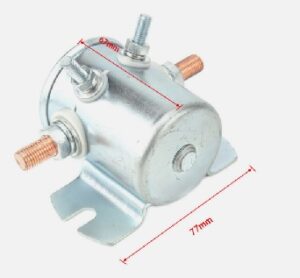
and a clean chassis earth or direct battery negative return. Earth quality matters. A poor earth creates resistance, heat and inconsistent operation, even when the positive cable looks substantial.
An upgrade is justified when testing shows the existing alternator cannot maintain stable charging voltage with the vehicle’s normal duty loads and the HHO system operating. It may also be appropriate where a fleet vehicle has been progressively fitted with accessories over time and the original charging system was never designed for the final load.
However, a bigger alternator is not automatically the first fix. Repair poor cable connections, confirm battery health, inspect belt condition and tension, and identify failed diodes or a weak regulator before replacing parts. A sulphated or undersized battery can distort the results because it accepts charge poorly and drags voltage down.

Also check alternator pulley ratios and idle speed. A high-output alternator that only reaches useful output at high revs may not solve an idle-heavy application such as site work, towing in traffic or generator operation. Specify the alternator for its output curve, not only the maximum amp figure stamped on the case.
Hydrogen Fuel Systems installations should be treated as part of the complete electrical package, not as a bolt-on afterthought. Document the readings before and after fitment. For fleet operators, that record makes fault-finding faster, supports repeatable installations across vehicles and helps identify when an accessory upgrade is affecting charging performance.
Once the system is fitted, repeat the loaded voltage and current tests with the engine hot. Inspect the fuse holder, terminals and cable after a sustained operating period. Warm is one thing; excessively hot connections, melted insulation or a burning smell demand immediate attention.
Recheck the battery after several days of normal use. If cranking slows, stop-start behaviour changes, warning lights appear or voltage is consistently low, do not ignore it. Reassess the load, wiring and alternator output before the issue becomes a roadside failure.
A properly assessed charging system gives your HHO kit clean, dependable power while preserving the electrical reserve your vehicle needs to earn its keep. Measure first, build with margin, and let the results under load decide the next move.
Call Gavan on WhatsApp call +61 403177183 for any questions about HHO kits and powering the hydrogen system.
by Gavan Knox MSc, BSc, BEd, Inventor
WhatsApp call +61 403177183
contact gavan@hfuel.com.au
https://hydrogenfuelsystems.com.au
Wednesday, September 16, 2026
Brilliant Invention Gen 20 Hydrogen Generator ---(update Feb 7... Full Story

by Gavan Knox HFS whats app +61 403177183 gavan@hfuel.com.au... Full Story
How 24V-to-13.8V Buck Configuration Regulators Affect HHO generation in... Full Story
A diesel that is smoking, using more fuel or... Full Story

How Do DC-DC Boost Regulators Affect Hydrogen Gas Production?... Full Story
Payment Methods Partner:

© 2023 - Hydrogenfuelsystems pty ltd