Brilliant Invention Gen 20 Hydrogen Generator July 2 2026
Brilliant Invention Gen 20 Hydrogen Generator ---(update Feb 7... Full Story
Perth, West Australia





by Gavan Knox MSc, BSc, BEd.
WhatsApp call +61 403177183
contact gavan@hfuel.com.au
https://hydrogenfuelsystems.com.au
Fleet Fuel Saving Guide for Hydrogen Engines. Fuel is not a small line item when your vehicles, machinery or generators work every day. It is often the cost that decides whether a job, route or contract makes money. If you searched for a fleet fuel saving guide hydrogen system operators can put to work, start with this: measure the fuel burn you have now, fit the right equipment properly, then prove the result over real operating hours.
Hydrogen enhancement is not a substitute for sound fleet maintenance or disciplined driving. It is a practical combustion-efficiency upgrade for operators who want to reduce fuel use, support cleaner combustion and get more from the engines they already own. For diesel utes, trucks, 4WDs, marine engines, petrol vehicles and standby generators, the opportunity can be significant when the asset has high fuel consumption and plenty of working hours.

A fleet cannot manage fuel savings from memory, occasional receipts or a driver saying the vehicle “feels better”. Before fitting any hydrogen generator kit, establish a baseline that reflects the work the vehicle genuinely does.
Record litres purchased, kilometres travelled, engine hours, payload, route type and idle time. For generators, record fuel use against load and run hours. For marine applications, track fuel consumption against engine hours, average speed, sea state and load. The point is not to create paperwork for its own sake. It is to identify the true cost per kilometre, per hour or per tonne moved.
A truck running flat highway kilometres has a very different fuel profile from a stop-start service vehicle in Perth traffic. A 4WD towing tools and equipment around regional sites will not match the results of an unloaded commuter vehicle. Hydrogen systems should be assessed against the actual duty cycle, not a best-case run on an empty road.
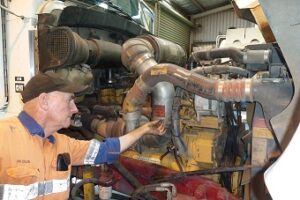
Also check the basics before chasing an upgrade. Dirty air filters, dragging brakes, incorrect tyre pressures, injector issues, boost leaks, poor wheel alignment and excessive idling can burn through fuel before combustion enhancement gets a fair chance to show its value. Fix obvious mechanical faults first. Then the fuel data becomes much more useful.
An on-board hydrogen generator uses electrical power to produce a controlled hydrogen and oxygen gas mixture, often called HHO. That gas is introduced into the engine intake in a managed quantity. The goal is to support a faster, more complete burn of the primary fuel charge.
For a hard-working internal combustion engine, combustion quality matters. Unburnt fuel, carbon build-up and inefficient burn characteristics all represent wasted potential. A correctly sized and installed hydrogen system is designed to improve the combustion event, which can support lower fuel consumption, stronger throttle response, reduced exhaust smoke and cleaner engine operation.


The commercial case is straightforward. If an asset consumes large volumes of diesel or petrol, even a modest and repeatable improvement in litres per 100 kilometres or litres per hour can add up quickly. That is why high-use vehicles, generators, workboats and machinery are often stronger candidates than low-kilometre private cars.
Do not treat hydrogen as magic gas in a bottle. Results depend on engine condition, system sizing, driving style, load, terrain, fuel quality and installation quality. A fleet manager should be wary of anyone promising one fixed saving figure for every vehicle. The right question is: what can this specific asset prove over a controlled test period?
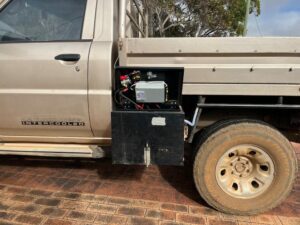

Bigger is not automatically better. The hydrogen generator needs to suit engine capacity, fuel type, electrical system, duty cycle and available installation space. An undersized unit may not deliver enough gas flow for a large, heavily loaded engine. An oversized or poorly configured system can create unnecessary electrical demand and installation complications.
Hydrogen Fuel Systems supplies Gen 10, Gen 15, Gen 20 and Gen 25 system options for different vehicle and equipment applications. The right choice should be based on the engine, not the sales pitch. A small petrol car, a diesel ute, a heavy vehicle, a marine engine and a stationary generator each need a considered setup.
Look beyond the cell itself. A dependable installation includes appropriate power supply components, wiring protection, hose routing, a water reservoir, filtration, mounting hardware and clear instructions. The system must be fitted where it is protected from heat, vibration, impact and service access problems. On a commercial vehicle, a neat install is not cosmetic – it is part of reliability.
For fleet buyers, documentation matters as much as the hardware. Ask for application guidance, technical specifications, test information and installation instructions. A system that is patented, supported with certification material and backed by practical component supply gives you a better foundation than a cheap, unsupported kit with no evidence trail.
A hydrogen generator is an engine enhancement system, not an accessory to bolt on casually between jobs. The wiring must be correctly fused and switched. The electrical load needs to be understood. Hoses must be secure and routed away from sharp edges, hot exhaust components and moving parts. Water quality, electrolyte requirements where applicable, and routine fluid checks must follow the manufacturer’s instructions.
On electronically controlled vehicles, installation should also respect the vehicle’s existing sensors, intake layout and fault-monitoring systems. Never bypass safety systems or make modifications that compromise legal roadworthiness. If the vehicle is under manufacturer warranty, obtain appropriate advice before proceeding.
For a fleet with multiple assets, standardise the installation process. Use the same approved components, wiring methods, labelling and inspection schedule across comparable vehicles. This makes fault finding faster, reduces variation between installs and gives drivers confidence that the equipment has been fitted professionally.
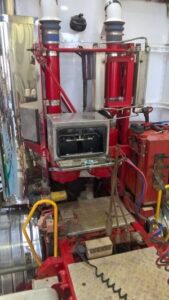
The fastest way to lose confidence in a fuel-saving program is to compare one lucky week against one bad week. Run a controlled trial over enough kilometres or engine hours to smooth out changes in weather, traffic, payload and driver behaviour.
For a useful fleet test, keep these four controls in place:
A clear spreadsheet is often more persuasive than a glossy claim. Calculate fuel use as litres per 100 kilometres for road vehicles, litres per hour for stationary equipment, or litres per tonne moved where payload data is reliable. Then calculate the dollar result using your actual fuel price.
For example, an owner-driver spending thousands of dollars a month on diesel does not need vague talk about efficiency. They need to know whether the system reduces litres used enough to recover its purchase and installation cost within an acceptable timeframe. That payback period will vary, but high-use assets generally give the strongest chance of a fast commercial return.
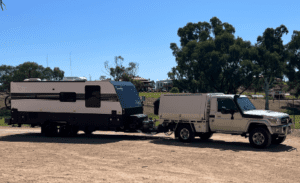
Hydrogen enhancement requires basic attention. Include the unit in your regular pre-start or scheduled-service checks. Inspect fluid level, fittings, hoses, wiring, connectors and mounting points. Replace filters and service consumables at the recommended intervals. If a driver reports a warning light, a fuel-use change or an engine issue, investigate it properly rather than assuming the hydrogen system is the cause.
Driver involvement also matters. A driver who leaves the vehicle idling for long periods, accelerates aggressively and runs tyres soft can erase a measurable fuel gain. Give drivers a simple explanation of why the system is fitted and why accurate fuel records matter. When they can see the operating-cost result, they are more likely to support the program.
The most profitable fleet upgrades are rarely the flashy ones. They are the upgrades that produce repeatable numbers across real work, real loads and real fuel bills. Fit a correctly matched hydrogen system, document the result and let the litres saved make the case for the next vehicle.
by Gavan Knox MSc, BSc, BEd.
WhatsApp call +61 403177183
contact gavan@hfuel.com.au
https://hydrogenfuelsystems.com.au
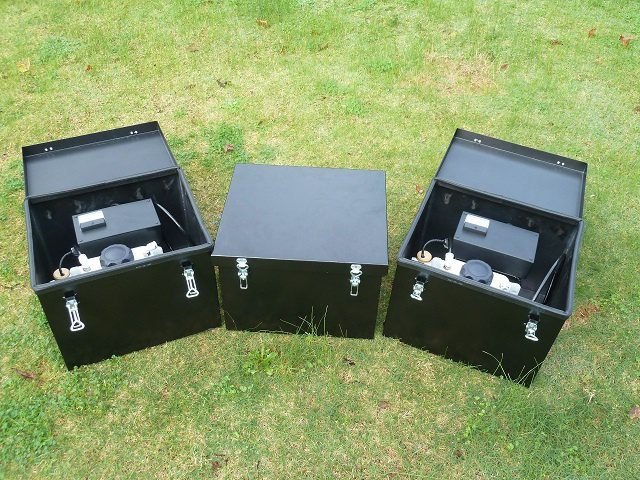
Brilliant Invention Gen 20 Hydrogen Generator ---(update Feb 7... Full Story

by Gavan Knox HFS whats app +61 403177183 gavan@hfuel.com.au... Full Story
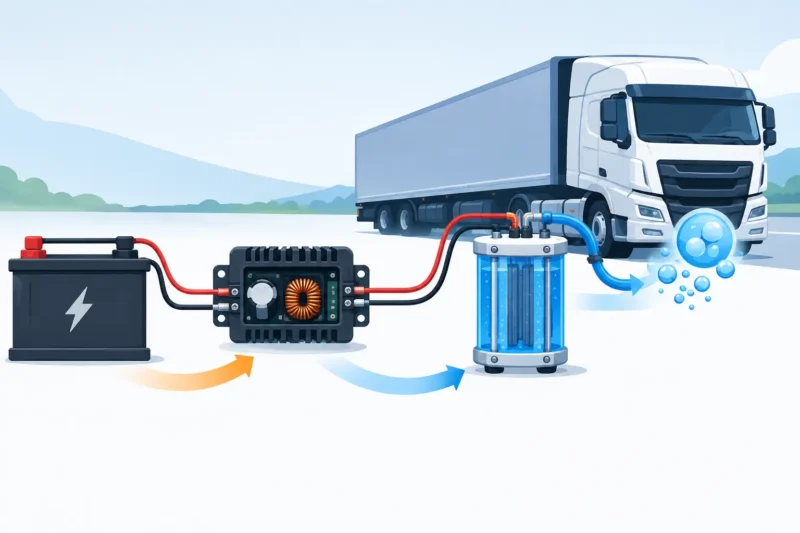
How 24V-to-13.8V Buck Configuration Regulators Affect HHO generation in... Full Story
A diesel that is smoking, using more fuel or... Full Story
How Do DC-DC Boost Regulators Affect Hydrogen Gas Production?... Full Story
Payment Methods Partner:

© 2023 - Hydrogenfuelsystems pty ltd