Brilliant Invention Gen 20 Hydrogen Generator July 2 2026
Brilliant Invention Gen 20 Hydrogen Generator ---(update Feb 7... Full Story
Perth, West Australia




by Gavan Knox
HFS whats app +61 403177183
gavan@hfuel.com.au
https://hydrogenfuelsystems.com.au
Producing Hydrogen using our PEM Hydrogen generator system
a PEM system can be used to generate hydrogen gas, and in fact it’s one of the most efficient and widely adopted technologies for clean hydrogen production today.
What a PEM System Actually Does
A PEM (Proton Exchange Membrane) electrolyser splits water into hydrogen and oxygen using electricity. The membrane only allows protons (H⁺ ions) to pass through, which makes the process:
🔬 How It Works (simple breakdown)
So yes — a PEM system is literally designed to generate hydrogen gas on demand.
🚛 Why PEM is popular for fuel systems (including automotive & industrial)
Given your work with hydrogen fuel systems, PEM tech is often used when you need controlled, high‑purity hydrogen rather than the more brute‑force HHO cell approach.
If you want, I can compare PEM vs alkaline vs HHO dry‑cell systems in terms of efficiency, cost, safety, and suitability for vehicle retrofits.
Our PEM system does not require acids to supply the Hydrogen ions fo produce Hydrogen Gas
A PEM system works very differently from the alkaline/HHO setups you’re used to, so it’s worth breaking it down clearly.
A PEM (Proton Exchange Membrane) electrolyser uses:
There is no liquid acid or alkaline electrolyte involved.
The membrane itself is a solid polymer that contains fixed sulfonic acid groups, but these are chemically bound inside the membrane. They don’t dissolve into the water and they don’t behave like a free acid solution.
So the system is not “using acid” in the way an HHO cell uses KOH or NaOH.
⚡ Why PEM Doesn’t Need Acid or KOH
The membrane performs the job that liquid electrolytes do in other systems:
Because of this, PEM systems:
🆚 PEM vs Alkaline/HHO Electrolysers
| Feature | PEM Electrolyser | Alkaline/HHO Cell |
| Electrolyte | None (pure water only) | KOH or NaOH solution |
| Membrane | Solid polymer (Nafion) | None |
| Gas purity | Very high | Lower |
| Maintenance | Low | Requires electrolyte changes |
| Corrosion | Minimal | High |
| Efficiency | High | Moderate |
Given your experience with HHO systems, PEM is basically the “clean, high‑tech” version of electrolysis.
If you want, I can walk you through whether a PEM system could replace or supplement your current HHO setups, or whether it’s practical for vehicle‑mounted hydrogen assist systems.
What is the makeup of the electrodes in a Electrolysis system and in a PEM electrolyser
A PEM electrolyser uses very specific, high‑performance electrodes, and they’re quite different from the stainless‑steel plates you use in HHO dry cells.
Here’s the clear breakdown.
⚡ The Electrodes Used in a PEM Hydrogen Generator
A PEM system has two catalyst‑coated electrodes:
Titanium is used because it resists corrosion in the acidic environment created inside the membrane.
Platinum is used because it’s the most efficient catalyst for hydrogen formation.
🧪 Why These Materials Are Needed
PEM membranes (like Nafion) contain fixed sulfonic acid groups, so the internal environment is mildly acidic. That means:
This is why PEM systems are more expensive but also far more efficient and durable.
🔍 Quick Summary Table
| Component | Material | Catalyst | Function |
| Anode | Titanium | IrO₂ or RuO₂ | Produces O₂ and H⁺ |
| Cathode | Carbon or titanium | Platinum | Produces H₂ |
| Membrane | Nafion | — | Conducts protons only |
If you want, I can compare PEM electrodes vs HHO dry‑cell plates so you can see exactly why PEM behaves so differently from your current systems.
Does a PEM system produce more hydrogen than an electrolysis system
Great question, and it gets right to the heart of why PEM systems are so different from the HHO/alkaline electrolysers you’ve worked with.
⚡ Does a PEM system produce more hydrogen than a normal electrolysis system?
Not automatically. All electrolysis systems—PEM, alkaline, HHO dry cells—are governed by the same physics:
So if two systems both run at, say, 20 amps, they will produce roughly the same amount of hydrogen, because Faraday’s laws don’t change.
But here’s the important part:
🔍 Where PEM does outperform traditional electrolysis
PEM doesn’t magically break the laws of electrochemistry. What it does do is convert more of your electrical power into actual hydrogen instead of heat, losses, or side reactions.
PEM advantages
What this means in practice
At the same electrical input, a PEM system often produces:
So while the raw volume of hydrogen per amp is similar, PEM gives you more hydrogen per unit of energy, especially at higher loads.
🆚 PEM vs HHO Dry Cell (your typical setup)
| Feature | PEM Electrolyser | HHO Dry Cell |
| Efficiency | High | Moderate |
| Gas purity | Very high (99.999% H₂) | Mixed HHO gas |
| Heat generation | Low | High |
| Current density | Very high | Limited |
| Maintenance | Low | High |
| Gas separation | Yes | No (H₂ + O₂ mixed) |
A PEM system is like a precision instrument. An HHO dry cell is more like a brute‑force generator.
🎯 Bottom line
If you want, I can run a comparison using your typical HHO cell specs (amps, voltage, plate count, electrolyte concentration) and show exactly how much hydrogen a PEM stack would produce at the same electrical input.
Tuesday, February 3, 2026
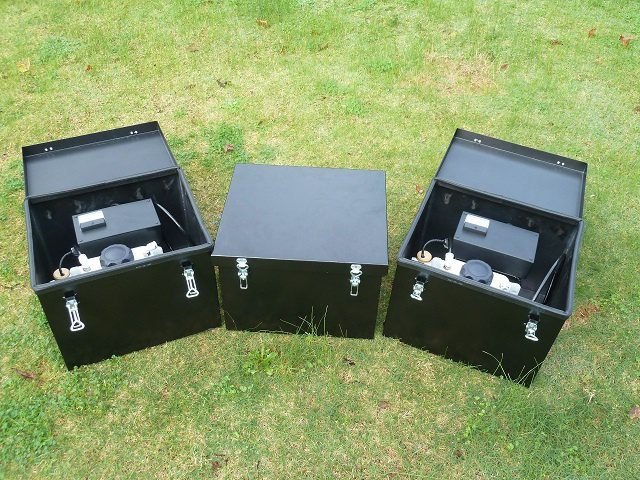
Brilliant Invention Gen 20 Hydrogen Generator ---(update Feb 7... Full Story

by Gavan Knox HFS whats app +61 403177183 gavan@hfuel.com.au... Full Story
HHO Versus Additives: What Actually Pays Back? - Oct.... Full Story
Run a Fleet Hydrogen Trial That Shows Real Results... Full Story

4WD Hydrogen Results for Hard-Working Rigs - Oct 9... Full Story
Payment Methods Partner:

© 2023 - Hydrogenfuelsystems pty ltd