Brilliant Invention Gen 20 Hydrogen Generator July 2 2026
Brilliant Invention Gen 20 Hydrogen Generator ---(update Feb 7... Full Story
Perth, West Australia





by Gavan Knox MSc, BSc, BEd, Inventor
WhatsApp call +61 403177183
contact gavan@hfuel.com.au
https://hydrogenfuelsystems.com.au
HHO Emissions Results That Stand Up to Testing -Sept 19. A tailpipe number only means something when you know what produced it. Genuine HHO emissions results are not a screenshot, a claim on a box or a quick idle reading after a vehicle has just been modified. They are repeatable measurements taken on a properly warmed engine, under comparable conditions, with the same fuel, load and test equipment. That is the standard serious vehicle owners, fleet managers and machinery operators should demand.
For a diesel ute working hard, a highway truck burning thousands of litres a month, or a generator running long shifts, emissions are tied directly to combustion quality and operating cost. When combustion is cleaner and more complete, the objective is straightforward: use fuel more effectively, reduce waste in the exhaust stream and maintain strong engine response. But the proof has to match the application.

Exhaust emissions are not one single figure. A petrol engine and a diesel engine produce different exhaust profiles, and their meaningful measurements are not identical. The right test looks at the gases relevant to that engine, then compares a stable baseline with readings after installation.
On petrol engines, carbon monoxide (CO), hydrocarbons (HC), carbon dioxide (CO2), oxygen (O2) and lambda are common tailpipe measurements. Reduced CO and HC can indicate that less unburnt fuel is leaving the cylinder. Lambda and oxygen readings help show whether the air-fuel balance has changed, which matters because a result can look impressive while the engine is simply running differently rather than more efficiently.
For diesel applications, opacity or smoke density is often a practical starting point. Excessive black smoke is wasted fuel made visible. Depending on the equipment available, operators may also assess CO, HC, CO2, NOx and particulate output. A reduction in visible smoke can be a useful operational result, particularly for work vehicles and plant, but a proper emissions result should be backed by instrument readings rather than a visual judgement alone.
NOx deserves special care. It is influenced heavily by combustion temperature, engine load, air management, EGR operation and calibration. Lowering one emission component does not automatically mean every other component falls by the same percentage. Anyone promising identical results across every engine, duty cycle and fuel type is selling a shortcut, not a test result.
An HHO system generates hydrogen and oxygen on board and introduces the gas into the engine intake. The intended effect is to support a faster, more complete burn of the main fuel charge. The outcome depends on whether the vehicle is mechanically sound and whether the system is correctly matched and installed.
A clean, well-maintained engine with a stable fuel system will give a more reliable comparison than one with blocked filters, a dirty intake, worn injectors, fault codes or an exhaust leak. If those faults are present, fix them first. Adding any performance or fuel-saving technology to a neglected engine makes the result harder to measure and harder to trust.
Vehicle use also matters. A lightly loaded passenger vehicle driven through suburban traffic will not behave like a prime mover hauling at highway speed between Perth and Kalgoorlie. Marine engines can run at sustained RPM for long periods. Generators may sit under a fixed load. These applications each need a testing process that reflects how the engine actually earns its keep.
System sizing matters as well. A small-capacity system on a large diesel will not be expected to deliver the same effect as a correctly specified system matched to engine capacity and operating demands. Gen 10, Gen 15, Gen 20 and Gen 25 systems are designed for different applications because engine size, fuel use and duty cycle are not interchangeable.
Start with a baseline. Do not test after a service, tyre change, injector clean, new air filter and HHO installation all at once, then credit every change to one component. Record the vehicle condition, kilometres, fuel type, ambient temperature, engine temperature and any recent maintenance before taking the first reading.
For a useful comparison, test at the same operating state. That means allowing the engine to reach normal temperature, using the same analyser where possible, and repeating the test under similar idle, RPM or load conditions. If testing a work vehicle, a loaded-road test or dyno-based comparison may offer more useful data than an idle-only reading.
A credible test record should include four things:
The more controlled the process, the more valuable the result. This is particularly important for fleets. One vehicle can provide a promising case study, but several comparable vehicles operating over a meaningful period deliver stronger evidence for a purchasing decision.
Fuel consumption is not an emissions test, but it is part of the commercial picture. If an engine produces lower smoke or lower hydrocarbons but uses more fuel to do the same job, the operating result is not good enough. Conversely, a lower fuel burn should be verified against kilometres travelled, engine hours, load carried and route conditions before a saving percentage is claimed.
For fleet operators, litres per 100 km is useful for road vehicles, while litres per hour may be the better measure for generators, marine engines and plant. Compare the same work, not just the same time period. A truck doing lighter loads in cooler weather can appear more efficient even without any mechanical change.
This is why the best evidence combines emissions readings with fuel records, driver notes and operating conditions. It turns a sales claim into a decision you can defend at the workshop bench or in the boardroom.
A disappointing reading does not always mean the HHO equipment is at fault. It can expose an existing engine problem or a weak test process. Air leaks, dirty MAF sensors, injector wear, poor earth connections, restricted filters, incorrect hose routing and insufficient electrical supply can all affect the outcome.
Modern vehicles add another layer. Electronic engine management may adapt fuelling based on sensor feedback. Any installation must be compatible with the vehicle, professionally fitted where required and checked against applicable Australian requirements. Do not bypass safety systems or modify emissions-control equipment to chase a number. A legal, reliable vehicle is worth more than a result that cannot be sustained.
Installation quality is not an optional extra. Secure mounting, correct wiring protection, properly routed hoses, suitable electrolyte management and regular checks are fundamental. Hydrogen Fuel Systems provides application-specific system options and technical material because the difference between a clean installation and a rushed one shows up in reliability, service life and measurable performance.
The strongest HHO emissions result is not necessarily the biggest percentage. It is a result that can be repeated, explained and connected to a real operating benefit. Lower smoke on a hard-working diesel, reduced CO and HC on a petrol engine, steadier combustion and a verified reduction in fuel used for the same work are commercially meaningful outcomes.
Ask for the test conditions behind every figure. Was the engine hot? Was it under load? Was the same analyser used? Were faults repaired before the test? Did fuel consumption improve over enough kilometres or hours to rule out normal variation? Straight answers separate practical engineering from marketing noise.
If you are assessing an HHO system for a vehicle, boat, generator or fleet, start with a sound engine and a documented baseline. Then measure the work that matters to you. The best result is the one that keeps showing up in your exhaust readings, your fuel records and your operating costs long after installation day.
by Gavan Knox MSc, BSc, BEd, Inventor
WhatsApp call +61 403177183
contact gavan@hfuel.com.au
https://hydrogenfuelsystems.com.au
Saturday, September 19, 2026
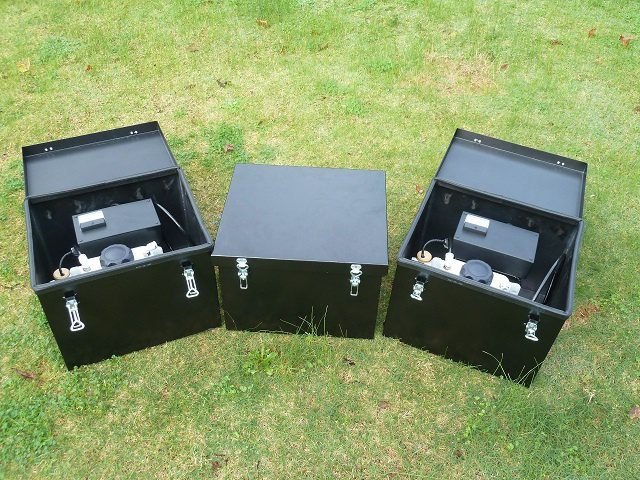
Brilliant Invention Gen 20 Hydrogen Generator ---(update Feb 7... Full Story

by Gavan Knox HFS whats app +61 403177183 gavan@hfuel.com.au... Full Story
A diesel that is smoking, using more fuel or... Full Story

How Do DC-DC Boost Regulators Affect Hydrogen Gas Production?... Full Story
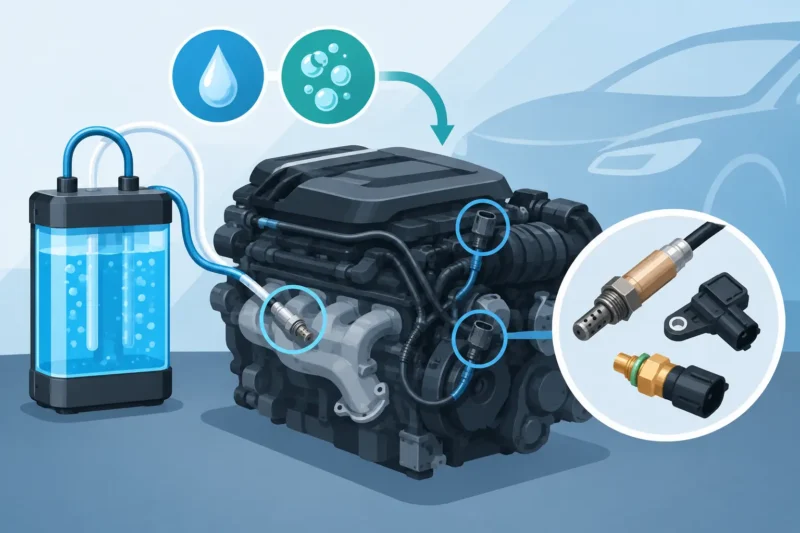
## Can HHO Affect Engine Sensors? What to Check... Full Story
Payment Methods Partner:

© 2023 - Hydrogenfuelsystems pty ltd