Brilliant Invention Gen 20 Hydrogen Generator July 2 2026
Brilliant Invention Gen 20 Hydrogen Generator ---(update Feb 7... Full Story
Perth, West Australia





by Gavan Knox MSc, BSc, BEd.
WhatsApp call +61 403177183
contact gavan@hfuel.com.au
https://hydrogenfuelsystems.com.au
Hydrogen Kit Certification Documents That Matter. A hydrogen kit is only as credible as the evidence sitting behind it. If a seller talks up fuel savings, stronger torque and cleaner exhaust but cannot produce hydrogen kit certification documents, installation data or genuine test material, you are being asked to buy on hope. That is not good enough when the kit is going on your car, ute, truck, boat, generator or working machinery.
For operators watching every litre of diesel or petrol, paperwork is not a box-ticking exercise. It is the difference between a system that has been engineered, tested and supported for real operating conditions, and a cheap component bundle with no accountable performance trail.
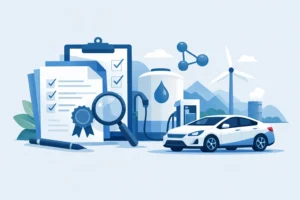
The word “certified” gets thrown around too freely in the aftermarket. A document may confirm that a component meets a particular electrical, materials or manufacturing standard. A test report may show measured emissions or fuel-use results under stated conditions. A patent document may establish that a design has protected technical features. These are all useful, but they are not the same thing.
A proper document pack lets you see exactly what has been examined, who carried out the work, which product version was involved and what the result means. It should also state any limits. A test on one engine, duty cycle or load profile is evidence for that application – not a blank cheque guaranteeing identical results on every vehicle in Australia.
That distinction matters. Fuel consumption on a long-haul diesel prime mover is influenced by load, terrain, idle time, driver behaviour, maintenance condition, tyre pressures and fuel quality. A generator running at a steady load behaves very differently to a 4WD working through sand or towing a caravan. Good evidence recognises the application instead of hiding behind a headline number.
Before spending money, ask for the documentation that relates to the actual system size and use case you are considering. A supplier with confidence in its product should be prepared to explain the paperwork in plain English, not bury you in jargon.
The most useful document pack generally includes:
There is a commercial reason this matters. The wrong-sized HHO system can undermine the very outcome you are chasing. A small passenger-car kit is not a serious answer for a hard-working diesel truck, marine engine or high-demand generator. The system must be matched to engine displacement, electrical capacity and operating profile.
A credible report names the product tested and gives the conditions of the test. You want to know whether the engine was cold or at operating temperature, whether the same route or load was used, how fuel was measured and whether the test ran long enough to reduce random variation.
Be cautious with screenshots that show a single impressive number without a method. A dashboard photo, an anonymous spreadsheet or a testimonial may be encouraging, but none replaces controlled documentation. Testimonials are valuable as real-world experience, especially from similar vehicles, yet they should support the technical evidence rather than replace it.
Ask a simple question: could another competent person understand how the result was reached? If the answer is no, the claim is not strong enough for a fleet purchasing decision.
This is where buyers need to be direct. Hydrogen kit certification documents for individual parts or a hydrogen-generation system do not automatically mean every installation is approved for every registered vehicle, insurer, state requirement or emissions rule.
Australian vehicle compliance can depend on the modification itself, the vehicle category, where it is registered and how the system is installed. Requirements may differ across states and territories. Heavy vehicles, commercial fleets, marine applications and stationary generators can also bring their own operating, workplace or insurance considerations.
The practical approach is to keep the supplier documentation with your installation records and confirm any applicable approval, engineering, inspection or insurance requirements before installation. Do this before you drill brackets, run wiring or alter under-bonnet layouts. It protects your investment and prevents costly rework.
A serious installer should also be prepared to follow the supplied instructions precisely. Improvised wiring, undersized cable, poor hose placement and missing fuses can turn a well-designed kit into an unreliable installation. Documentation is only useful when the work on the vehicle matches it.
Many buyers focus on the generator cell and ignore the rest of the system. That is a mistake. Hydrogen enhancement depends on stable electrical supply, correct water management, clean gas delivery and safe integration with the engine bay or machinery compartment.
Detailed installation material should show where to position the unit away from excessive heat and vibration, how to protect wiring, how to route lines without kinks or abrasion, and how to maintain filters and fluid levels. It should also set out commissioning checks. These are not minor details. They determine whether the unit keeps producing consistently after thousands of kilometres or hours of operation.
For a fleet, standardised installation instructions have another benefit: repeatability. If five trucks receive five different installations, comparing fuel results becomes difficult. If each vehicle is fitted, tested and maintained to the same documented process, you can build useful operating data and make decisions based on more than driver impressions.
A road train operator should prioritise evidence from high-load diesel work. A tradie running a ute around suburban jobs needs documentation relevant to stop-start driving and accessory load. A marine owner should check suitability for vibration, moisture and the engine’s duty cycle. Generator users should focus on steady-load efficiency, service intervals and electrical supply requirements.
This does not mean a supplier must have a report for every exact make and model. It means the proposed kit and its evidence should make mechanical sense for the application. Engine size, alternator capacity, available mounting space and normal workload all matter.
At Hydrogen Fuel Systems, the purpose of supplying technical documents, sizing guidance and test material is straightforward: give buyers something more useful than a sales pitch. You should be able to see what you are fitting, why it is sized that way and how it is meant to perform when installed correctly.
Walk away from claims that cannot be linked to a product model, an identifiable test or a clear installation process. Be equally wary of sellers who promise a fixed fuel-saving percentage regardless of vehicle condition or workload. No honest technical supplier can control every variable that affects fuel use.
Other warning signs include no fuse or wiring information, no maintenance instructions, no disclosed operating requirements, copied certificates that do not name the product, and paperwork with no issue date, author or scope. A certificate can look impressive while proving very little. Read the detail, not just the logo at the top.
Price alone is also a poor filter. The cheapest kit may save money at checkout but cost more through poor fitment, missing parts, weak support or a system that cannot be properly documented to a fleet manager, workshop or insurer.
Keep a file for each vehicle or machine. Store the kit specifications, installation instructions, invoices, serial numbers, photographs of the completed fitment and service notes. Then track fuel use before and after installation using the same method over meaningful operating periods.
For a single vehicle, record kilometres, litres, workload and any maintenance changes. For a fleet, compare similar vehicles on similar routes where possible. This gives you a cleaner picture of fuel savings and helps identify whether a result is linked to the system, the driver, the job or a mechanical issue that needs attention.
The best hydrogen kit certification documents do not just help you buy with confidence. They give you a practical foundation for fitting the right system, protecting the vehicle and measuring whether the result is paying its way.
by Gavan Knox MSc, BSc, BEd.
WhatsApp call +61 403177183
contact gavan@hfuel.com.au
https://hydrogenfuelsystems.com.au
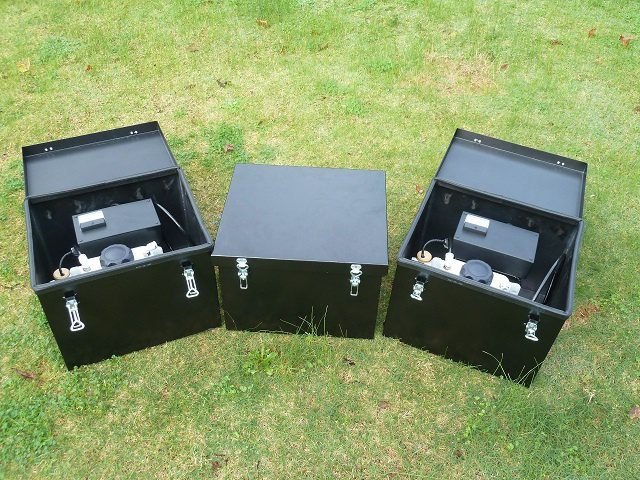
Brilliant Invention Gen 20 Hydrogen Generator ---(update Feb 7... Full Story

by Gavan Knox HFS whats app +61 403177183 gavan@hfuel.com.au... Full Story
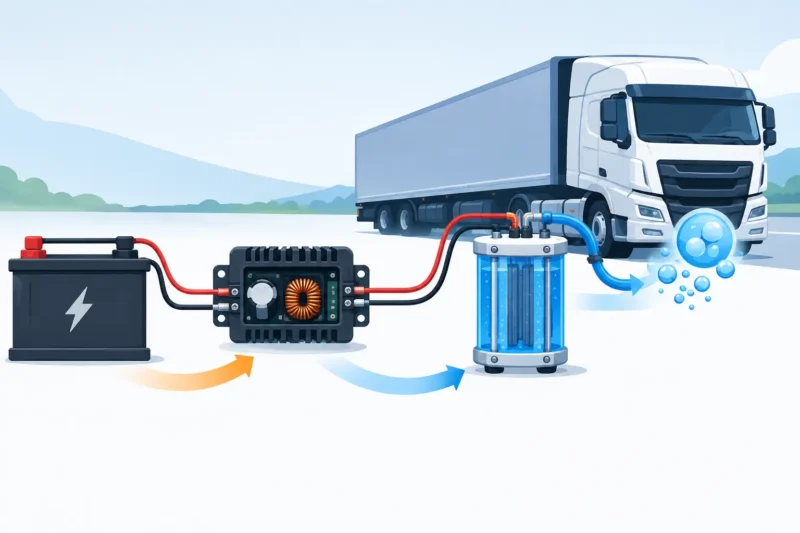
How 24V-to-13.8V Buck Configuration Regulators Affect HHO generation in... Full Story
A diesel that is smoking, using more fuel or... Full Story
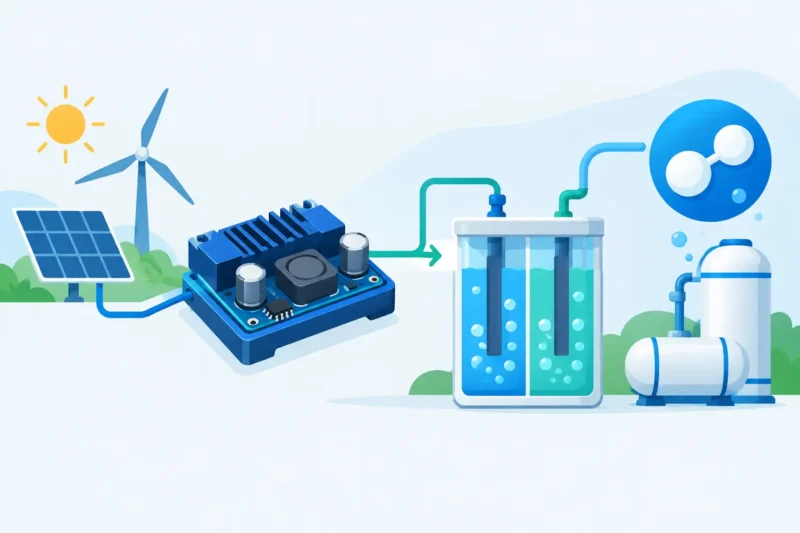
How Do DC-DC Boost Regulators Affect Hydrogen Gas Production?... Full Story
Payment Methods Partner:

© 2023 - Hydrogenfuelsystems pty ltd