Brilliant Invention Gen 20 Hydrogen Generator July 2 2026
Brilliant Invention Gen 20 Hydrogen Generator ---(update Feb 7... Full Story
Perth, West Australia




by Gavan Knox MSc, BSc, BEd, Inventor
WhatsApp call +61 403177183
contact gavan@hfuel.com.au
https://hydrogenfuelsystems.com.au
HHO Fuse /Circuit breaker Installation That Protects Your System – Sept 8A. Hydrogen generator can be mounted perfectly, wired neatly and producing as intended, yet still be let down by one cheap or incorrectly sized fuse. That is why HHO Fuse /Circuit breaker installation is not a minor finishing job. It is the electrical protection that stands between your HHO system, your vehicle wiring and a costly failure.
For a diesel work ute, a long-haul truck, a 4WD or a stationary generator, the goal is simple: supply the HHO unit with dependable power while ensuring a fault is stopped fast. Get the Fuse /Circuit breaker location, rating and wiring right from the start, and your system has the stable electrical foundation it needs to support cleaner combustion and better operating efficiency.

A Fuse /Circuit breaker is not there to make the hydrogen generator work harder. It is there to protect the cable and connected components when current rises beyond what the circuit can safely carry. If a positive cable rubs through against a sharp bracket, insulation fails from heat, or a component develops an internal short, the Fuse /Circuit breaker is designed to open the circuit before the wiring becomes the weak point.
That distinction matters. Selecting a larger Fuse /Circuit breaker simply because a smaller one blows is not a repair. It can leave the cable exposed to excessive current and turn a minor fault into melted insulation, damaged electronics or an under-bonnet fire risk.
A correctly specified HHO system uses matched components: the generator’s current draw, the cable size, the relay or controller, the fuse holder and the fuse rating all work together. The fuse rating must protect the smallest-rated part of that circuit, usually the cable or a supplied controller lead, while still allowing normal operating current without nuisance blowing.
Install the main positive fuse as close as practical to the battery or approved positive supply point. This is the unprotected end of the circuit, and it is where protection counts most. A short run from the battery terminal to the Fuse /Circuit breaker holder means there is very little live cable that could short against the body, engine or accessory hardware without protection.
Do not mount the holder where it can sit in water, collect dust, contact exhaust heat or be crushed by a bonnet hinge. In Australian conditions, under-bonnet heat, vibration, corrugations and road grime are not theoretical concerns. They are normal operating conditions for many work vehicles and touring rigs.
Use a quality, sealed automotive fuse holder rated for the current and environment. The holder must grip the Fuse /Circuit breaker firmly. A loose connection creates resistance, and resistance creates heat. If a fuse holder is discoloured, soft, cracked or shows heat damage around its terminals, stop and inspect the circuit before replacing anything.
The fuse needs to be protected, but it also needs to be reachable. If the system stops operating, a visual fuse check should not require removing half the engine bay. Mount the holder securely on a solid bracket or inner guard area away from moving parts, then route the wiring so it cannot pull on the terminals.
Avoid cable ties alone as the only support for a heavy fuse holder. Vibration can fatigue the cable at the terminal, particularly in trucks, agricultural equipment and off-road vehicles. Proper mounting costs little and prevents a frustrating fault later.
The right Fuse /Circuit breaker size is determined by the HHO kit’s documented electrical requirements and the cable size supplied or specified for that model. Gen 10, Gen 15, Gen 20 and Gen 25 systems can have different current demands. A Fuse /Circuit breaker suitable for a smaller passenger-car installation may be completely wrong for a larger truck, marine or generator application.
Follow the Fuse /Circuit breaker rating stated in the installation documentation supplied for your exact system. Do not assume that more amperage equals more hydrogen output or more fuel savings. The electrical system is engineered as a package, and changing the fuse outside specification can compromise that protection.
If a Fuse /Circuit breaker repeatedly blows, treat it as a diagnostic signal. Common causes include a damaged positive cable, poor terminal crimp, moisture in a connector, incorrect polarity, a chafed wire near a bracket, an undersized cable, a relay problem or a fault in a connected component. Find the cause before fitting another Fuse /Circuit breaker .
Never bridge a blown Fuse /Circuit breaker with wire, foil or any improvised conductor. That bypasses the one component designed to isolate the fault. It is a false economy that can damage an alternator circuit, vehicle wiring loom or HHO power supply components.
The Fuse /Circuit breaker can only protect the circuit it is connected to. Cable routing still determines whether the electrical installation survives daily use. Route the positive supply cable away from exhaust manifolds, turbo housings, steering shafts, fan belts, pulleys and sharp sheet-metal edges. Where the cable passes through a panel, use a proper grommet. Where it runs near heat, use suitable heat protection and secure it at sensible intervals.
Keep the wiring organised and clearly separated from ignition leads, high-temperature areas and factory sensor wiring where possible. This makes future inspection faster and reduces the chance of interference or accidental damage during servicing.
Use automotive-grade cable of the correct cross-section, with properly crimped terminals and heat-shrink protection where specified. A neat connection is not automatically a sound connection. Tug-test each terminal after crimping, check that ring terminals sit flat against the connection point, and tighten terminals securely without stripping threads.
For high-current applications, voltage drop matters. Excessive cable length, undersized wire and poor earth connections can reduce the voltage available to the hydrogen generator and create heat at weak connections. The system may still appear to run, but it will not be operating under the stable conditions expected from a properly installed kit.
Many HHO systems use a relay so the higher-current supply is switched safely and the generator only runs when the engine is operating or the ignition circuit is active. The main Fuse /Circuit breaker protects the high-current positive feed. The relay controls when that feed reaches the unit. A separate low-current ignition trigger circuit may also have its own protection requirement.
Do not confuse the two circuits. The ignition trigger wire is not a substitute for the main Fuse /Circuit breaker battery feed, and the main Fuse /Circuit breaker does not remove the need for correctly wired relay control. Connecting a high-current HHO load directly through a small ignition wire is a common installation mistake that can overload the factory circuit.
Select a proven ignition or engine-run trigger point appropriate to the vehicle and installation instructions. Modern vehicles can have sensitive electronics and smart charging systems, so avoid guesswork. If you are not confident identifying the correct circuit or reading a wiring diagram, use a qualified automotive electrician.
A poor earth can cause unreliable operation, heat at terminals and misleading fault symptoms. Connect the earth lead to a clean, solid chassis or engine earth point as instructed. Remove paint, corrosion and contamination where necessary, use the correct terminal hardware, then protect the finished connection from moisture and corrosion.
Do not earth a high-current system through a thin factory accessory wire or a random bolt that is isolated by paint, rubber mounts or corrosion. The earth return must handle the same operating demand as the positive feed.
Before starting the engine, inspect every part of the circuit. Confirm the Fuse /Circuit breaker rating matches the kit documentation, the holder is mounted securely, positive wiring is protected from chafe and heat, and no cables can contact moving components. Check polarity twice before connecting the battery.
Once the engine is running, verify that the system powers up only under the intended conditions. Check for unusual heat at the Fuse /Circuit breaker holder, relay, terminals and cable joints after a short operating period. Heat is a warning sign of resistance, poor contact or an incorrectly matched component.
For fleet vehicles, generators and equipment that work long hours, make fuse and wiring inspection part of routine servicing. Look for brittle insulation, loose ties, moisture ingress, corrosion and vibration damage. A five-minute check can prevent downtime when the vehicle is needed to earn.
Hydrogen Fuel Systems kits are designed to deliver practical combustion-enhancement results, but electrical protection is what keeps that investment working safely over the long haul. Fit the specified Fuse /Circuit breaker , mount it close to the supply, respect cable ratings and investigate every blown fuse properly. That is how you build an HHO installation ready for real kilometres, real load and real work.
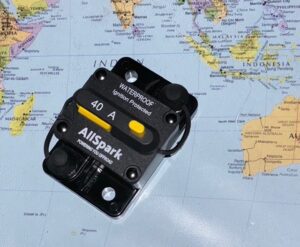
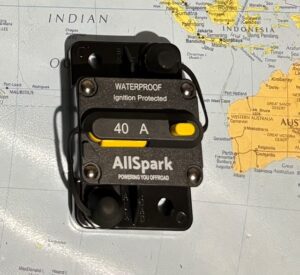
Through this document I have referred to the Fuse /Circuit breaker rather than just a fuse. It is advised to Use a Manual reset circuit breaker as shown in the shop as it can handle a larger current flow and be easily reset, rather than using a one time fuse, that may be accidently fused by an accidental short circuit .
The Manual reset circuit breaker should still be mounted in a secure protected location to avoid Dust and and moisture which can act as a short circuit.
Call Gavan and I can send you a quote for a Suitable circuit breaker for the style and output of your circuit breaker. Circuit breakers available are 20 amp, 30 amp, 40 amp and 50 amp units.
by Gavan Knox MSc, BSc, BEd, Inventor
WhatsApp call +61 403177183
contact gavan@hfuel.com.au
https://hydrogenfuelsystems.com.au
Brilliant Invention Gen 20 Hydrogen Generator ---(update Feb 7... Full Story

by Gavan Knox HFS whats app +61 403177183 gavan@hfuel.com.au... Full Story
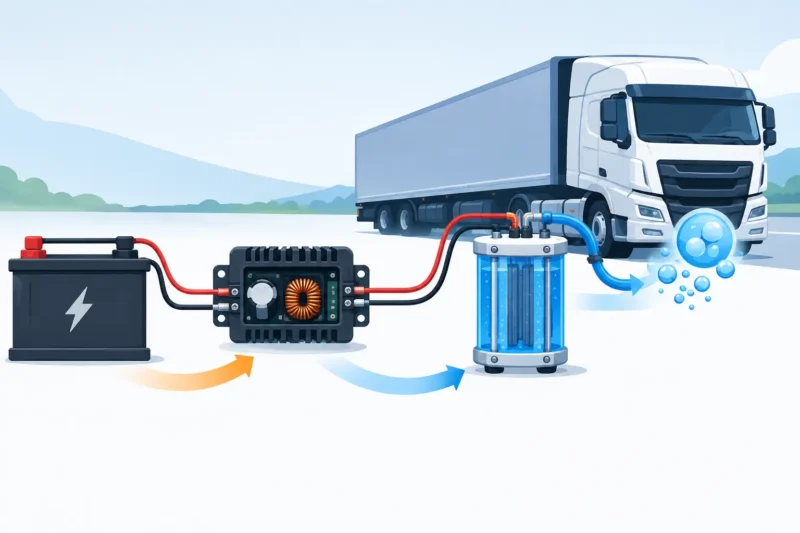
How 24V-to-13.8V Buck Configuration Regulators Affect HHO generation in... Full Story
A diesel that is smoking, using more fuel or... Full Story

How Do DC-DC Boost Regulators Affect Hydrogen Gas Production?... Full Story
Payment Methods Partner:

© 2023 - Hydrogenfuelsystems pty ltd