Brilliant Invention Gen 20 Hydrogen Generator July 2 2026
Brilliant Invention Gen 20 Hydrogen Generator ---(update Feb 7... Full Story
Perth, West Australia




by Gavan Knox MSc, BSc, BEd, Inventor
WhatsApp call +61 403177183
contact gavan@hfuel.com.au
https://hydrogenfuelsystems.com.au
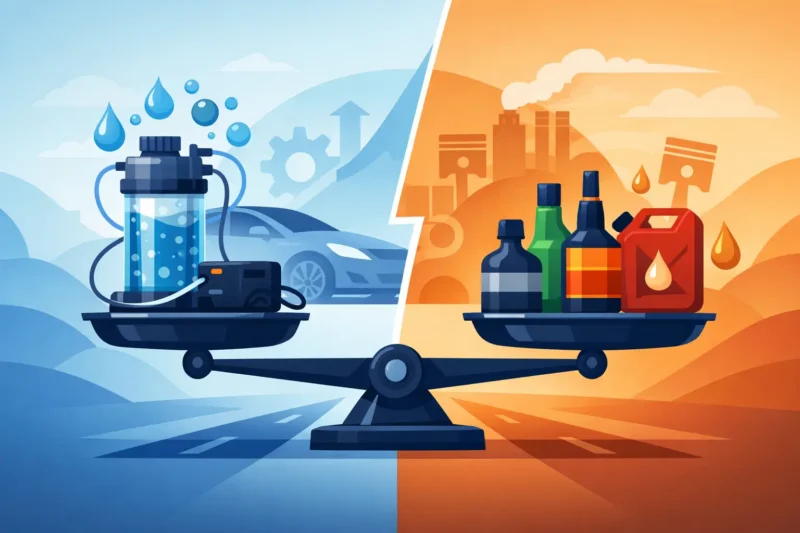
HHO Kit vs Fuel Additives – Which Pays Off? – Sept 4. A high-fuel-use ute, truck, 4WD, boat or generator does not need another vague promise. It needs a solution that can justify its cost in kilometres, litres and operating hours. In the hho kit vs fuel additives decision, both options aim to improve combustion, but they take very different paths – and one may suit your operation far better than the other.
Fuel additives are poured into the tank and consumed with the fuel. An HHO kit is fitted to the vehicle or machine and produces hydrogen gas on board while the engine operates. That difference matters when you are chasing an ongoing reduction in fuel use, better throttle response and cleaner combustion across thousands of kilometres.
Fuel additives are chemical treatments. Depending on the product, they may claim to clean injectors, remove moisture, lift cetane in diesel, improve lubricity or support more complete combustion. They can be useful maintenance products, particularly where fuel quality is questionable or an engine has a known injector cleanliness issue.
Their limitation is simple: every treatment is used up. If you stop buying and adding it, the treatment stops. The cost is recurring, and the result can vary with the fuel, engine condition, dosage and duty cycle.
An HHO kit uses the vehicle’s electrical system to generate a controlled flow of hydrogen and oxygen gas from water. That gas is introduced into the intake system to support a faster, more complete burn of the main fuel charge. The objective is not to replace diesel or petrol. It is to help the engine get more work from the fuel it is already consuming.
For an owner-driver doing long highway kilometres, a fleet with vehicles running every day, or a generator burning fuel for hours at a time, that ongoing operation is the key advantage. Once correctly installed, the system works whenever the engine is running, rather than relying on another bottle being added at the bowser.
A quality additive can have a legitimate place in a maintenance programme. Diesel conditioners may help address low lubricity, water contamination or deposits. Injector cleaners can be worthwhile where restricted spray patterns and poor fuel atomisation are contributing to rough running, smoke or reduced economy.
That makes additives a sensible short-term or targeted tool. If a vehicle has sat for months, has been filled from an unreliable source, or is showing symptoms linked to fuel contamination, an additive may be part of the fix.
But do not confuse a maintenance chemical with a long-term fuel-saving system. Most additives are not installed hardware. They do not continuously introduce a combustion-supporting gas, and they do not create a repeatable on-board process every time the engine is under load.
For a lightly used passenger car, the convenience of pouring in an occasional treatment may be enough. For a diesel work ute covering 40,000 kilometres a year, a rigid truck, a marine engine or a site generator, the ongoing cost of additive use deserves a hard look. Small per-tank purchases add up quickly.
An HHO system is designed for operators who want a fitted, ongoing efficiency upgrade. By supporting combustion in the cylinder, it can help reduce unburnt fuel, improve combustion quality and reduce the conditions that contribute to carbon build-up.
The practical benefits operators look for are lower fuel consumption, improved torque response, reduced exhaust smoke and a cleaner-running engine. Results depend on the application, but high-consumption engines and vehicles operating under regular load generally offer the strongest case for investment.
That is why HHO technology attracts attention from transport operators, tradies, 4WD owners, marine users and generator owners. When fuel is a major operating expense, even a measured improvement in consumption can produce meaningful annual savings.
There is also a different ownership model. Additives require you to keep buying product and remember to use it at the correct rate. An HHO kit requires an upfront purchase, proper installation and periodic basic servicing, such as checking water level, connections and filters. After that, it is working on every trip.
Hydrogen Fuel Systems offers system sizes matched to the job, from smaller vehicle applications through to higher-output systems for trucks, 4WDs, marine engines and generators. Correct sizing is not a minor detail. A system should match the engine capacity, fuel type and real workload rather than being selected on price alone.
This comparison comes down to how you calculate value. Fuel additives usually have a low upfront cost because there is almost no installation. That can make them attractive at the counter. Yet the true cost is the amount spent over the vehicle’s working life.
If an additive costs $20 to $40 a bottle and is used regularly across a year, the spend can be substantial before any measurable fuel saving is proven. Multiply that across several fleet vehicles and the numbers become harder to ignore.
An HHO kit costs more at the start because it is a physical system. It needs secure mounting, correct electrical protection, safe hose routing and an installation suited to the engine. That is not a drawback – it is the reason it can deliver an ongoing effect instead of a temporary treatment.
The right question is not, “Which one costs less today?” It is, “Which one has the better payback over my actual fuel use?” A weekend vehicle with low kilometres may take longer to recover the cost of an installed system. A courier van, mine-site vehicle, long-haul truck or generator with heavy annual consumption can reach a very different answer.
Neither option is a substitute for basic mechanical maintenance. An HHO kit cannot repair worn injectors, a blocked air filter, a failing turbocharger, poor compression or a fault code that has been ignored for six months. Likewise, no bottle of additive can turn a mechanically tired engine into a fuel miser.
Start with a healthy baseline. Service the engine, check for intake and exhaust leaks, make sure tyres are correctly inflated and confirm that there are no existing fuel-system faults. Then measure fuel use before and after any change using the same route, load and driving conditions where possible.
For HHO systems, installation quality is critical. The generator, reservoir, wiring, fuse protection, gas lines and intake connection must be fitted properly. Modern vehicles may also need the appropriate electronic fuel-control strategy so the engine management system responds correctly to the improved combustion conditions.
This is where generic, one-size-fits-all kits can disappoint. Application-specific guidance, suitable components and documented installation procedures give you a much better chance of achieving a consistent result.
Choose a fuel additive when you need a targeted maintenance treatment, you suspect fuel contamination, or your vehicle is low-use and you do not want to install equipment. It can be a practical supporting product, especially when used according to the manufacturer’s dosage instructions.
Choose an HHO kit when fuel burn is a continuing business cost and you want a system that operates every time the engine does. It makes the most commercial sense for drivers and operators who can measure litres per 100 kilometres, fuel per hour, load conditions and annual spend.
There is room for both in some operations. An additive may assist with periodic fuel-system maintenance, while an HHO system is installed for ongoing combustion support. The mistake is expecting a bottle of fuel treatment to deliver the same long-term operating model as a fitted hydrogen generator.
Before spending money, put your fuel figures on paper. Track what the vehicle or machine actually burns, how often it works under load and what each litre costs your business. That turns the choice from marketing talk into a straight operating-cost decision.
by Gavan Knox MSc, BSc, BEd, Inventor
WhatsApp call +61 403177183
contact gavan@hfuel.com.au
https://hydrogenfuelsystems.com.au
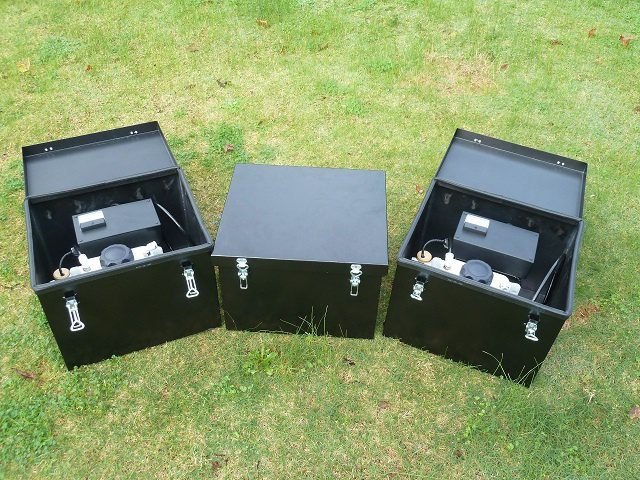
Brilliant Invention Gen 20 Hydrogen Generator ---(update Feb 7... Full Story

by Gavan Knox HFS whats app +61 403177183 gavan@hfuel.com.au... Full Story
A diesel that is smoking, using more fuel or... Full Story

How Do DC-DC Boost Regulators Affect Hydrogen Gas Production?... Full Story
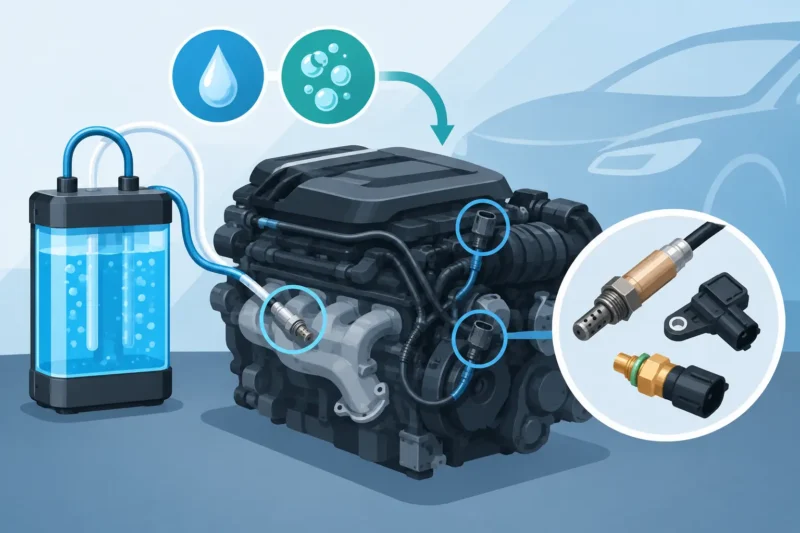
## Can HHO Affect Engine Sensors? What to Check... Full Story
Payment Methods Partner:

© 2023 - Hydrogenfuelsystems pty ltd