Brilliant Invention Gen 20 Hydrogen Generator July 2 2026
Brilliant Invention Gen 20 Hydrogen Generator ---(update Feb 7... Full Story
Perth, West Australia




by Gavan Knox MSc, BSc, BEd.
WhatsApp call +61 403177183
contact gavan@hfuel.com.au
https://hydrogenfuelsystems.com.au
HHO Versus Water Injection for Hard-Working Engines. A loaded ute, a diesel work ute climbing hills or a generator running long shifts all reveal the same thing: fuel use is driven by combustion quality, load and operating conditions. HHO versus water injection is not a simple contest between two add-ons. They work in fundamentally different ways, target different engine problems and suit different operating profiles.
If your priority is reducing fuel waste across normal day-to-day operation, an on-board HHO system deserves close attention. If your engine is regularly pushed into high boost, high intake temperatures or sustained heavy load, water injection may have a specific role. The right choice comes down to what your engine needs most – a combustion enhancer or a charge-air cooling system.
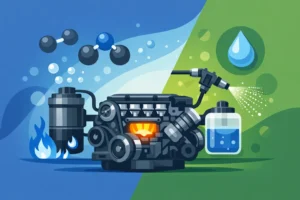
HHO systems generate hydrogen and oxygen gas on demand from water, then introduce that gas into the engine intake. The gas is used as a supplementary combustion aid. Hydrogen has a very fast flame speed and a low ignition energy, characteristics that can help the existing diesel or petrol fuel charge burn more completely and consistently.
Water injection works by spraying a fine water mist into the intake air, usually under boost or load. As the water evaporates, it absorbs heat. This lowers inlet charge temperatures and can reduce the risk of detonation in petrol engines. In diesel applications, it can also be used to manage combustion and exhaust gas temperatures when the engine is working hard.
That distinction matters. HHO is intended to support more efficient combustion from idle through to working load. Water injection is primarily a thermal management tool, with its strongest benefit appearing when intake temperatures and cylinder pressures rise.
Neither system creates free energy. Anyone promising that is selling fiction. The question is whether the system can improve the way your engine uses the fuel you are already paying for, under the conditions your vehicle or machinery actually sees.
A properly sized HHO kit is built for drivers and operators who want more from every litre of fuel. By supplementing the intake charge with on-demand hydrogen and oxygen, the system aims to improve flame propagation and reduce unburnt fuel left behind by an incomplete combustion event.
For a diesel engine, where fuel is injected into compressed hot air, combustion quality can be affected by injector condition, carbon build-up, driving pattern, load and fuel quality. HHO is commonly used to support a cleaner, more responsive burn. The practical targets are straightforward: stronger torque feel, reduced smoke, smoother operation and lower fuel consumption where the engine’s duty cycle supports it.
In petrol engines, the fast-burning nature of hydrogen can assist ignition and flame travel. Results vary with engine management, tuning, compression ratio and how hard the vehicle is driven. An older naturally aspirated work ute will behave differently from a modern turbocharged petrol 4WD with a tightly controlled ECU.
The key advantage is that an HHO system is active whenever the engine is operating, subject to the installation and control setup. It is not waiting for a boost threshold before it begins contributing. For vehicles that spend their lives commuting, towing, carrying tools or covering regional kilometres, that broader operating window can be more relevant than peak-load cooling alone.
Water injection has a genuine place in performance and high-load applications. Turbocharged petrol engines are especially prone to intake heat and knock when boost rises. Cooling the intake charge can allow more aggressive tuning, help control detonation and, in correctly engineered applications, support higher output.
For diesel engines, water injection can lower combustion and exhaust temperatures under heavy demand. That can be useful for a vehicle that is repeatedly towing near its limit, a race or competition build, or machinery held at a high load for extended periods.
But water injection is not automatically a fuel-saving system. Its gains often rely on tuning changes that take advantage of cooler intake temperatures. Without tuning, it may provide temperature control but limited improvement in fuel economy. With poor installation, incorrect nozzle placement or inconsistent flow, it can create its own headaches.
There is also the practical side. A water injection system needs a reservoir, pump, lines, nozzle, controller and a reliable supply of suitable water. Run the tank dry and its cooling effect disappears. If the engine tune depends heavily on water or water-methanol injection, a failed pump or blocked nozzle can become a serious issue.
The best system is not the one with the biggest claim. It is the one that fits the job.
A fleet vehicle clocking up mixed metropolitan and highway kilometres has a different duty cycle from a weekend drag car. A marine engine under a steady propeller load has different needs again. A generator running at a consistent output may reward combustion improvements differently from a turbo diesel that only sees maximum boost while towing a caravan through the ranges.
HHO is generally the stronger conversation for owners focused on everyday fuel use, combustion efficiency and emissions-related improvements. It is designed to be a supplementary gas system rather than a high-load-only cooling strategy. This makes it relevant for cars, 4WDs, trucks, marine engines and generators that need to earn their keep every hour they run.
Water injection is more specialised. It becomes attractive where heat is the limiting factor: high boost, high inlet temperatures, knock-prone petrol combinations or sustained heavy-load diesel work. If your concern is protecting an engine under extreme conditions, water injection may be part of the answer. If your concern is reducing operating cost across a broad range of normal use, HHO may be the more direct fit.
Both systems depend on correct sizing and installation. An undersized HHO generator on a large-capacity diesel may not deliver a meaningful gas volume. An oversized or poorly configured system can create electrical, plumbing or drivability issues. The generator size, power supply, wiring protection, gas filtration and intake connection all need to match the engine and application.
That is why application-specific selection matters. A small passenger vehicle does not need the same setup as a truck, a 4WD towing equipment, a commercial boat or a stationary generator. Hydrogen Fuel Systems offers generator sizes for different engine capacities and uses, from smaller vehicle applications through to demanding commercial and machinery work.
Water injection needs the same discipline. Nozzle size, injection point, activation pressure, pump capacity and tank location affect whether the system delivers a fine, controlled spray or becomes an unreliable accessory. On modern engines, any modification also needs to work sensibly with the factory ECU, sensors and emissions equipment.
Do not judge either technology by a video, a forum comment or a single impressive dyno run. Track your own baseline. Record litres per 100 km, hours worked per tank, load carried, route, idle time and maintenance condition before installation. Then compare like for like after installation. For fleets and commercial operators, that evidence is far more valuable than a headline figure.
Yes, in the right build, they can serve separate purposes. HHO can be used to support combustion efficiency, while water injection can control heat under high boost or severe load. This is not an automatic recommendation for every engine. Combining systems increases cost, complexity and the need for proper setup.
A modified turbo petrol engine that sees sustained boost is a more logical candidate than a stock commuter. Likewise, a heavily loaded diesel that regularly operates near its thermal limit may benefit from a carefully engineered approach that addresses both combustion quality and intake temperature.
For most operators, however, start with the problem you can measure. If fuel bills, sluggish response and smoke are the main concern, investigate HHO first. If intake air temperatures, exhaust temperatures or detonation under boost are the issue, investigate water injection and the supporting tune.
HHO and water injection are not interchangeable products. HHO is a practical combustion-enhancement option for drivers and businesses chasing better day-to-day efficiency, response and cleaner-running operation. Water injection is a targeted cooling strategy for engines that face serious heat and boost pressure.
Choose based on operating data, not hype. Measure the fuel burn, understand the load and fit equipment that matches the engine. When a vehicle, boat or generator is working for a living, the best modification is the one that delivers repeatable results where it counts – at the pump, under load and over the long haul.
by Gavan Knox MSc, BSc, BEd.
WhatsApp call +61 403177183
contact gavan@hfuel.com.au
https://hydrogenfuelsystems.com.au
Brilliant Invention Gen 20 Hydrogen Generator ---(update Feb 7... Full Story

by Gavan Knox HFS whats app +61 403177183 gavan@hfuel.com.au... Full Story

Fuel Economy Methodology That Produces Real Numbers - oct... Full Story

Can HHO Improve Towing Economy? Facts That Matter -... Full Story
HHO Versus Additives: What Actually Pays Back? - Oct.... Full Story
Payment Methods Partner:

© 2023 - Hydrogenfuelsystems pty ltd