Brilliant Invention Gen 20 Hydrogen Generator July 2 2026
Brilliant Invention Gen 20 Hydrogen Generator ---(update Feb 7... Full Story


by Gavan Knox MSc, BSc, BEd, Inventor
WhatsApp call +61 403177183
contact gavan@hfuel.com.au
https://hydrogenfuelsystems.com.au
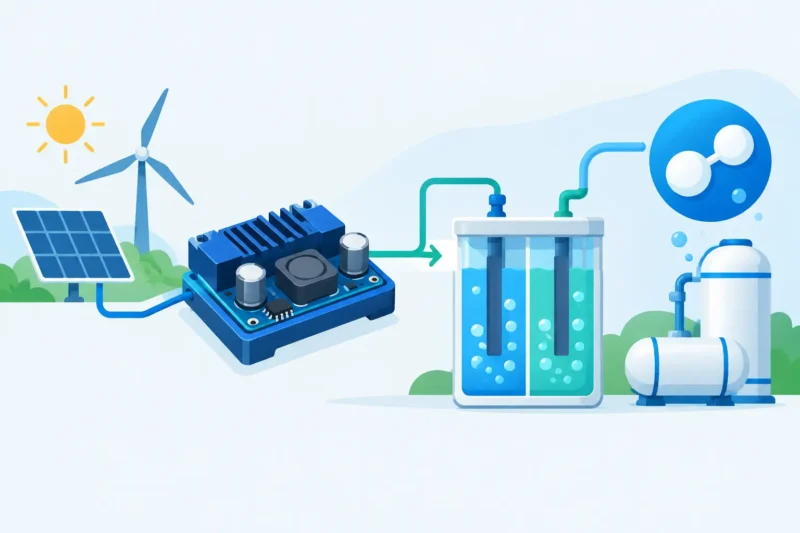
How Do DC-DC Boost Regulators Affect Hydrogen Gas Production. A hydrogen cell can be well built, correctly mounted and filled with the right electrolyte, yet still underperform if its power supply is wrong. When owners ask, “how do dc – dc boost regulators affect hydrogen gas production?”, the short answer is simple: they control whether the cell receives the stable, usable electrical power it needs to produce gas consistently.
For a vehicle, truck, generator or marine application, that consistency matters. Vehicle electrical systems do not deliver one fixed voltage all day. Battery voltage changes during cranking, alternator output rises once the engine is running, and voltage can drop under heavy electrical load. A properly selected DC-DC boost regulator helps manage those changes so the hydrogen generator is not left starving for power when demand is high or being driven too hard when charging voltage climbs.
An HHO cell produces hydrogen and oxygen through electrolysis. In practical terms, electrical current passes through the electrolyte between the cell plates, separating water into gas. More usable current generally increases gas output – but only within the operating limits of the cell, electrolyte, wiring and thermal design.
That is where a boost regulator earns its place. A DC-DC boost regulator takes a lower DC input voltage and raises it to a controlled higher output voltage. In an on-board hydrogen system, it can give the cell the voltage it needs to achieve its intended operating current, even when the source voltage is lower than ideal.
This is particularly relevant where a system is designed around a specific cell configuration. Plate count, plate spacing, electrolyte strength and desired current draw all influence the voltage the cell needs. Simply connecting every cell straight to a vehicle battery and hoping for the best is not a power strategy. It is a quick way to create inconsistent production, unnecessary heat, poor wiring outcomes or shortened component life.
A boost regulator does not create free energy. It draws power from the vehicle’s electrical system, and its output is subject to efficiency losses. What it does provide is control. That control can make the difference between a system that produces gas predictably and one that changes behaviour every time the alternator, battery or accessories change load.
Voltage gets the attention because it is easy to measure, but current is the figure that has the strongest direct relationship with gas production. Faraday’s law is the basic principle: the amount of gas produced is tied to the electrical charge passing through the electrolyte.
In a real automotive installation, the objective is not simply to chase the highest amp reading. The objective is to hold the cell in an efficient operating range. If current is too low, gas production falls away. If current is excessive, the cell can heat rapidly, electrolyte performance can change, water consumption can increase and electrical components can be pushed beyond their intended limits.
A quality boost regulator can help maintain output as input voltage moves around. For example, a system fed from a voltage source that sags under load may lose cell current without regulation. By lifting and controlling the output voltage, the regulator can bring the cell back towards its designed electrical range.
The result is steadier hydrogen gas production across normal operating conditions. That gives the engine a more consistent supplementary gas flow rather than a strong burst at one voltage and very little at another.
Most 12-volt vehicles run above 12 volts once the engine is operating. Depending on the vehicle and charging system, alternator voltage may sit around the mid-13 to mid-14 volt range, and it may vary further with temperature, battery state and electrical demand.
Without a controlled supply, a hydrogen cell sees those variations directly. Current rises and falls because the electrical conditions across the cell are changing. This affects gas output and heat generation at the same time.
A boost regulator is useful when the required cell voltage is above the available supply, but regulation is equally important in the overall design. The regulator, cabling, fuse protection and cell specification must work as one system. A regulator chosen only by its advertised peak wattage, with no allowance for continuous load, heat and real vehicle conditions, is not good enough for serious use.
This is where many DIY installations go wrong. A boost regulator may allow an operator to increase voltage, and gas production may initially appear to rise. But pushing voltage higher can also push current higher, especially as electrolyte temperature increases. That can create a runaway pattern: more current produces more heat, warmer electrolyte conducts more easily, and current climbs again.
More bubbles are not always better bubbles. If the cell is overheating, drawing excessive amps or using water at an unreasonable rate, the system is not operating efficiently. It is consuming electrical power that the engine must ultimately replace through the alternator.
A correctly configured setup needs to balance gas production against electrical draw. That balance depends on the application. A passenger diesel, a high-kilometre ute, a heavy transport vehicle, a stationary generator and a marine engine all have different electrical capacity, engine load profiles and space for installation.
This is why system sizing matters. The regulator should suit the designed cell load, not be used as a blunt instrument to force a small cell into producing beyond its intended capacity.
Automotive engine bays are harsh places for electronic components. Heat, vibration, dust, moisture and voltage spikes all work against cheap or poorly mounted hardware. A boost regulator that performs on a bench for five minutes may not survive a long haul, summer towing or continuous generator duty.
Look beyond a headline power number. Continuous current rating, thermal performance, heat sinking, enclosure quality and wiring terminals matter. So does the regulator’s input-voltage range. It must operate correctly across the voltage conditions your vehicle actually sees, not only at a perfect workshop voltage.
The unit should also be protected by correctly sized fusing close to the power source. Cable size must suit the current draw and cable run, with secure connections and proper routing away from heat and moving parts. Poor electrical connections create voltage drop, and voltage drop defeats the purpose of adding controlled power in the first place.
A relay or ignition-controlled switching arrangement is also essential in most vehicle installations. The hydrogen system should not remain powered when the engine is off. It needs to operate as part of a properly planned electrical installation, not as an unfused accessory connected permanently to the battery.
A regulator should be adjusted with measurements, not guesswork. Start with the cell manufacturer’s intended operating range, then verify output voltage and current with suitable metres once the system is installed.
Check the system cold, then check it again after it has reached normal operating temperature. Electrolyte conductivity changes as temperature rises, so a setting that appears conservative at start-up may become excessive after a long drive. Monitor cell temperature, current draw, water level and gas output behaviour together.
If amperage keeps climbing as the system warms, the answer is not to ignore it because gas output looks strong. Reassess the electrolyte concentration, regulator setting and cooling conditions. A stable system is the one that delivers repeatable production without constantly chasing its own temperature.
For fleets and high-use equipment, record the readings. A simple commissioning sheet with input voltage, regulated output, operating current and temperature gives you a baseline. If performance changes later, you have real data to work from instead of relying on memory.
The purpose of controlled hydrogen production is not to produce the biggest possible gas volume at any cost. It is to provide a consistent supplementary gas supply that supports more complete combustion under real operating conditions.
When an HHO system is correctly sized, installed and powered, vehicle owners may target lower fuel consumption, smoother operation, improved torque response and lower exhaust emissions. Actual outcomes vary with engine condition, duty cycle, driving style, load, fuel quality and the way the system is tuned. A regulator cannot fix injector faults, poor compression, blocked filters or an engine that needs mechanical attention.
But it can remove one major source of inconsistency: unstable cell power. For operators who run serious kilometres or hours, consistency is what allows a system to be assessed properly. You cannot measure fuel savings with confidence if the hydrogen generator is drawing wildly different current from one trip to the next.
Hydrogen Fuel Systems applications are built around matching system capacity and power supply components to the vehicle or equipment, rather than relying on a one-size-fits-all electrical setup. That approach matters whether the application is a car, 4WD, truck, boat or generator.
A DC-DC boost regulator is therefore not just another accessory in an HHO installation. When selected and set correctly, it is the control point that helps turn fluctuating vehicle power into stable hydrogen gas production. Measure it, protect it, match it to the cell, and let the system prove its performance over real operating hours.
Thursday, November 5, 2026
Brilliant Invention Gen 20 Hydrogen Generator ---(update Feb 7... Full Story
Will HHO Affect Turbochargers? Facts That Matter - Nov... Full Story
Marine Vessel HHO Fuel Trial for Real Fuel Savings... Full Story
HHO Kits That Make Hard-Working Engines Work - Nov... Full Story
Payment Methods Partner:

© 2026 Hydrogen Fuel Systems Pty Ltd