Brilliant Invention Gen 20 Hydrogen Generator July 2 2026
Brilliant Invention Gen 20 Hydrogen Generator ---(update Feb 7... Full Story


by Gavan Knox MSc, BSc, BEd, Inventor
WhatsApp call +61 403177183
contact gavan@hfuel.com.au
https://hydrogenfuelsystems.com.au
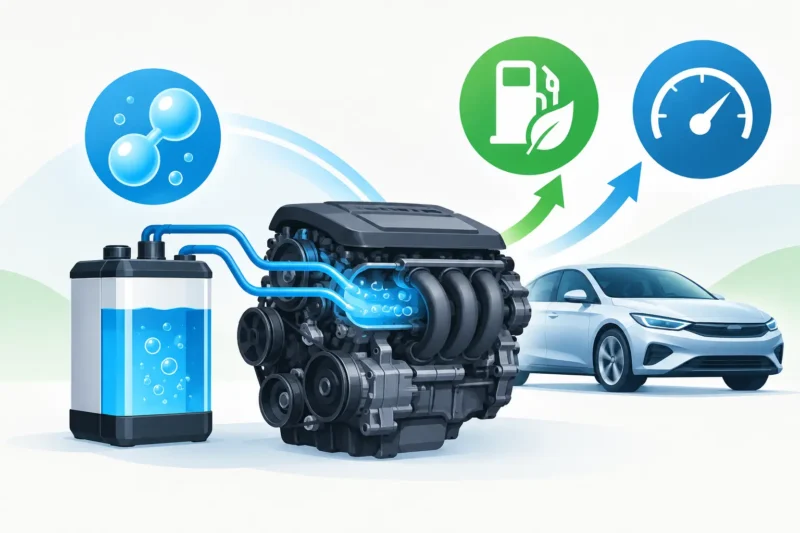
How Does HHO Hydrogen Increase Engine Economy and Power? – Sept 27A hard-working diesel ute, truck, boat or generator does not waste fuel because the tank is too small. It wastes fuel when combustion is incomplete, throttle response is lazy and part of every injection event leaves the cylinder without doing its full share of work. So, how does HHO / hydrogen increase the fuel economy and power of an engine? By introducing a small, on-demand hydrogen-rich gas supply that helps the existing petrol or diesel charge burn faster, cleaner and more completely.
That is the principle. The result, when the system is correctly sized, installed and tuned for the application, can be stronger torque, improved fuel efficiency, reduced smoke and a cleaner-running engine. It is not magic fuel and it does not replace the fuel already in the tank. It is combustion enhancement, and the condition of the engine matters.
An HHO system uses electrical power from the vehicle or machine to generate hydrogen and oxygen gas from water. The gas is produced on demand and fed into the engine’s intake air. There is no high-pressure hydrogen bottle to refill and no stored combustible gas sitting in the vehicle.
Hydrogen has a very fast flame speed and a wide flammability range. In the right quantity, it can help initiate and support a more even burn of the main fuel charge. Petrol and diesel engines burn their conventional fuel differently, but both can lose efficiency when combustion is slow, uneven or incomplete. That is especially common under heavy load, during stop-start operation, towing, idling or in engines with accumulated carbon deposits.
The aim is simple: get more useful cylinder pressure from the fuel you are already buying. When more of the injected or inducted fuel burns at the right time in the power stroke, the engine can produce the same work with less throttle or less fuel. In applications that need the available output, that improved combustion can be felt as sharper response and stronger pulling power.
Torque is what moves a loaded trailer, pushes a 4WD through soft sand and keeps a truck or marine engine working under load. An engine produces useful torque when combustion pressure builds efficiently after top dead centre. If the burn is sluggish or patchy, pressure arrives late and less of it is converted into crankshaft force.
A correctly matched HHO gas flow can improve flame propagation through the air-fuel charge. The practical effect may be cleaner acceleration, less hesitation and a stronger mid-range pull. Drivers commonly notice this where the engine works hardest – climbing, overtaking, towing or carrying tools and equipment.
This does not turn a standard engine into a race engine. It helps the engine access more of the performance already available from the fuel and airflow it has. Results depend on engine size, condition, load profile, fuel quality, driving style and whether the vehicle’s management system is properly accommodated.
Fuel economy gains do not come from creating free energy. An on-board hydrogen generator draws electrical power, and the alternator must replace that power. The system earns its place only when the combustion improvement and operating efficiency outweigh that electrical demand.
On a suitable engine, the savings can come from several connected changes. More complete combustion can reduce wasted hydrocarbons and soot. Improved combustion stability can reduce the throttle input needed to maintain a given speed or load. A driver who gets stronger low- and mid-range torque may also use less aggressive throttle to do the same job.
For diesel engines, this can be particularly relevant where smoke, soot and carbon build-up signal incomplete combustion. Cleaner combustion can reduce visible exhaust smoke and may help keep the intake tract, combustion chambers and exhaust components from loading up as quickly. For petrol engines, better burn quality may improve response and reduce the tendency for roughness under certain operating conditions.
The biggest financial opportunity is usually not a lightly used passenger car that only does short suburban trips. It is the vehicle or machine consuming significant fuel over long hours: a courier van, trade ute, fleet truck, generator, marine engine, 4WD tourer or agricultural machine. When litres add up every week, even a modest percentage improvement can have a meaningful payback.
An undersized unit may not supply enough gas to make a measurable difference on a large-capacity engine. An oversized or poorly controlled system is not the answer either. Gas production needs to match engine capacity, fuel type and operating demand.
That is why HHO systems are offered in different generator sizes for different applications. A small petrol car, a turbo-diesel ute and a heavy-duty generator do not have the same airflow, electrical capacity or fuel consumption. They should not be treated as though they do.
The installation also matters as much as the generator itself. Gas delivery location, hose routing, electrical protection, water quality, flashback protection and intake connections all need to be handled properly. A quality installation is tidy, fused, secure and designed for vibration, heat and real Australian road conditions.
On electronically managed vehicles, the engine control unit may adapt fuelling based on oxygen, airflow, temperature and exhaust feedback. In some cases, appropriate tuning or sensor management is required to preserve the intended combustion benefit. Fitting hardware without understanding how the engine manages fuel is where many generic claims fall apart.
Hydrogen enhancement is not a repair substitute. It cannot correct a blocked injector, worn turbocharger, slipping transmission, failed sensor, major vacuum leak, low compression or a neglected service schedule. If an engine is already mechanically compromised, diagnose and repair the fault first.
It also will not deliver one universal fuel-saving figure. A highway fleet vehicle running at steady load may respond differently from a short-trip city ute. A diesel working near its torque band may show a different outcome from a petrol engine that spends most of its life idling. Claims should be tested against litres used, kilometres travelled, engine hours, load and operating conditions – not judged from one trip or a dashboard estimate.
The sensible approach is to establish a baseline before installation. Record fuel purchases, distance or hours, payload, route and normal operating conditions over enough time to account for traffic, weather and driver behaviour. Compare like with like after installation. That is how operators separate a genuine operating improvement from random variation.
When less fuel leaves the cylinder partially burnt, exhaust quality can improve. Lower soot output and reduced unburnt fuel are practical outcomes worth pursuing, particularly for diesel applications that work under sustained load. Cleaner combustion may also reduce the rate of carbon accumulation that contributes to poor response and dirty intake components.
However, emission outcomes should always be treated as application-specific and measured where compliance is required. Any aftermarket modification must remain suitable for the vehicle, insurance requirements and relevant Australian laws. A professional installation and documented system components give owners far more confidence than improvised wiring and unproven hardware.
Hydrogen Fuel Systems positions HHO as a practical engine-efficiency upgrade, with system options, installation guidance and technical documentation for drivers and operators who want evidence behind the hardware. The right unit is the one matched to the engine and its workload, not simply the biggest unit available.
For owners watching every litre, the question is not whether hydrogen replaces fuel. It is whether better combustion can make the engine waste less of the fuel it already burns. On the right vehicle, with a correctly specified and properly installed system, that is where the value sits: more useful pull, cleaner running and lower operating cost over the kilometres and hours that matter.
by Gavan Knox MSc, BSc, BEd, Inventor
WhatsApp call +61 403177183
contact gavan@hfuel.com.au
https://hydrogenfuelsystems.com.au
Brilliant Invention Gen 20 Hydrogen Generator ---(update Feb 7... Full Story

A Towing Economy HHO Example That Pays Its Way... Full Story

Diesel Truck HHO Case Study That Measures Results -... Full Story
HHO Controller Review for Better Engine Results - Nov... Full Story
Payment Methods Partner:

© 2026 Hydrogen Fuel Systems Pty Ltd