Brilliant Invention Gen 20 Hydrogen Generator July 2 2026
Brilliant Invention Gen 20 Hydrogen Generator ---(update Feb 7... Full Story
Perth, West Australia





by Gavan Knox MSc, BSc, BEd, Inventor
WhatsApp call +61 403177183
contact gavan@hfuel.com.au
https://hydrogenfuelsystems.com.au
Are Engine MAP and Oxygen Enhancers Needed for HHO Savings?- Sept 28. A hydrogen system can improve combustion, but it does not give every engine the same electronic requirements. The question, are engine MAP sensor enhancers and oxygen sensor enhancers needed when using HHO hydrogen systems savings, comes down to one thing: how the vehicle’s ECU measures air, fuel and exhaust gases – and how aggressively the engine corrects its fuelling.
For some older vehicles, no enhancer is required at all. For many late-model petrol vehicles, an oxygen sensor enhancer may be considered as part of a properly assessed installation. For electronically controlled diesel engines, a MAP sensor enhancer may be relevant in particular applications. Fitting either device blindly, however, is not a shortcut to savings. It can create fault codes, poor drivability, excessive exhaust temperatures or compliance problems.
The smart approach is mechanical first, electronic second. Start with a correctly sized HHO system, sound electrical installation and a healthy engine. Then assess the vehicle’s fuelling strategy before deciding whether sensor conditioning is appropriate.
An on-board HHO hydrogen system introduces a small volume of hydrogen-rich gas into the intake air. Hydrogen has a fast flame speed and broad ignition range. When applied correctly, it can support a more complete and consistent combustion event, particularly where an engine spends long hours under stable load.
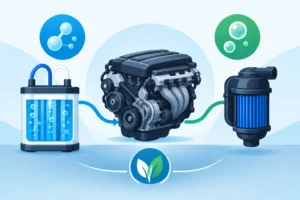
That is why high-use applications such as utes, trucks, generators, marine engines and 4WD vehicles are often considered for hydrogen enhancement. The goal is not to replace the fuel in the tank. The goal is to help the existing fuel burn more efficiently, reducing wasted energy and potentially lowering soot, smoke and carbon build-up.
But modern engine management systems are designed to maintain a programmed air-fuel ratio, emissions target and torque output. If the ECU detects a change in exhaust oxygen or intake pressure, it may compensate by adjusting injector duration, boost control or other operating parameters. That correction can reduce the practical effect of the HHO system.
This is where MAP and oxygen sensor enhancers enter the conversation.
The MAP sensor measures manifold absolute pressure. In simple terms, it tells the ECU how much air pressure is present in the intake system. The ECU uses that information, along with other inputs, to calculate fuel delivery and load.
A MAP sensor enhancer, sometimes called a MAP conditioner, modifies the signal the ECU receives from the MAP sensor. On certain electronically controlled diesel engines, it may be used to influence fuelling behaviour so the engine does not immediately compensate away the combustion efficiency benefit created by the HHO gas.
That does not mean every diesel needs one. Many diesel engines run effectively with an HHO system and no MAP modification, especially where the hydrogen system is modestly sized and the ECU strategy is less aggressive. Older mechanical diesels generally do not use a MAP signal to command fuel in the same way as common-rail engines, so a MAP enhancer is usually irrelevant.
A MAP enhancer may be considered where a modern turbo-diesel’s ECU responds strongly to calculated load changes, or where testing shows that the expected reduction in fuel use is being offset by electronic correction. It needs to be selected and calibrated for the exact vehicle, not treated as a universal plug-in accessory.
Too much alteration of a MAP signal can cause problems. The ECU may detect an implausible reading and log a fault. It may alter boost control in a way that affects performance. In the worst case, incorrect calibration can increase stress on the engine or exhaust system. For a working truck or a generator that cannot afford downtime, guessing is expensive.
Oxygen sensors, often called O2 or lambda sensors, monitor oxygen in the exhaust. On closed-loop petrol engines, the ECU uses their feedback to continually trim fuelling. If the sensor reports more oxygen than expected, the ECU may add fuel. If it reports less, it may reduce fuel.
An oxygen sensor enhancer modifies the signal from the oxygen sensor so the ECU does not over-correct when an HHO system changes the way combustion appears at the exhaust. In some petrol applications, that can help retain the fuel-saving potential of a correctly installed hydrogen system.
The key words are some petrol applications. Not every petrol vehicle needs an O2 enhancer, and not every O2 sensor should be interfered with. Modern vehicles may use wideband sensors, multiple sensors before and after the catalytic converter, adaptive learning and detailed catalyst-monitoring routines. A basic enhancer that worked on an older vehicle can trigger a check-engine light or emissions-monitor fault on a newer model.
Post-catalyst oxygen sensors are particularly sensitive from a compliance perspective because they monitor catalyst performance. Altering sensor signals to conceal a fault, defeat emissions monitoring or bypass an emissions control system is not acceptable. Any modification must remain lawful, safe and suitable for the vehicle’s intended use.
If a petrol engine is already running rich, misfiring, consuming oil or carrying a failed sensor, an enhancer is not the fix. Repair the underlying issue first. Hydrogen enhancement works best when the base engine is in proper operating condition.
The answer is not based on whether the engine is petrol or diesel alone. It depends on the ECU, sensor layout, operating load, HHO system output and the results you measure after installation.
A practical assessment starts with baseline data. Record fuel consumption over a repeatable route or operating cycle, scan for existing diagnostic trouble codes and confirm that intake, exhaust and fuel systems are healthy. For a commercial vehicle, measure litres per 100 kilometres or litres per hour across comparable loads. For a generator, use fuel consumed per operating hour at a consistent electrical load.
Install the correctly matched HHO system and repeat the same test. If the engine runs cleanly, produces no faults and shows a measurable improvement without an enhancer, there is no technical reason to add one. Extra electronics should earn their place.
If the ECU quickly corrects the change and testing shows little or no operational benefit, a vehicle-specific sensor solution may be worth discussing with an experienced installer. The decision should be backed by data, not marketing claims or forum advice.
A poorly chosen enhancer can make a good installation look bad. Common warning signs include a check-engine light, unstable idle, hesitation under acceleration, unusual smoke, reduced power, increased fuel use or failed readiness checks.
On turbo-diesel engines, keep a close eye on exhaust gas temperature where the application works hard. A heavily loaded caravan tow vehicle, fleet truck, boat or generator has far less tolerance for poor calibration than a lightly used passenger car. More hydrogen output or a larger signal adjustment is not automatically better. The best result is a stable, repeatable improvement with safe operating temperatures and predictable engine behaviour.
There is also a warranty and legal consideration. Australian vehicle rules, registration requirements and insurer expectations can vary by state and application. Any change affecting engine management or emissions-related components should be checked for compliance before fitting. A system intended for off-road, marine or stationary equipment may not have the same requirements as a road-registered vehicle.
Most disappointing HHO results begin before anyone looks at a sensor. An undersized system may not supply enough gas for a large engine under load. An oversized or poorly controlled system can create unnecessary electrical draw and tuning complications. Bad earth connections, undersized wiring, incorrect electrolyte concentration, poor hose routing or intake leaks can also erase the benefits you are trying to achieve.
Match the generator output to engine capacity and duty cycle. A commuter car, a long-haul diesel, a work ute and a marine engine do not operate in the same conditions. The installation must reflect that reality.
Hydrogen Fuel Systems focuses on application-matched HHO equipment because the target is practical operating results: lower fuel use, cleaner combustion and dependable performance. That result comes from fitting the right system properly, then verifying it with real fuel and operating data.
MAP and oxygen sensor enhancers are not compulsory add-ons for every HHO hydrogen system. They are tuning tools for specific electronically controlled engines where measured ECU correction is limiting the result. Used in the right application and calibrated correctly, they may help preserve combustion-efficiency gains. Used without diagnosis, they can create faults and cost more than they save.
Treat your engine as the final authority. Establish a baseline, install the HHO system correctly, monitor the results and only introduce sensor conditioning where the vehicle’s data clearly supports it. That is how fuel savings become a measurable operating advantage rather than another expensive promise.
by Gavan Knox MSc, BSc, BEd, Inventor
WhatsApp call +61 403177183
contact gavan@hfuel.com.au
https://hydrogenfuelsystems.com.au
Sunday, September 27, 2026
Brilliant Invention Gen 20 Hydrogen Generator ---(update Feb 7... Full Story

by Gavan Knox HFS whats app +61 403177183 gavan@hfuel.com.au... Full Story
How 24V-to-13.8V Buck Configuration Regulators Affect HHO generation in... Full Story
A diesel that is smoking, using more fuel or... Full Story

How Do DC-DC Boost Regulators Affect Hydrogen Gas Production?... Full Story
Payment Methods Partner:

© 2023 - Hydrogenfuelsystems pty ltd