Brilliant Invention Gen 20 Hydrogen Generator July 2 2026
Brilliant Invention Gen 20 Hydrogen Generator ---(update Feb 7... Full Story


by Gavan Knox MSc, BSc, BEd, Inventor
WhatsApp call +61 403177183
contact gavan@hfuel.com.au
https://hydrogenfuelsystems.com.au
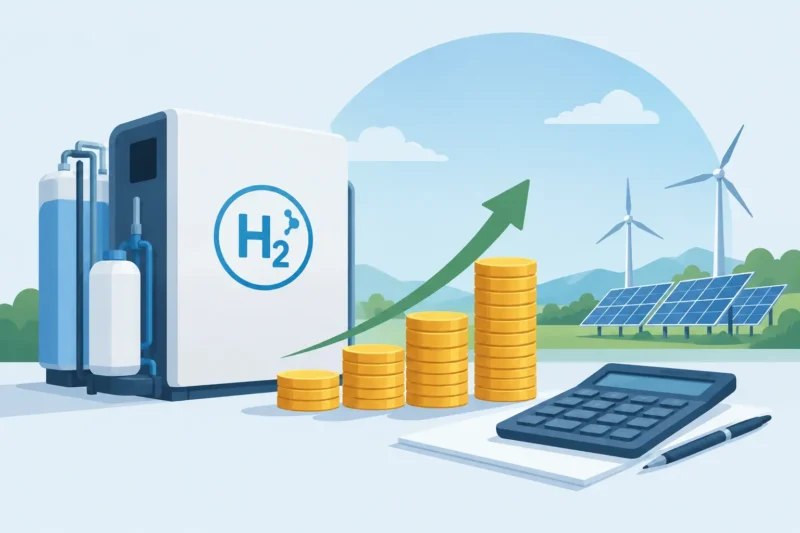
Calculate Hydrogen Kit Payback Before You Buy. A hydrogen kit is not a purchase to judge by the sticker price alone. If your ute, truck, boat or generator burns fuel every working day, the smarter question is how quickly lower fuel use can recover the fitted cost. To calculate hydrogen kit payback properly, use your actual fuel records, not a guess based on one good run down the highway.
The calculation is simple. Getting honest numbers is where the value lies. A vehicle covering low kilometres with light loads will deliver a different return from a loaded diesel doing regional runs, a mining support vehicle idling for hours, or a generator operating day after day. Fuel price, duty cycle, engine condition and correct kit sizing all matter.
Start with the fuel cost you can prove. Pull the last three to six months of fuel receipts, fleet reports or card statements. For a work vehicle, include litres, kilometres, hours where relevant, and the average price per litre. This gives you a credible baseline before any system is fitted.’
Use this core formula:
Payback period in months = total installed kit cost ÷ monthly fuel saving
Monthly fuel saving is calculated as:
Monthly fuel spend × measured fuel-saving percentage
For example, imagine a diesel 4WD or light truck using 450 litres per month. At $2.00 per litre, that vehicle costs $900 a month to fuel. If its measured improvement after fitting is 12 per cent under comparable operating conditions, the fuel saving is $108 per month.
If the kit, accessories and installation cost $1,620, the estimated payback is 15 months:
$1,620 ÷ $108 = 15 months
After that point, the savings remain in the business rather than being spent at the bowser. For a vehicle retained for several years, that is the number worth watching.
Do not use a claimed percentage as if it is automatically your result. Treat it as a scenario, then validate it against your own fuel records. A well-maintained vehicle doing consistent work is easier to measure than a vehicle that changes drivers, loads, routes and towing demands every week.
A payback calculation only works when the inputs match the application. The Gen 10, Gen 15, Gen 20 and Gen 25 systems are designed for different engine sizes and operating demands. Choosing a system based purely on the lowest purchase price can stretch the return if it is not suitable for the engine and workload.
Your initial cost should include more than the generator itself. Add the kit price, installation labour if you are not fitting it yourself, electrical components, consumables, freight and any application-specific fittings. If the vehicle needs a more complex installation because of limited engine-bay space, dual batteries, marine access or generator enclosure requirements, account for that upfront.
Then establish the monthly fuel spend. For road vehicles, take average monthly litres and multiply by your average fuel price. For generators, marine engines and machinery, calculate litres per operating hour, then multiply by average monthly hours and fuel price. Hours often tell a far clearer story than kilometres for equipment that works hard while stationary.
A simple worksheet might show these figures:
| Input | Example | |—|—:| | Average fuel use | 450 L per month | | Average diesel price | $2.00 per L | | Monthly fuel spend | $900 | | Estimated measured saving | 12% | | Monthly fuel saving | $108 | | Total fitted system cost | $1,620 | | Estimated payback | 15 months |
This is also the right place to calculate three scenarios: conservative, expected and strong. If the same vehicle saves 8 per cent, monthly savings are $72 and payback moves to 22.5 months. At 15 per cent, savings are $135 and payback falls to 12 months. This range is more useful than pretending every engine will produce one identical number.
Fuel savings are influenced by how the engine is used, not just what badge is on the grille. A highway prime mover, a stop-start delivery truck, a heavily loaded ute and a recreational 4WD can all have the same engine capacity but very different fuel profiles.
Longer operating hours and higher monthly fuel consumption generally produce faster payback because each percentage point of improvement is worth more dollars. That is why owner-drivers, fleets, marine operators and generator users often focus closely on return per litre or return per hour. A system fitted to equipment burning $3,000 of fuel each month has far more scope to return its cost quickly than one spending $250.
Engine condition matters too. Hydrogen enhancement is not a substitute for maintenance. Dirty air filters, worn injectors, boost leaks, poor tyre pressures, dragging brakes or a blocked fuel filter can hide the gains you are trying to measure. Service the vehicle first and record the baseline after the work is complete.
Driver behaviour can distort results. Aggressive acceleration, extended idling, changes in payload and different towing loads can easily outweigh a small fuel-use improvement on paper. Where possible, compare the same route, driver, load and fuel source over enough kilometres or hours to make the result meaningful.
One fill is not a fuel economy test. Tank fill levels vary, traffic changes and weather can affect consumption. A proper before-and-after review gives you evidence you can use for your own decision-making, and for a fleet manager or business partner who wants proof.
Before installation, record at least several normal fuel cycles. Note odometer readings or engine hours, litres purchased, fuel price, load conditions and any unusual operating factors. After installation, repeat the same recordkeeping for a comparable period.
For a road vehicle, calculate litres per 100 km:
Litres used ÷ kilometres travelled × 100
For a generator or marine engine, calculate litres per hour:
Litres used ÷ operating hours
Compare fuel economy first, then convert the change into dollars using the current fuel price. This separates actual efficiency from the effect of a changing diesel price. It also gives you a clean record of operating cost improvement over time.
If you run multiple vehicles, trial one suitable vehicle before rolling systems across the fleet. Pick an asset with reliable fuel data and a stable route or workload. A clean trial can make the next purchasing decision much easier to justify.
Fuel savings are the main figure in a hydrogen kit payback calculation, but they are not the only commercial consideration. Improved combustion efficiency may support cleaner operation, reduced exhaust emissions and improved engine response. For operators, stronger torque delivery under load can matter just as much as the fuel figure, particularly when towing, carrying tools or running equipment.
Maintenance benefits should be treated carefully in the payback model. If you have records showing fewer issues or lower servicing costs after fitting, include those verified savings. Do not invent a maintenance dollar figure simply to make the return look faster. The strongest business case is still built on fuel use that can be measured at the bowser or from a bulk tank.
Downtime deserves attention as well. A work truck off the road, a charter boat unable to operate or a generator unavailable on site can cost far more than a few litres of diesel. Correct installation, appropriate electrical protection and routine checks help protect the investment. Follow the application guidance, use suitable components and make sure any modifications meet relevant Australian requirements, warranty conditions and insurer expectations.
Once you have a monthly saving estimate, multiply it by 12. In the earlier example, $108 per month equals $1,296 per year. That means a $1,620 fitted system is close to recovered in the first 15 months, with the following years offering a clearer operating-cost advantage while the vehicle remains in service.
If the vehicle is due for sale in six months, has inconsistent usage or barely burns fuel, the payback may not stack up. If it is a high-use diesel, fleet asset, marine engine or generator with predictable consumption, the numbers can look very different.
Run the calculation before you buy, fit the correct system for the job, and keep recording fuel data after installation. The result you want is not a hopeful percentage. It is a documented reduction in dollars spent every month your engine is working.
by Gavan Knox MSc, BSc, BEd, Inventor
WhatsApp call +61 403177183
contact gavan@hfuel.com.au
https://hydrogenfuelsystems.com.au
Thursday, November 5, 2026
Brilliant Invention Gen 20 Hydrogen Generator ---(update Feb 7... Full Story
Will HHO Affect Turbochargers? Facts That Matter - Nov... Full Story
Marine Vessel HHO Fuel Trial for Real Fuel Savings... Full Story
HHO Kits That Make Hard-Working Engines Work - Nov... Full Story
Payment Methods Partner:

© 2026 Hydrogen Fuel Systems Pty Ltd