Brilliant Invention Gen 20 Hydrogen Generator July 2 2026
Brilliant Invention Gen 20 Hydrogen Generator ---(update Feb 7... Full Story
Perth, West Australia




by Gavan Knox MSc, BSc, BEd, Inventor
WhatsApp call +61 403177183
contact gavan@hfuel.com.au
https://hydrogenfuelsystems.com.au
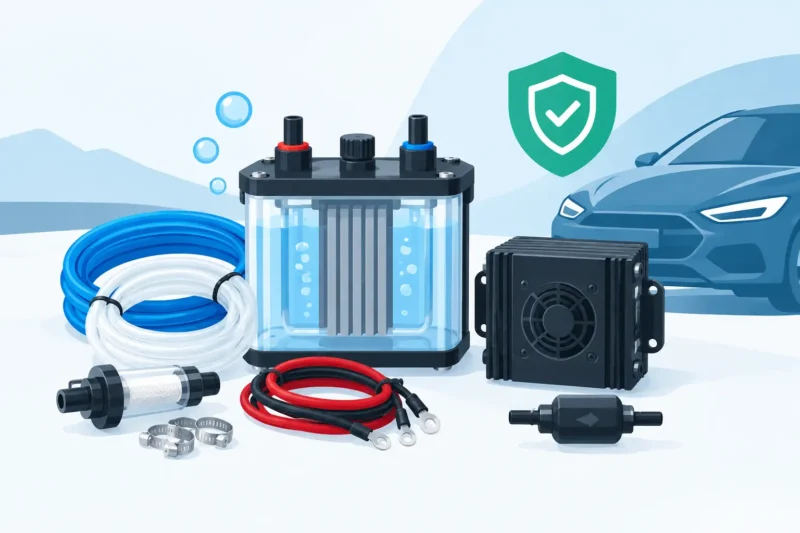
HHO Kit Accessories That Protect Performance – Sept 22. A hydrogen generator is only as reliable as the parts feeding it, protecting it and controlling it. The right HHO kit accessories turn a basic installation into a system built for consistent output, cleaner operation and long service life – whether it is fitted to a diesel ute, a road train, a 4WD, a boat or a standby generator.
Cheap fittings and improvised wiring may look like a saving on installation day. They can quickly become the reason for leaks, voltage loss, contaminated electrolyte, blown fuses or a system that simply does not perform as intended. If you want a hydrogen enhancement system to support combustion efficiency and lower operating costs, every supporting component must be selected for the application.

An HHO system has several jobs happening at once. It needs a stable electrical supply, a controlled electrolyte path, clean gas delivery and protection from heat, vibration and engine bay conditions. The cell gets most of the attention, but the accessories determine whether those jobs are handled properly.
A vehicle that sees daily stop-start work in Perth traffic needs different mounting and cable routing considerations from a long-haul truck crossing the country. A marine installation faces moisture and corrosion. A generator may run for long, steady periods and needs components matched to its duty cycle. There is no value in fitting a high-capacity cell if the power supply, hose routing or safety hardware is undersized.
Good accessories also make fault-finding faster. When filters, fuses, connectors and mounting points are installed correctly, a technician can inspect the system logically rather than chase an intermittent issue through a tangle of non-standard parts.
A hydrogen generator demands a dependable electrical feed. Properly rated cable, terminals, relays, circuit protection and power supply components help maintain stable current without putting unnecessary strain on the vehicle’s electrical system.
Cable that is too light creates resistance and heat. Poor terminal crimping creates voltage drop. A fuse chosen by guesswork may nuisance-trip or fail to provide adequate protection. These are not minor details. Stable current supports consistent cell operation, while correctly installed protection helps isolate a problem before it damages wiring or electrical components.
For higher-output systems on trucks, machinery and generators, power supply selection should be based on the actual electrical load and operating environment. Fit components designed for the job, route cables away from exhaust heat and moving belts, and protect them from abrasion wherever they pass through a panel or bracket.
The reservoir does more than hold water. It supports electrolyte management and gives you a practical point for checking fluid condition and level. A quality reservoir and compatible fittings help reduce the risk of leaks, contamination and poor flow.
Hose selection matters just as much. Engine bays are hot, crowded and constantly vibrating. Hose needs to resist heat and chemical exposure, while fittings must stay secure under vibration. Avoid sharp bends that restrict flow and keep hose away from turbochargers, exhaust manifolds and edges that can cut through it over time.
Use clamps suited to the line and check them after the initial operating period. A connection that appears tight in the workshop can settle once the vehicle has been through heat cycles and rough roads.
Gas delivery needs to be clean and controlled. Bubblers and filters are fitted to help protect the system and engine intake path by managing moisture and contaminants before the gas reaches the inlet. They also provide a visible inspection point: discoloured fluid, residue or an unexpected change in level tells you it is time to investigate.
This is not an area for makeshift plumbing. Correct hose routing, secure connections and purpose-built safety components are essential. Keep the gas line as direct as practical without stretching it tight, and mount components where they can be inspected without dismantling half the engine bay.
A filter is a service item, not a fit-and-forget ornament. Inspect it at the intervals recommended for your system and sooner if the vehicle works in dusty, high-heat or high-vibration conditions.
A cell, reservoir or filter mounted on a flimsy bracket will not stay where it belongs for long. Vibration works on every fastener, particularly in diesel 4WDs, commercial vehicles and equipment used on corrugated access roads.
Use solid mounting hardware that suits the vehicle structure and leaves room for service access. The system must be secure without crushing hoses, stressing wiring or blocking factory service points. Mounting position also affects heat exposure. A neat installation that places components beside an exhaust source is not a good installation.
Before drilling or fastening anything, check both sides of the panel. You do not want to find a brake line, wiring loom or fuel line after the drill bit is already through.
The correct electrolyte and clean water are fundamental to stable operation. Contaminated water can introduce minerals and residue that affect the cell and make servicing harder. Follow the system’s instructions on concentration rather than assuming more electrolyte means more performance. Over-concentration can increase current draw and heat, creating unnecessary wear.
Keep practical service parts on hand for vehicles that cannot afford downtime. Depending on the application, that can include replacement hose, clamps, filters, fuses, terminals and approved fittings. A fleet operator does not need a shelf full of random parts. They need the right spares, labelled clearly, so a routine inspection does not become a day off the road.
The accessory package should follow the system size and how the engine earns its keep. A Gen 10 system on a passenger car has different mounting space, current requirements and service demands from a Gen 25 installation on a heavy-duty engine.
For a work ute or 4WD, prioritise vibration resistance, protected cable routing and easy access for checks after off-road use. For trucks and transport equipment, focus on heavy-duty electrical connections, secure mounting and component placement that does not interfere with scheduled servicing. Marine users should give extra attention to corrosion resistance and dry, accessible mounting locations. Generator installations need a tidy, protected layout that can be inspected during routine maintenance runs.
Do not choose accessories solely because they are the lowest-cost option or because they fit physically. Check material compatibility, current rating, hose diameter, temperature exposure and the intended system configuration. A part can look right and still be the wrong part.
A professional-looking installation follows a few non-negotiable principles. Wiring is fused close to the power source, protected from heat and abrasion, and terminated cleanly. Hoses are routed without kinks, supported along their length and checked for clearances. Components are mounted firmly but remain accessible for inspection and servicing.
After installation, inspect the entire system while the engine is running and again after the first few drives or work cycles. Check fasteners, hose clamps, fluid level, wiring security and signs of rubbing. This early inspection catches most installation-related issues before they become downtime.
Documentation matters too. Keep installation instructions, system specifications and service notes with the vehicle records. For fleets, this gives drivers and maintenance staff a clear reference point and makes it easier to compare performance, fuel use and service history across the equipment.
The strongest results come from components designed to work together. Hydrogen Fuel Systems supplies HHO systems, installation guidance and supporting parts so owners can build a setup suited to the engine rather than force generic hardware into place.
That does not mean every vehicle needs every optional component. A simple passenger-car application may need a compact, straightforward layout. A commercial diesel with high kilometres, however, deserves properly rated power components, protected lines and serviceable filtration from day one. The decision comes down to engine size, available space, electrical capacity and the cost of downtime.
Treat accessories as performance insurance, not an afterthought. When the wiring is stable, the fluid path is clean, the gas line is protected and the installation can be serviced easily, your HHO system has the foundation it needs to keep working hard alongside the engine.
by Gavan Knox MSc, BSc, BEd, Inventor
WhatsApp call +61 403177183
contact gavan@hfuel.com.au
https://hydrogenfuelsystems.com.au
Brilliant Invention Gen 20 Hydrogen Generator ---(update Feb 7... Full Story

by Gavan Knox HFS whats app +61 403177183 gavan@hfuel.com.au... Full Story
How 24V-to-13.8V Buck Configuration Regulators Affect HHO generation in... Full Story
A diesel that is smoking, using more fuel or... Full Story

How Do DC-DC Boost Regulators Affect Hydrogen Gas Production?... Full Story
Payment Methods Partner:

© 2023 - Hydrogenfuelsystems pty ltd