Brilliant Invention Gen 20 Hydrogen Generator July 2 2026
Brilliant Invention Gen 20 Hydrogen Generator ---(update Feb 7... Full Story


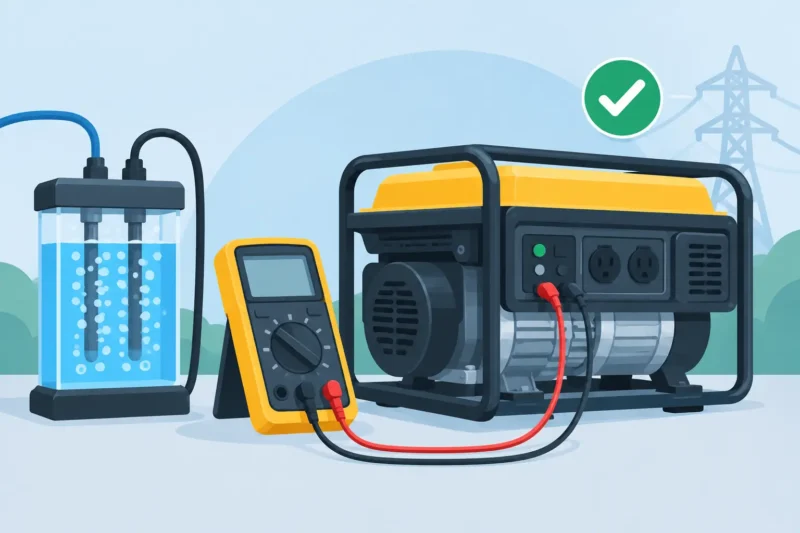
HHO Voltage Testing for Reliable Generator Output – Nov 26. A hydrogen generator can be perfectly mounted, correctly plumbed and filled with the right electrolyte, yet still underperform if its electrical supply is wrong. HHO voltage testing is the fast, practical way to confirm the system is receiving the power it needs without overloading the cell, cooking wiring or flattening the battery.
For a working vehicle, ute, truck, 4WD, generator or marine engine, voltage is not a minor detail. It determines how consistently the HHO system can operate as engine speed, alternator output and electrical demand change. Test it properly and you can find poor connections before they become expensive faults.
An on-board HHO generator draws power from the vehicle’s charging system. When the engine is running, the alternator should supply enough voltage to operate the hydrogen cell while maintaining battery charge and supporting the vehicle’s normal electrical loads.
Low voltage usually means reduced current flow and weaker gas production. The cause may be a tired battery, weak alternator, corroded terminals, undersized cable, a poor earth, a blown fuse or a relay that is not making a clean connection. High voltage is also a problem. Excessive charging voltage can increase cell temperature, accelerate electrolyte activity and put unnecessary strain on electrical components.
The objective is not simply to see a number on a multimeter. You are checking whether voltage remains stable from the battery to the HHO controller and generator under real operating conditions. A reading that looks acceptable at idle may fall away once headlights, air conditioning, driving lights, electric fans or a trailer connection are switched on.
Every vehicle and HHO system has its own operating conditions, so always work from the specifications supplied with the kit and the vehicle manufacturer’s charging-system data. That said, most conventional 12-volt automotive systems will show around 12.4 to 12.8 volts at a healthy battery with the engine off. With the engine running, charging voltage commonly sits around 13.8 to 14.7 volts.
Many late-model vehicles use smart alternators, battery-management systems or variable charging strategies. These can deliberately alter voltage depending on battery state, temperature, braking conditions and electrical demand. A reading that moves around is not automatically a fault. What matters is whether the HHO system is configured to work within that vehicle’s charging behaviour and whether power remains dependable when the generator is meant to be active.
On 24-volt trucks, machinery and marine applications, do not assume the same components used on a 12-volt car will be suitable. The supply, relay, fuse rating, controller and generator configuration must match the system voltage. Guesswork at 24 volts can damage equipment quickly.
A decent digital multimeter is the starting point. It should be capable of reading DC voltage accurately and have leads in good condition. A clamp meter is also valuable where current draw needs checking without disconnecting heavy wiring. For fault-finding on commercial vehicles, a battery load tester and scan tool can help identify charging or battery-management issues that a basic voltage check will not reveal.
Before testing, inspect the installation with the engine off. Check that cables are protected from heat, sharp edges and moving parts. Look for loose crimp terminals, green corrosion around battery connections, melted fuse holders, rubbed insulation and earth cables attached to painted or contaminated metal. A voltage test is more useful when the physical installation is sound.
Use proper eye protection and keep sparks, cigarettes and open flames away from the battery and HHO system. Hydrogen is highly flammable. If you are not comfortable working around vehicle electrics, get a qualified auto electrician involved. That is cheaper than replacing an alternator, wiring harness or control module.
Start at the battery. With the engine switched off and accessories disabled, place the meter probes directly on the battery posts, not the cable clamps. This tells you the battery’s actual resting voltage. If it is already low, charge and assess the battery before blaming the HHO generator.
Next, start the engine and repeat the test at idle. Allow the vehicle to settle after start-up, particularly on modern diesel vehicles where glow plugs, fans and charging control can affect the initial reading. Record the voltage rather than relying on memory.
Then test at the HHO system’s main positive supply and earth point while it is operating. The voltage measured at the generator or controller should be close to the battery charging voltage. A noticeable drop across the wiring indicates resistance somewhere in the circuit. The issue might be an undersized cable, poor terminal, relay contact, fuse holder or earth connection.
A useful check is voltage drop. Measure between the battery positive post and the HHO positive input with the system switched on. Then measure between the HHO earth point and the battery negative post. Any significant voltage loss means power is being wasted as heat in the wiring or connections rather than reaching the generator.
Finally, add normal vehicle loads. Switch on headlights, cabin fan, air conditioning and other accessories commonly used in service. On a work ute, this may include beacon lights, a fridge, inverter or auxiliary equipment. Raise engine speed moderately if safe to do so and watch for unstable readings. The aim is to confirm that the HHO power supply remains reliable in the conditions the vehicle actually faces on the road.
If battery voltage is healthy but the HHO system voltage is low, focus on the supply path. Corroded battery terminals and poor earth points are common culprits, especially in vehicles exposed to dust, water crossings, salt air or heavy vibration. A connection can look tight while still having enough resistance to restrict current under load.
If voltage is low everywhere with the engine running, investigate the charging system. Belt condition, alternator output, battery health, battery sensor operation and factory electrical loads all need consideration. Do not fit a larger fuse or bypass a relay to hide a charging fault. That creates a fire risk and does not solve the underlying problem.
If voltage is excessively high, stop and investigate before continuing to run the HHO unit. Overcharging can point to a regulator issue, wiring fault or incorrect charging setup. It may also cause battery damage and affect other electrical equipment in the vehicle.
If voltage is stable but gas production is still inconsistent, voltage is only one part of the diagnosis. Check the generator’s current draw, electrolyte concentration, water level, cell temperature, hose routing, filter condition and controller settings. A proper HHO system is a complete installation, not just a cell connected to a battery.
Once the readings are right, make the result repeatable. Secure every cable, use correctly rated fuses, keep terminals clean and ensure the generator is switched through an ignition-controlled circuit or suitable controller. The system should not continue drawing power when the engine is off unless the installation is specifically designed for that purpose.
For fleet vehicles and high-hour equipment, add voltage inspection to scheduled maintenance. A five-minute check can catch a deteriorating connection before it affects fuel use, generator output or engine operation. It is particularly worthwhile after accessory installations, battery replacement, alternator work, off-road travel or exposure to wet and corrosive conditions.
A well-installed HHO kit should operate as part of a healthy electrical system, not fight against it. Get the voltage right, verify it under load and you give the generator the stable electrical foundation it needs to deliver consistent output kilometre after kilometre.
Wednesday, November 25, 2026
Brilliant Invention Gen 20 Hydrogen Generator ---(update Feb 7... Full Story

HHO Controller Review for Better Engine Results - Nov... Full Story
HHO Voltage Testing for Reliable Generator Output - Nov... Full Story
Best Hydrogen Kits for Boats by Engine Size -... Full Story
Payment Methods Partner:

© 2026 Hydrogen Fuel Systems Pty Ltd