Brilliant Invention Gen 20 Hydrogen Generator July 2 2026
Brilliant Invention Gen 20 Hydrogen Generator ---(update Feb 7... Full Story
Perth, West Australia





by Gavan Knox MSc, BSc, BEd.
WhatsApp call +61 403177183
contact gavan@hfuel.com.au
https://hydrogenfuelsystems.com.au
Hydrogen Kit for Petrol Engines: Worth It?. Petrol prices don’t ask permission before chewing through your weekly budget. If you run a car, ute, 4WD, boat or generator and you are sick of watching fuel costs climb, a hydrogen kit for petrol engines gets attention for one reason – it promises a practical gain where it matters most: fuel economy, combustion efficiency and drivability.
That promise is exactly why buyers need more than hype. You need to know what the system does, what it does not do, and whether the numbers stack up for your application. A proper hydrogen enhancement system is not magic. It is a mechanical upgrade designed to improve the burn inside the engine, and that means better results for the right vehicle, with the right installation, under the right operating conditions.
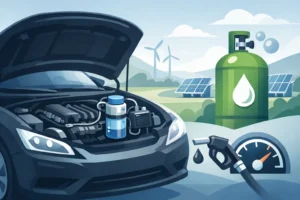
A hydrogen kit for petrol engines generates a small amount of hydrogen and oxygen gas on board the vehicle while the engine is running. That gas is then introduced into the intake, where it mixes with the incoming air-fuel charge. The goal is straightforward – promote a faster, more complete burn of the petrol already being used.
That matters because petrol engines do not always achieve perfect combustion. In real-world driving, especially under varying loads, cold starts, stop-start conditions and inconsistent throttle input, some fuel does not burn as efficiently as it could. Hydrogen is highly combustible and can help stabilise and accelerate flame propagation in the combustion chamber. When combustion improves, the engine can respond with better throttle feel, cleaner exhaust and lower fuel consumption.
This is the point many people miss. The system is not replacing petrol. It is helping the engine use petrol more effectively. That is why serious operators look at hydrogen enhancement as a combustion efficiency upgrade, not a fantasy fuel replacement.
The strongest interest usually comes from drivers and operators who burn enough fuel to notice every extra dollar. If you run a high-kilometre vehicle, tow regularly, drive a loaded 4WD, operate a marine petrol engine or use a petrol generator for long periods, efficiency gains matter quickly.
In those cases, the value is not limited to fuel savings alone. Better combustion can also mean sharper response under load, less carbon build-up over time and reduced visible or measurable exhaust emissions. For owner-drivers and businesses, that combination is what makes the system commercially attractive. Saving fuel is good. Saving fuel while improving engine behaviour is better.
Results still depend on the engine condition. A worn-out petrol engine with ignition faults, vacuum leaks or poor compression is not a good candidate for any efficiency upgrade until the basics are sorted. A hydrogen system works best as an addition to a sound, properly maintained engine.
This market has no shortage of big promises. That is why experienced buyers look for tested hardware, technical documentation, certification references and application-specific guidance. If a supplier cannot show how the system is built, how it is installed and what kind of evidence supports the performance claims, caution is justified.
A proper aftermarket system should be evaluated the same way you would judge any serious engine product. Look at the generator design, current draw, materials, control components, filtration, documentation and install support. Ask whether the kit has been matched to engine size and intended use. A small hatchback, a six-cylinder ute, a V8 tow vehicle and a generator do not all need the same setup.
That is where sizing matters. Systems built in multiple capacities are usually a stronger sign that the supplier understands load, displacement and duty cycle. Matching output to the application is part of getting stable performance instead of chasing inconsistent results.
The phrase hydrogen kit for petrol engines is broad, but petrol applications are not all the same. Some vehicles spend their lives in urban stop-start traffic. Others sit on the highway at steady revs. Some haul tools every day. Others tow caravans, boats or trailers on weekends. Marine engines and generators introduce another layer again, because load profiles can be more constant and run times much longer.
That changes expected outcomes. A vehicle doing long-distance runs at stable speed may show fuel savings differently from one crawling through city traffic. A heavily loaded 4WD may value extra torque feel and smoother pull under load just as much as a percentage fuel gain. A generator operator might focus on long-run efficiency and cleaner operation instead of throttle response.
So, is it worth it? Often yes, but only when the system is sized properly, fitted correctly and used on an engine that gives it a fair chance to perform.
A poor install can ruin a good product. That is not an overstatement. Hose routing, electrical supply, mounting position, intake integration, fluid management and protection of components all influence reliability and output.
For petrol engines, clean installation is especially important because you are dealing with intake behaviour, engine bay heat and varying operating conditions. The unit needs to be mounted securely, wired correctly and configured to suit the engine. Cheap shortcuts create problems – unstable production, poor gas delivery, electrical issues or maintenance headaches.
This is why detailed instructions and technical support are not extras. They are part of the product. A serious supplier gives you installation guidance for the application, not a vague one-page sheet and a box of parts.
If you are mechanically minded, you may be comfortable fitting a system yourself. If not, get it installed properly. The cost of a clean install is usually far less than the cost of chasing faults later.
Let’s be blunt. If you are expecting a bolt-on miracle that doubles economy overnight, you are shopping with the wrong mindset. Real engine upgrades deliver measurable gains, not fairy tales.
The first trade-off is upfront cost versus payback period. If your vehicle uses little fuel and only covers short distances, the return may take longer. If you are burning through fuel every week, the numbers can become far more attractive.
The second trade-off is maintenance discipline. A hydrogen system is not a fit-and-forget ornament. It needs correct fluid use, periodic checks and sensible monitoring. Operators who respect equipment usually get the best long-term outcome.
The third trade-off is expectations. Gains vary by engine size, condition, driving style and load. That is not a weakness in the technology. It is simply how mechanical systems work in the real world.
Before spending a dollar, ask the practical questions. What size system suits your engine? What evidence backs the claims? What install guidance is included? What parts support is available? Can the supplier show test reports, certifications or documented results? Is the system built for automotive use, or is it a generic kit dressed up with marketing?
You should also ask what happens after the sale. Can you get replacement parts? Filters? Technical help? Wiring guidance? Application advice for your exact vehicle or machinery type? In Australia, that support matters. Conditions vary from metro commuting in Sydney or Melbourne to long, hot regional runs across WA and the NT. Equipment has to cope with real use, not brochure use.
That is one reason buyers often favour suppliers that present hard documentation instead of vague green messaging. The strongest case for hydrogen enhancement has always been operational – lower running costs, better combustion, cleaner burn and improved engine response.
The best-value buyer is usually the one who uses the engine enough to measure the change. Fleet vehicles, owner-driver work utes, high-use 4WDs, marine operators and generator users are all strong candidates. They understand fuel as an operating cost, not just an annoyance.
For these buyers, even moderate efficiency gains can add up across months of driving or operating hours. Add the potential for improved torque feel, cleaner combustion and reduced carbon-related wear over time, and the system starts to make commercial sense rather than just technical curiosity.
That is why this category keeps attracting attention from practical operators. They are not buying a conversation piece. They are buying a system because they want the engine to work harder for less fuel.
Hydrogen Fuel Systems has built its position around exactly that mindset – proven hardware, documented performance and application-driven support rather than theory.
If your petrol engine is in good condition and your fuel bill keeps getting your attention, this is the kind of upgrade worth assessing with a calculator, not a guess. The smart move is to look at your actual fuel use, your actual workload and the quality of the kit in front of you. When the numbers and the hardware line up, a hydrogen enhancement system stops sounding experimental and starts looking like a practical business decision.
by Gavan Knox MSc, BSc, BEd.
WhatsApp call +61 403177183
contact gavan@hfuel.com.au
https://hydrogenfuelsystems.com.au
call Gavan on +61 403177183 – on WhatsApp or 0403177183 to clarify any points in this Post.
Contact Gavan through email gavan@hfuel.com.au or glknox11@live.com or through this website HERE
Views: 0
Friday, July 10, 2026
Brilliant Invention Gen 20 Hydrogen Generator ---(update Feb 7... Full Story

by Gavan Knox HFS whats app +61 403177183 gavan@hfuel.com.au... Full Story
HHO Kit for Fleet Vehicles That Cuts Fuel Costs... Full Story
Hydrogen Kit for Petrol Engines: Worth It - July... Full Story
Best Hydrogen Kit Size for Your Engine - july... Full Story
Payment Methods Partner:

© 2023 - Hydrogenfuelsystems pty ltd